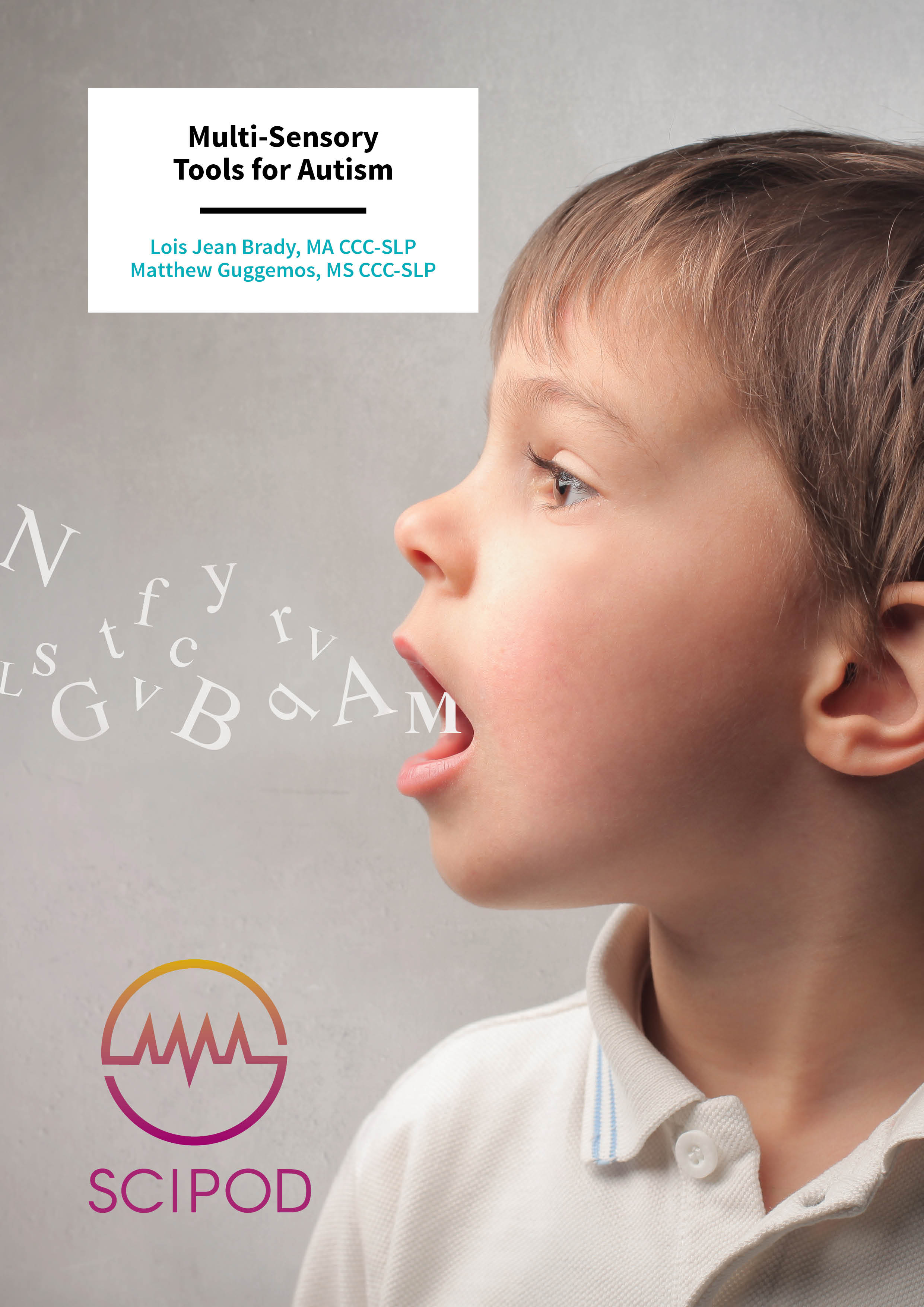
Multi-Sensory Tools for Autism – Lois Jean Brady and Matthew Guggemos, iTherapy LLC
Aug 31, 2018health and medicine, social and behavioural sciences
For children with autism, communication can be a challenge. Drawing from a wealth of clinical experience, speech pathologists Lois Brady and Matthew Guggemos at iTherapy, LLC are developing innovative, engaging multi-sensory communication tools with the aim of improving quality of life for individuals with autism.
You may also like …
Prof. Dharambir Sanghera | The Hidden Genetics of Type 2 Diabetes: What Indian Families Are Teaching Us About Disease Risk
Type 2 diabetes has become one of the defining health challenges of our time. Hundreds of millions of people worldwide are living with the disease, and the numbers continue to climb. While unhealthy diets, reduced physical activity, and increasing rates of obesity have all contributed to this growing epidemic, they tell only part of the story. Genetics also plays an important role, influencing why some people develop diabetes while others remain healthy despite living similar lifestyles.
Prof. Dr. Dietmar Thurnher | Von der Stille zum Überleben: 150 Jahre Laryngektomie und die Zukunft der Stimme
Im späten neunzehnten Jahrhundert stand die Medizin an der Schwelle zwischen Verzweiflung und Entdeckung. Krebs des Kehlkopfes, jener Struktur, die uns die Stimme verleiht und unsere Atemwege schützt, verlief fast immer tödlich. Chirurgen verfügten nur über wenige Werkzeuge und noch weniger Erfolge. Dann veränderte im Jahr 1873 eine mutige und kontroverse Operation alles. Theodor Billroth führte die erste totale Laryngektomie durch und entfernte einem menschlichen Patienten den gesamten Kehlkopf. Es war ein radikaler Eingriff, der ein Leben rettete – allerdings um den Preis des Sprachvermögens und der natürlichen Atmung. Dieser Moment markierte den Beginn einer langen und sich stetig weiterentwickelnden Reise in der Behandlung von Kopf-Hals-Karzinomen.
Prof. Peter Littrup | The Future of Cancer Care May Already Be Here, and May Hold Faster Promise for Neurologic Diseases
For decades, cancer treatment has followed a familiar path. A tumor is found, surgery removes it, radiation burns what remains, and chemotherapy or immunotherapy attempts to destroy cells that may have spread elsewhere. These treatments have saved countless lives, yet they often come with immense physical, emotional, and financial costs. Many patients endure fatigue, pain, scarring, organ damage, mounting bills and lifelong side effects. However, the extraordinary advances of modern medicine have often included the commercial viability of a proven medical product, regardless of its cost and accessibility. The dream of a gentler, more precise, and more effective cancer treatment has remained elusive.
Prof. Vibeke Vågenes – Cecilie Grevstad | When a Monthly Cycle Becomes a Barrier: Why Menstrual Health Matters for Girls’ Education in Tanzania
For millions of girls around the world, education represents hope. It offers the possibility of independence, financial security, improved health, and the chance to shape a different future from previous generations. Yet for many girls, the path to education is filled with obstacles that receive little attention. Some are obvious, such as poverty or long journeys to school. Others are far less visible, hidden behind silence, embarrassment and social expectations. One of the most overlooked is menstruation.
Andras Gedeon | Beyond Spirometry: Could a Simple New Measurement Transform COPD Care?
Every healthcare professional involved in the care of patients with chronic obstructive pulmonary disease understands the challenge. COPD is one of the world’s leading causes of illness and death, affecting more than 300 million people and placing an enormous burden on healthcare systems. Although treatment options have improved significantly over recent decades, clinicians continue to face a fundamental problem. They mostly rely on diagnostic measurements that do not fully capture the disease’s complexity. For many years, a simple form of spirometry has been the cornerstone of COPD diagnosis and management. The ratio of forced expiratory volume in one second and forced vital capacity is relatively easy and inexpensive to measure. It is therefore widely available and is supported by decades of clinical experience. This ratio has become so firmly established as a measure of the disease that it is virtually impossible to imagine COPD assessment without it.
Prof. Katerina Tetzloff | Listening Is Half the Conversation: How Bilingual Minds Are Reshaping Our Understanding of Speech Disorders
Imagine sitting across the kitchen table from someone you have known for decades. They begin telling you about their day, but something has changed. Their words are slower than they once were. Some sounds are blurred together, others seem to disappear entirely. You know the person well. You know the stories they are likely to tell and the expressions they often use. Yet despite all of that familiarity, you find yourself asking them to repeat themselves again and again.
Dr Michael Egnor – Dr Racheed Mani | When the Brain’s Plumbing Is Not the Problem
For decades, doctors have puzzled over a strange and often misunderstood condition called normal pressure hydrocephalus. People with the disorder may begin to shuffle when they walk, struggle with memory, or lose bladder control. Brain scans reveal enlarged fluid-filled spaces called ventricles, yet the pressure inside the skull often appears surprisingly normal. It is a medical paradox that has challenged neurologists and neurosurgeons since the condition was first described in the 1960s. Now, new research is offering a radically different way of thinking about what may actually be happening inside the brain. Rather than viewing normal pressure hydrocephalus as a simple problem of fluid buildup, researchers are beginning to see it as a disorder of energy, rhythm, and pulsation.
Dr Fay Betsou | The Missing Piece in Medical Diagnostics: Why the Right Samples Matter
When a new medical test reaches a clinic or laboratory, most people focus on the technology itself. They think about the machine, the test kit, or the scientific breakthrough that makes diagnosis possible. Yet behind every successful diagnostic test lies something far less visible but equally important: the biological specimens used to develop and validate it. Without the right samples, even the most promising diagnostic innovation can fail. A test may appear accurate in the laboratory but perform poorly in real-world settings. It may work well for one patient population but struggle in another. It may detect a disease in some regions of the world while missing important variations elsewhere.
Dr. Daniel Kroeger | Sleeping More Than Ever Before: The Surprising Science of Extra Sleep and Anxiety
For centuries, sleep has remained one of humanity’s greatest biological mysteries. We spend roughly a third of our lives doing it, yet scientists are still trying to fully understand why the brain insists upon sleep. It seems clear that sleep restores the body, sharpens memory, regulates emotions, and keeps countless internal systems in balance. But one major problem has always complicated sleep research: most experiments focus on what happens when sleep is taken away. That approach has taught researchers a great deal. Sleep deprivation has been linked to poor concentration, weakened immune function, emotional instability, and a long list of health problems. Yet asking what happens when sleep is removed only tells part of the story. It is a little like studying hunger by starving people without ever exploring what happens when they are exceptionally well fed.
Prof. Megan Lancaster | The Hidden Signals of the Heart: How Genetics Is Transforming the Fight Against Sudden Cardiac Death
The human heart beats with a rhythm so steady that most of us rarely stop to consider it. Each pulse carries oxygen, sustains life, and quietly reflects the intricate biological systems that keep us alive. However, this familiar rhythm requires a delicate electrical balance. When that balance is disturbed, the consequences can be sudden and severe. Among the most striking examples is Long QT syndrome, a condition that can lurk silently until it triggers a dangerous arrhythmia or even sudden cardiac death.