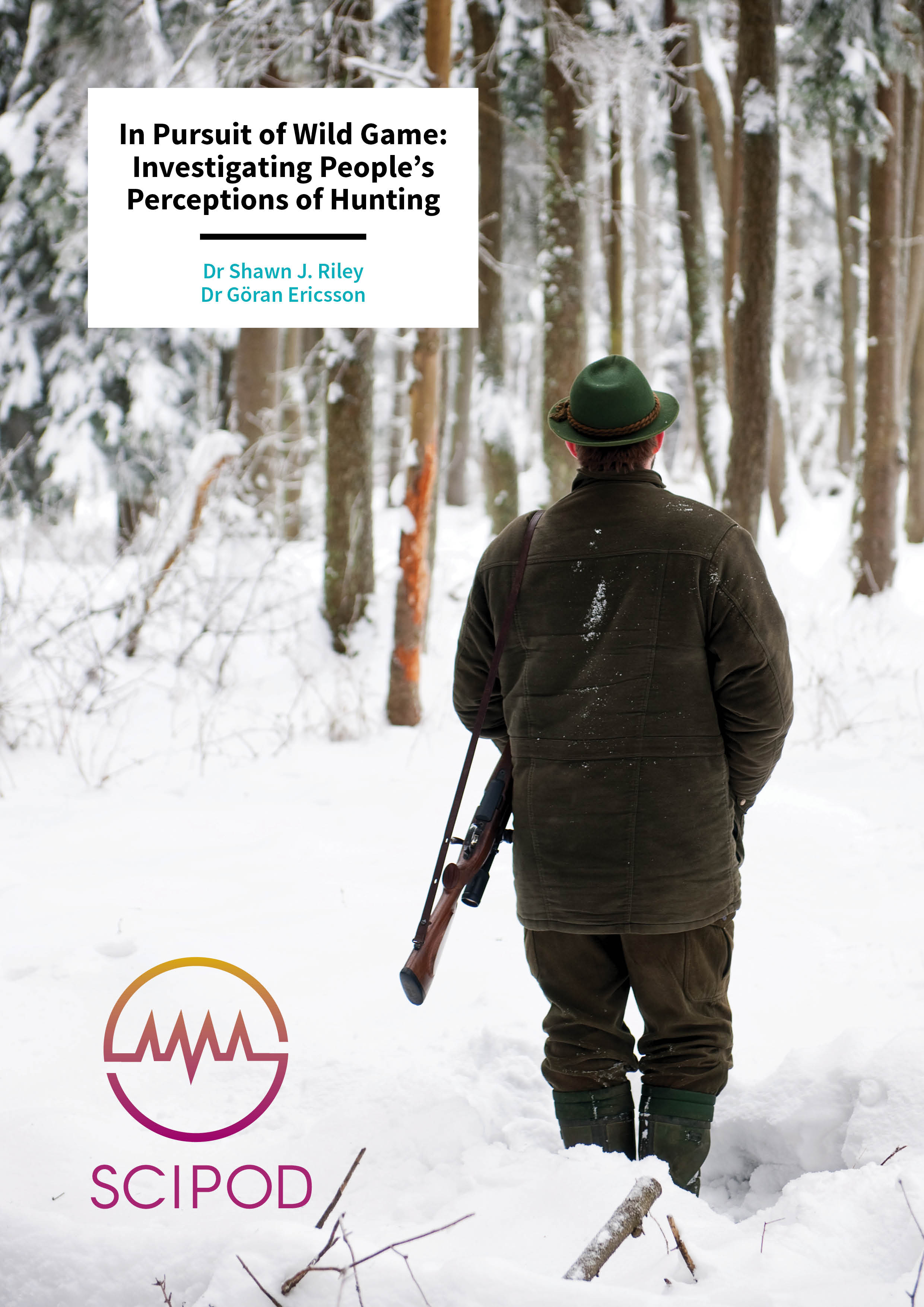
In Pursuit of Wild Game Investigating People’s Perceptions of Hunting – Drs Shawn J. Riley and Göran Ericsson
Mar 19, 2018earth and environment, social and behavioural sciences
Hunting is among the most ancient of human activities, and still plays a major role in obtaining food for many people worldwide. Dr Shawn Riley and Dr Göran Ericsson work to understand the volume and distribution of wild-harvested meat, how this meat moves through society, and the effects of sharing the harvest on people’s perspective toward traditional uses of wildlife such as hunting. They also investigate the factors that influence people’s perception of hunting, and how hunters distribute their yields in different situations.
You may also like …

Prof. Maurizio Ferrera | Reimagining Europe: Crisis, Solidarity, and the Search for a Common Future
In moments of uncertainty, societies are compelled to imagine what comes next. The future becomes a contested space, shaped not only by policies and institutions but also by competing visions of what a good society should look like. In his book, Politics and Social Visions, Prof. Maurizio Ferrera of the University of Milan explores this dynamic with clarity and depth, arguing that Europe’s trajectory cannot be understood without paying close attention to the power of ideas. His work reminds us that political life is not merely about solving problems, but also about imagining possibilities.
Dr. Munira Cheema | Speaking in the Shadows: How Everyday Pakistanis Are Redefining Voice and Power
In an age where a single post can spark a national debate, the question of who gets to speak and who is heard has taken on new urgency. In her book, Dissenting Counter-Publics in Pakistani Social Media and Café Culture, Dr. Munira Cheema of King’s College London invites readers into a complex and evolving landscape where voices once pushed to the margins are finding new ways to emerge. Drawing from both digital platforms and physical gathering spaces, her work reveals how ordinary citizens are reshaping conversations about identity, power, and belonging in Pakistan.
Professor Lori Peek | When Children Lead in Crisis: What the Pandemic Revealed About Young People, Empathy, and the Future of Disaster Literacy
In the early months of the COVID-19 pandemic, a familiar narrative took hold across the world. Children, it was often said, were among the most vulnerable. Their schools closed, their routines vanished, and their social worlds shrank overnight. Yet beneath this narrative, another quieter story unfolded, one that challenges how we think about children in times of crisis. Instead of remaining passive recipients of care, many young people stepped forward as helpers, problem-solvers, and advocates for others at risk of the deadly virus.
Prof. José Ignacio Nazif-Muñoz | When Heat Meets the Road: How Rising Temperatures Are Changing Urban Traffic Safety
On a sweltering summer day, most of us notice the obvious effects of heat. We feel slower, more irritable, and eager to escape the sun. What is less obvious is how these same conditions quietly reshape our behavior behind the wheel. A recent study led by Prof. José Ignacio Nazif-Muñoz of the University of Sherbrooke in collaboration with Prof. Jose Guillermo Cedeño Laurent of Rutgers University explores this hidden connection, revealing how heatwaves and urban heat patterns influence road safety across five cities in Québec. The findings offer a timely reminder that climate change is not only an environmental issue but also a public safety concern that touches everyday life in unexpected ways.
Ana Cikač – Prof. Saša Pišot | Omejeni v gibanju: medosebni odnosi v pogojih skrajne gibalne neaktivnosti
Ko si predstavljamo raziskave, povezane z vesoljskimi odpravami, pogosto pomislimo na rakete, astronavte in tišino orbite. A se nekatere najpomembnejše ugotovitve o življenju zunaj Zemlje odvijajo daleč od vesolja, v tihih sobah, kjer ljudje več tednov nepretrgoma ležijo. To so študije dolgotrajnega ležanja, edinstven raziskovalni model, ki simulira učinke mikrogravitacije na človeško telo tako, da udeležence prosi, naj dlje časa ostanejo v ležečem položaju. Čeprav so te študije zasnovane z namenom raziskovanje mišic, kosti in presnove, ustvarjajo tudi nenavaden družbeni svet. Kaj se zgodi z medčloveškimi odnosi, ko je gibanje omejeno, rutine in dojemanje časa pa se spremenijo.
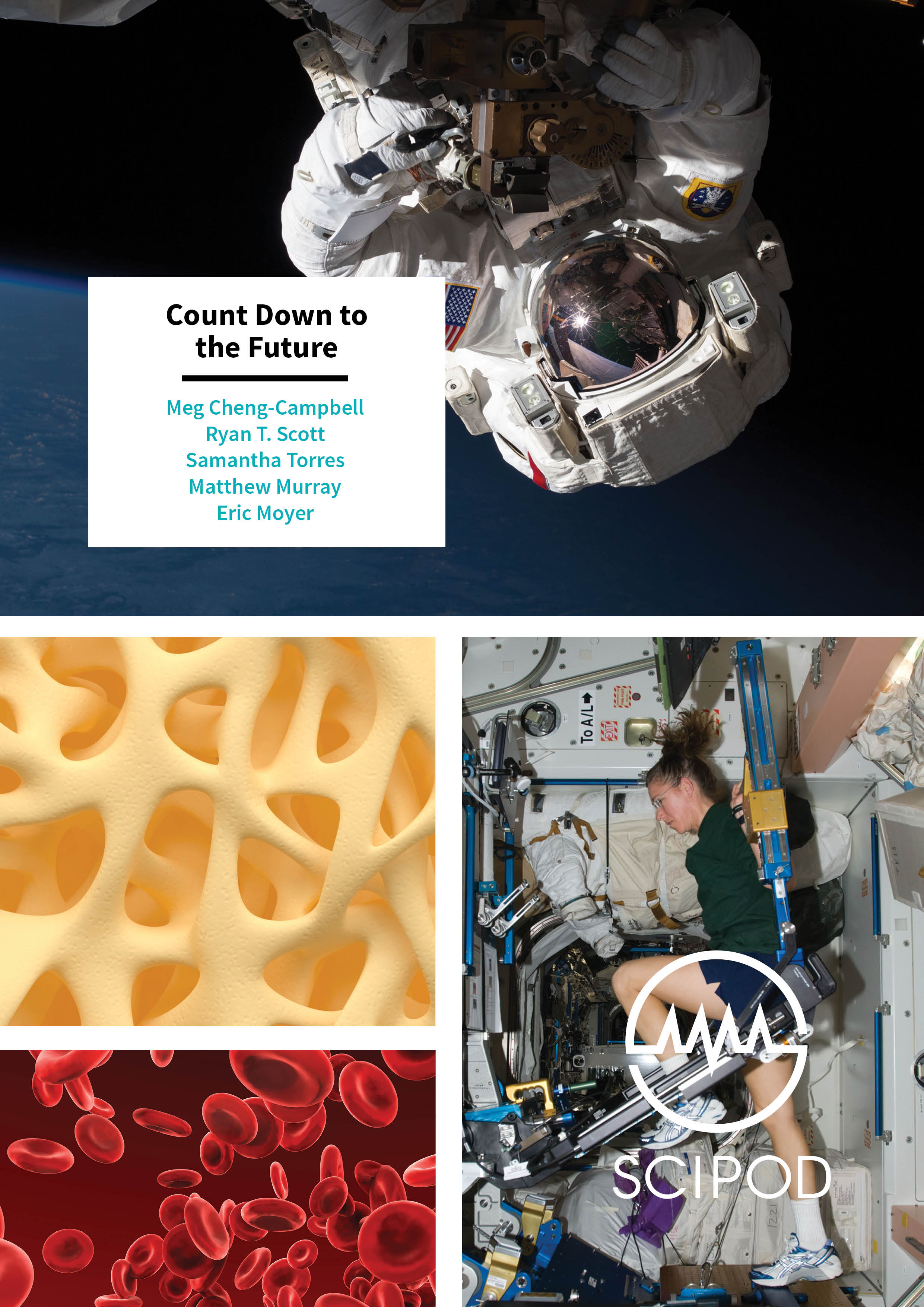
Ana Cikač – Prof. Saša Pišot | Held in Place: Relationships Under Extreme Inactivity
When we imagine research linked to space travel, we often picture rockets, astronauts, and the silence of orbit. Yet some of the most important insights into life beyond Earth happen far from space, in quiet rooms where people lie still for weeks at a time. These are bed rest studies, a unique research model that simulates the effects of microgravity on the human body by asking participants to remain lying down for long periods. While these studies are designed to explore muscles, bones, and metabolism, they also create an unusual social world. What happens to human relationships when movement is restricted, routines are stripped away, and the experience of time changes?
Prof. Ariel Pakes | Should I Stay or Should I Go? The Hidden Forces Behind Your Health Plan Loyalty
If you ask someone in the United States whether to reconsider their health insurance plan choices, they may sigh, roll their eyes, and offer a story about navigating a maze of deductibles, networks, and confusing brochures. In practice, most people end up doing the simplest thing possible: they stay in the same plan they are already in. Economists have long noticed this pattern. Even when plans raise their prices or competitors offer better deals, people tend to remain where they are. This raises a fascinating question: do people stay because switching is difficult, or because they genuinely prefer the plan they already have? A new study by the economist Prof. Ariel Pakes of Harvard University, and colleagues Prof. Mark Shepard and Prof. Jack Porter, digs into this puzzle and uncovers some surprising answers. Although the study uses sophisticated mathematical tools, the insights are straightforward and important for anyone interested in how health insurance markets work.
Dr Suzanne Coyle | Weaving Spirituality into Psychotherapy: How Stories Help Healing
As the practice of psychotherapy increasingly embraces the spiritual dimensions of the human experience, therapists are investigating new ways to weave faith and meaning into healing. Dr Suzanne Coyle, a licensed pastoral counsellor and family therapist, explores the role of spirituality in psychotherapy and how this intersection can support the journey of healing. Her work provides practitioners with the tools and knowledge to meaningfully integrate spirituality into clinical practice.
Barbara Holifield | Coming Home to the Body: Sensing, Development, Trauma and Depth Psychology
We often take our bodies for granted, treating them as vehicles to get us through the day or as objects to manage and control. But author and Jungian Analyst Barbara Holifield’s book Being with the Body in Depth Psychology challenges this view, arguing that the body is the foundation of our sense of self and the lens through which we encounter the world. Depth psychology has seldom treated the body as an intrinsic aspect of our psychology, and when it has, it rarely delves into the body as experienced. Through in-depth case studies, Holifield’s two important chapters – Chapter 2, Sensing the Self, Sensing the World, and Chapter 4, Attaining Embodiment: A Developmental Perspective – explore how we come to feel at home in our bodies and why this matters for both psychological health and human growth.
Reimagining online safety education through the eyes of young people
In today’s world, the internet is more than a tool. It can be a place where friendships are built, identities are explored, and young people find connection. For teenagers, digital spaces are a huge component of their lives. However, the way we talk about online safety often feels like it belongs to another era, one rooted in adult fears rather than young people’s lived experiences. A project led by the Young and Resilient Research Centre at Western Sydney University, in partnership with the PROJECT ROCKIT Foundation with funding from Australia’s eSafety Commissioner, set out to bridge this disconnect. Instead of telling young people how they “should” behave online, the researchers conducted a survey of 104 young people and workshops with 31 young Australians aged 12 to 17 which asked them directly: What does online safety mean to you? What do you wish adults understood? What would your ideal online world look like? How do you want to learn about online safety?
The results were eye-opening and led to the development of a framework to reimagine how online safety education for young people is designed and delivered.