
Arts and Humanities
Explore Arts and Humanities

Prof. Yu Du | The Age of Judgment: What Sentencing Reveals About Youth, Maturity, and Mercy
Imagine two people standing before a judge. One is nineteen, old enough to vote and be tried as an adult, but still developing the mental machinery needed for restraint and long-range planning. The other is sixty-eight, with decades of life experience but perhaps declining health, reduced mobility, and little likelihood of committing another crime. The law calls both adults. Yet common sense suggests that age matters, and not always in the same way.

Prof. Maurizio Ferrera | Reimagining Europe: Crisis, Solidarity, and the Search for a Common Future
In moments of uncertainty, societies are compelled to imagine what comes next. The future becomes a contested space, shaped not only by policies and institutions but also by competing visions of what a good society should look like. In his book, Politics and Social Visions, Prof. Maurizio Ferrera of the University of Milan explores this dynamic with clarity and depth, arguing that Europe’s trajectory cannot be understood without paying close attention to the power of ideas. His work reminds us that political life is not merely about solving problems, but also about imagining possibilities.

Dr. Munira Cheema | Speaking in the Shadows: How Everyday Pakistanis Are Redefining Voice and Power
In an age where a single post can spark a national debate, the question of who gets to speak and who is heard has taken on new urgency. In her book, Dissenting Counter-Publics in Pakistani Social Media and Café Culture, Dr. Munira Cheema of King’s College London invites readers into a complex and evolving landscape where voices once pushed to the margins are finding new ways to emerge. Drawing from both digital platforms and physical gathering spaces, her work reveals how ordinary citizens are reshaping conversations about identity, power, and belonging in Pakistan.

Professor Lori Peek | When Children Lead in Crisis: What the Pandemic Revealed About Young People, Empathy, and the Future of Disaster Literacy
In the early months of the COVID-19 pandemic, a familiar narrative took hold across the world. Children, it was often said, were among the most vulnerable. Their schools closed, their routines vanished, and their social worlds shrank overnight. Yet beneath this narrative, another quieter story unfolded, one that challenges how we think about children in times of crisis. Instead of remaining passive recipients of care, many young people stepped forward as helpers, problem-solvers, and advocates for others at risk of the deadly virus.
Prof. Marjorie Wonham | The Power of Crossing Disciplines: How Blending Arts and Sciences Transforms Education
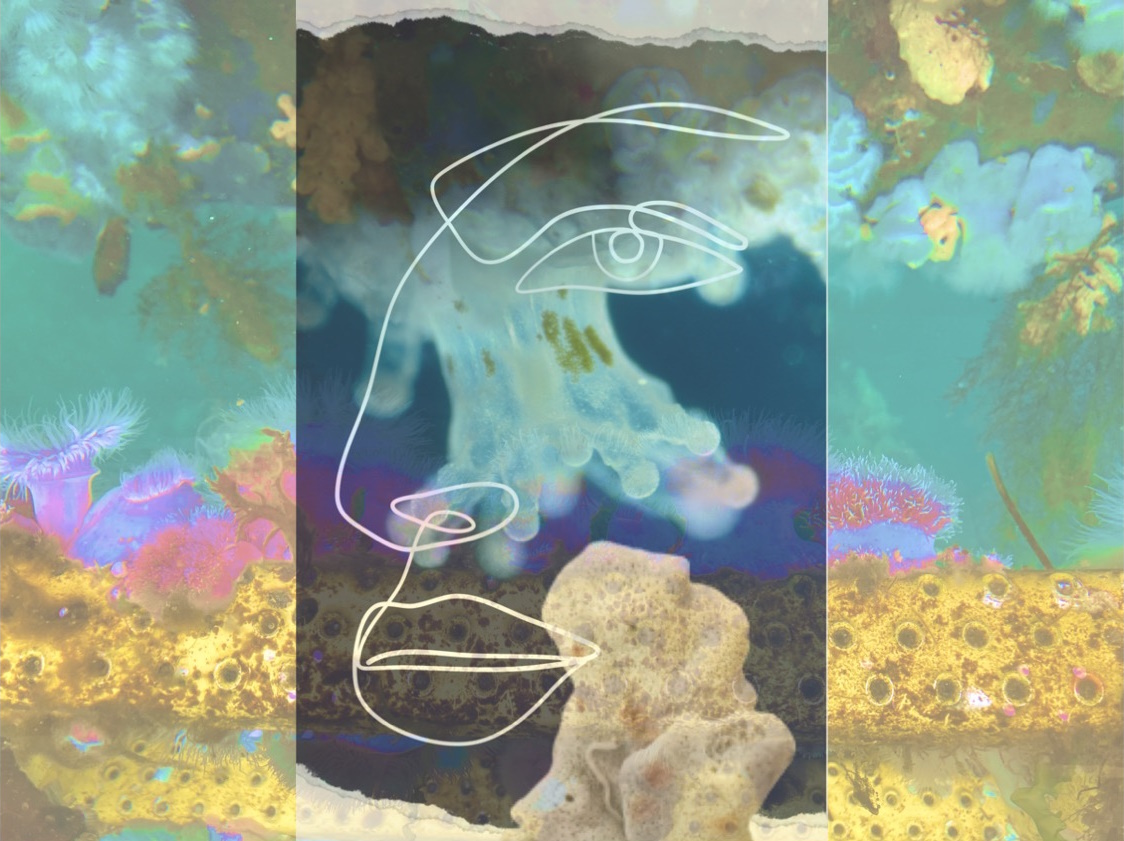
In many people’s minds, the arts and the sciences still occupy separate worlds. Science is often imagined as precise, objective, and technical, while the arts are seen as expressive, subjective, and emotional. These stereotypes are reinforced by the way higher education is organized, with students urged to specialize early and remain safely within disciplinary boundaries. Yet the challenges that shape contemporary life rarely respect those boundaries. Climate change, biodiversity loss, public health crises, and social inequality are problems that demand not only data and analysis, but also imagination, empathy, and the ability to communicate across cultures and perspectives to achieve meaningful change. In this context, the growing movement to integrate arts and sciences in higher education is not a luxury or an experiment. It is a necessity.

Prof. Neil Roughley | Being on Someone’s Side: What It Means to Act and Feel on Behalf of Others
What does it really mean to act or feel on behalf of another person? The phrase is familiar in everyday life. Parents apologise on behalf of their children, lawyers speak on behalf of their clients, and friends feel anger or pride on behalf of those they care about. These cases seem ordinary, yet they raise difficult questions. Whose action is this, exactly? Whose feeling is being expressed? And what sort of relationship makes this kind of representation possible? In his paper “On Behalfness: Siding with Others in Action and Emotion,” philosopher Prof. Neil Roughley at the University of Duisburg-Essen in Germany argues that these everyday practices reveal a distinctive form of alignment between people that deserves careful philosophical attention.

Dr. Michael Hauser | After the Death of God: Reimagining the Divine with Alain Badiou
What if the most honest way to speak about God today is to begin by admitting that the old images no longer work? For centuries, many believers pictured God as a supreme being who rules the universe from beyond it, guarantees meaning, and stands as the ultimate explanation for everything that exists. Yet modern history, philosophical critique, and even theology itself have steadily eroded this picture. The result is not simply atheism in the popular sense, but a profound theological crisis.
Dr Suzanne Coyle | Weaving Spirituality into Psychotherapy: How Stories Help Healing
As the practice of psychotherapy increasingly embraces the spiritual dimensions of the human experience, therapists are investigating new ways to weave faith and meaning into healing. Dr Suzanne Coyle, a licensed pastoral counsellor and family therapist, explores the role of spirituality in psychotherapy and how this intersection can support the journey of healing. Her work provides practitioners with the tools and knowledge to meaningfully integrate spirituality into clinical practice.
Prof. Satoshi Abe | The Unexpected Symbols Driving Iran’s Environmental Movement
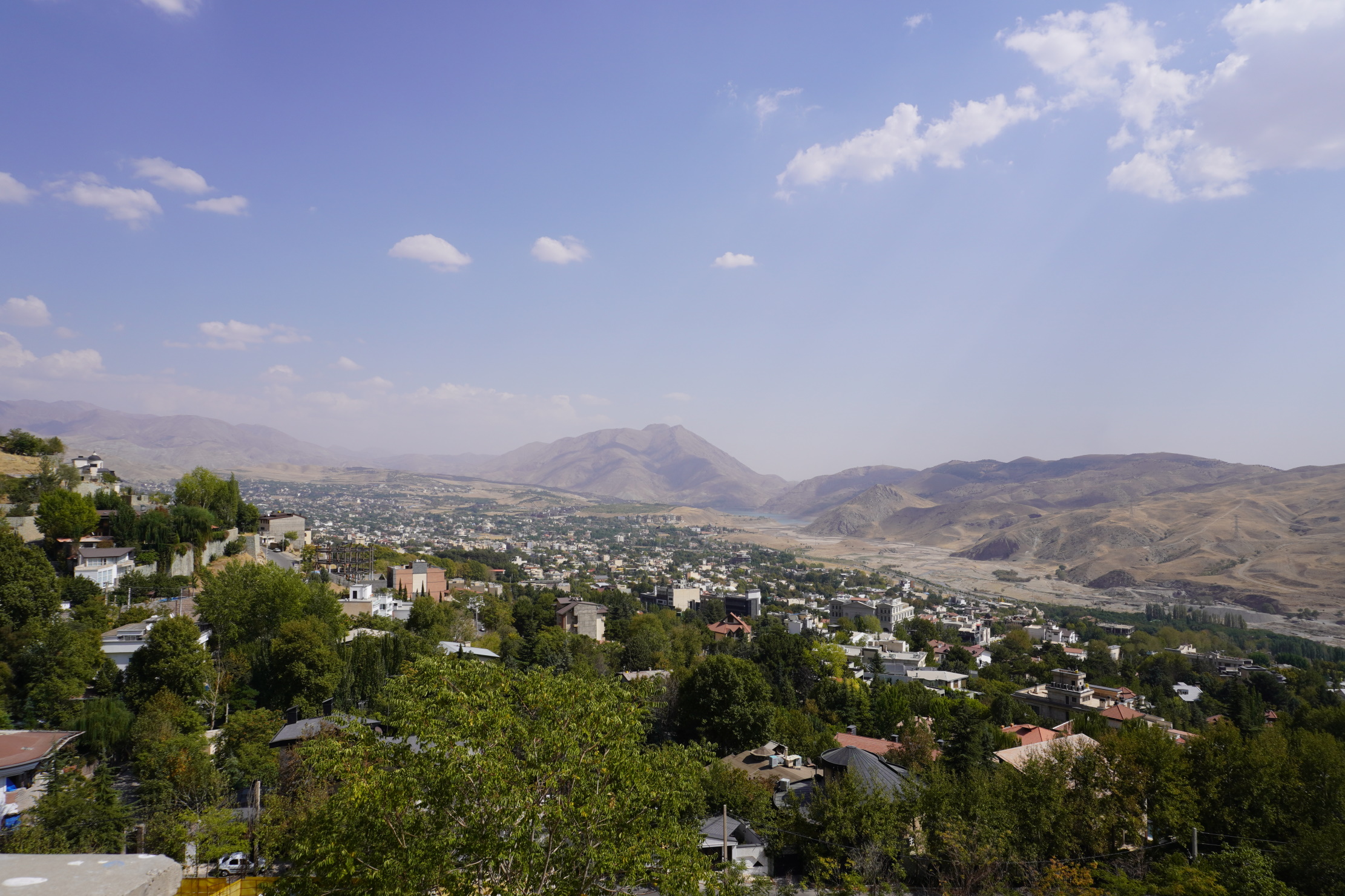
If you walk through the bustling streets of Tehran, you might first notice the traffic, the densely packed apartments, or young people weaving through the city on motorbikes. But if you look a little closer, you may notice banners stretching across overpasses, tiny flags lining the perimeters of parks, or posters taped to walls, and you might just begin to sense something else humming quietly in the background: a story about nature, identity, and the nation itself. According to Prof. Satoshi Abe of Tottori University, Japan, who has researched environmental activism in Iran, the country is experiencing not just an environmental crisis, but an environmental reimagining. Iranians are not simply debating water shortages, air pollution, or endangered species, though they are certainly doing that. They are also wrestling with questions about what “nature” means within the story of Iran.

Reimagining online safety education through the eyes of young people
In today’s world, the internet is more than a tool. It can be a place where friendships are built, identities are explored, and young people find connection. For teenagers, digital spaces are a huge component of their lives. However, the way we talk about online safety often feels like it belongs to another era, one rooted in adult fears rather than young people’s lived experiences. A project led by the Young and Resilient Research Centre at Western Sydney University, in partnership with the PROJECT ROCKIT Foundation with funding from Australia’s eSafety Commissioner, set out to bridge this disconnect. Instead of telling young people how they “should” behave online, the researchers conducted a survey of 104 young people and workshops with 31 young Australians aged 12 to 17 which asked them directly: What does online safety mean to you? What do you wish adults understood? What would your ideal online world look like? How do you want to learn about online safety?
The results were eye-opening and led to the development of a framework to reimagine how online safety education for young people is designed and delivered.

Professor Ligeia Quackelbeen | How Should Judges Consider Cultural Concepts in International Criminal Law?
Research from Assistant Professor Ligeia Quackelbeen at Tilburg University examines how international criminal courts categorize cultural practices such as forced marriage, revealing issues with current legal approaches. Using a landmark case as a primary example, the analysis demonstrates how judges rely on rigid checklist-based reasoning that fails to adequately consider cultural contexts. The research examines the benefits of adopting prototype theory from cognitive science to enable more culturally sensitive legal interpretations that better understand local practices rather than applying generic Western-centered definitions.

Dr Katrina Schlunke | Bringing Dead Zoos to Life: Caring for Extinct Animals and Living Cultures
Step into a natural history museum, sometimes called a ‘dead zoo’, and you will find yourself surrounded by silence. Behind glass cases and inside drawers lie animals long gone: the Tasmanian tiger, the quagga, birds that no longer take flight, creatures whose skins and bones now carry only the weight of memory. These preserved remains are meant to represent care – careful handling, careful storage, and careful cataloguing, in a tribute to the long dead and sometimes extinct. But as Dr Katrina Schlunke, from the University of Potsdam and Sydney, argues, the care offered by museums is not so simple. It is bound up with histories of colonialism, extinction, and exclusion, which are typically not explored or acknowledged in the displays we encounter.
Prof. Yu Du | The Age of Judgment: What Sentencing Reveals About Youth, Maturity, and Mercy
Imagine two people standing before a judge. One is nineteen, old enough to vote and be tried as an adult, but still developing the mental machinery needed for restraint and long-range planning. The other is sixty-eight, with decades of life experience but perhaps declining health, reduced mobility, and little likelihood of committing another crime. The law calls both adults. Yet common sense suggests that age matters, and not always in the same way.
Prof. Maurizio Ferrera | Reimagining Europe: Crisis, Solidarity, and the Search for a Common Future
In moments of uncertainty, societies are compelled to imagine what comes next. The future becomes a contested space, shaped not only by policies and institutions but also by competing visions of what a good society should look like. In his book, Politics and Social Visions, Prof. Maurizio Ferrera of the University of Milan explores this dynamic with clarity and depth, arguing that Europe’s trajectory cannot be understood without paying close attention to the power of ideas. His work reminds us that political life is not merely about solving problems, but also about imagining possibilities.
Dr. Munira Cheema | Speaking in the Shadows: How Everyday Pakistanis Are Redefining Voice and Power
In an age where a single post can spark a national debate, the question of who gets to speak and who is heard has taken on new urgency. In her book, Dissenting Counter-Publics in Pakistani Social Media and Café Culture, Dr. Munira Cheema of King’s College London invites readers into a complex and evolving landscape where voices once pushed to the margins are finding new ways to emerge. Drawing from both digital platforms and physical gathering spaces, her work reveals how ordinary citizens are reshaping conversations about identity, power, and belonging in Pakistan.
Professor Lori Peek | When Children Lead in Crisis: What the Pandemic Revealed About Young People, Empathy, and the Future of Disaster Literacy
In the early months of the COVID-19 pandemic, a familiar narrative took hold across the world. Children, it was often said, were among the most vulnerable. Their schools closed, their routines vanished, and their social worlds shrank overnight. Yet beneath this narrative, another quieter story unfolded, one that challenges how we think about children in times of crisis. Instead of remaining passive recipients of care, many young people stepped forward as helpers, problem-solvers, and advocates for others at risk of the deadly virus.
Prof. Marjorie Wonham | The Power of Crossing Disciplines: How Blending Arts and Sciences Transforms Education
In many people’s minds, the arts and the sciences still occupy separate worlds. Science is often imagined as precise, objective, and technical, while the arts are seen as expressive, subjective, and emotional. These stereotypes are reinforced by the way higher education is organized, with students urged to specialize early and remain safely within disciplinary boundaries. Yet the challenges that shape contemporary life rarely respect those boundaries. Climate change, biodiversity loss, public health crises, and social inequality are problems that demand not only data and analysis, but also imagination, empathy, and the ability to communicate across cultures and perspectives to achieve meaningful change. In this context, the growing movement to integrate arts and sciences in higher education is not a luxury or an experiment. It is a necessity.