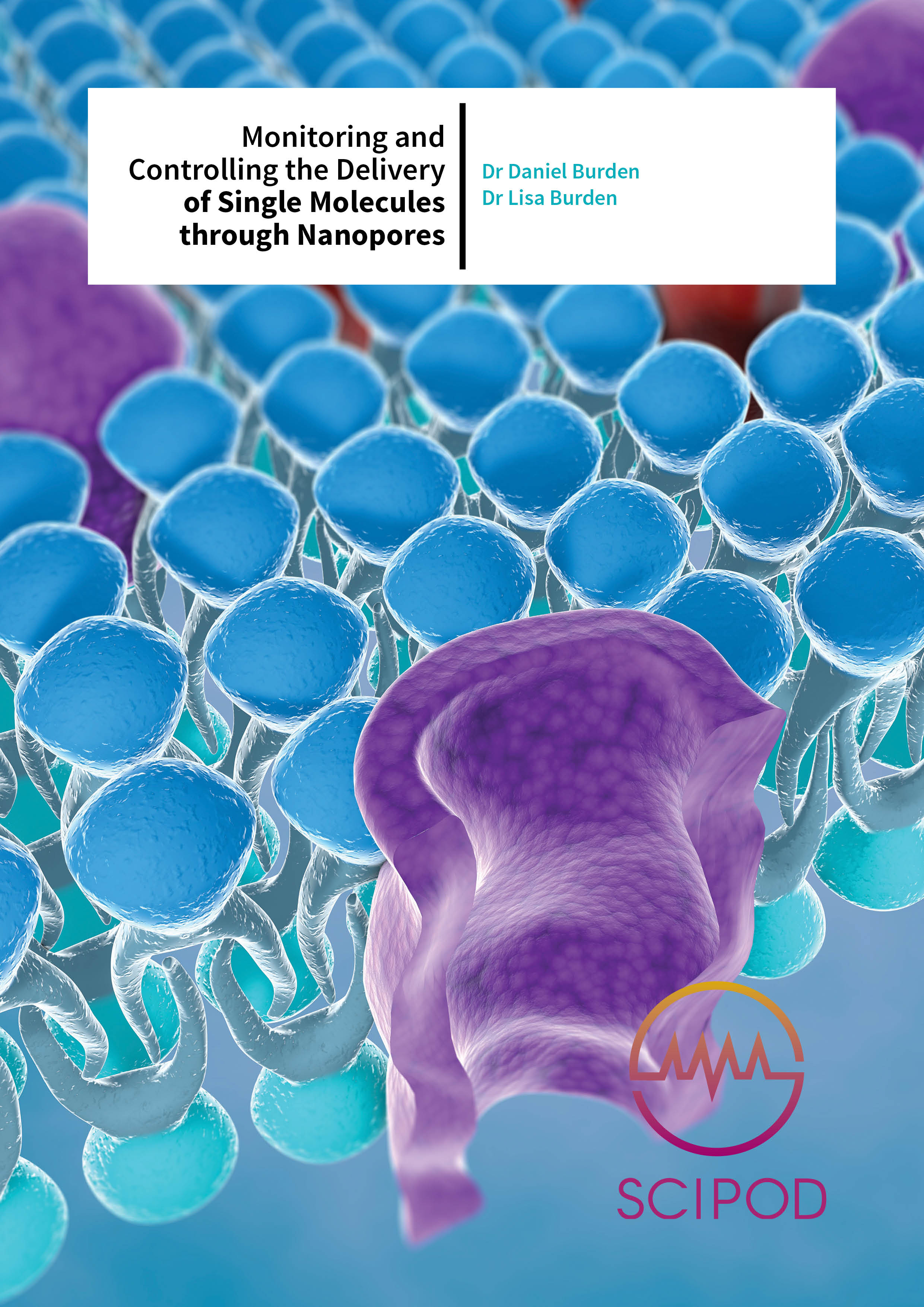
The Core of Corruption – Professor Bo Rothstein, University of Gothenburg

Feb 28, 2018business and economy, social and behavioural sciences

Corruption in governments affects all aspects of daily life. A society’s health, prosperity and even trust in others are all impacted by the integrity of administrations. Professor Bo Rothstein, co-founder of the Quality of Government Institute at the University of Gothenburg, has helped to articulate the nature of corruption and has come up with tangible steps that can be taken to address it.
[lbg_audio2_html5 settings_id=’54’]

You may also like …
Prof. José Ignacio Nazif-Muñoz | When Heat Meets the Road: How Rising Temperatures Are Changing Urban Traffic Safety

On a sweltering summer day, most of us notice the obvious effects of heat. We feel slower, more irritable, and eager to escape the sun. What is less obvious is how these same conditions quietly reshape our behavior behind the wheel. A recent study led by Prof. José Ignacio Nazif-Muñoz of the University of Sherbrooke in collaboration with Prof. Jose Guillermo Cedeño Laurent of Rutgers University explores this hidden connection, revealing how heatwaves and urban heat patterns influence road safety across five cities in Québec. The findings offer a timely reminder that climate change is not only an environmental issue but also a public safety concern that touches everyday life in unexpected ways.

Where Gas Meets Liquid: Rethinking Carbon Capture for a Net-Zero Future | Dr. Ali Najarnezhadmashhadi

The story of climate change is often told through numbers. Rising temperatures, increasing atmospheric carbon dioxide, and tightening timelines toward global climate targets dominate headlines. Yet behind these numbers lies a quieter, more complex story of engineering innovation. It is a story about how we might redesign industrial systems to reduce emissions without dismantling the infrastructure that modern life depends on. At the center of this effort is carbon capture, a technology that has shifted from theoretical promise to practical necessity.

Mara Bălașa – Professor Rickard Sandberg | Green Steel and the Price of a Cleaner Future

Steel is everywhere. It forms the skeletons of skyscrapers, the frames of cars, the rails beneath trains, and the machines that build modern economies. Yet behind this essential material lies a difficult truth. Steelmaking is one of the world’s most carbon intensive industries. Each ton of conventional steel can release nearly two tons of carbon dioxide into the atmosphere. As countries race to reduce emissions and limit climate change, transforming the way steel is made has become an urgent challenge.

Dr. Clayton Raines | From Alewives to Bass: Discovering the Viruses Lurking in North America’s Fish

In rivers and lakes across North America, fish carry secrets invisible to the naked eye, secrets that researchers with the U.S. Geological Survey’s Eastern Ecological Science Center are determined to help uncover. With a passion for aquatic health and an interest in viral sleuthing, these researchers, including Dr. Clayton Raines, a fish biologist, have conducted groundbreaking research that is reshaping our understanding of fish disease. From uncovering a new virus in alewives to decoding the mystery behind the blotchy skin of black basses, this work not only expands the frontiers of fish virology but also reveals the hidden complexities of ecosystems. Here, we explore Raines’ and colleagues’ fascinating findings and their implications for fish management, conservation, and the health of freshwater species.

Prof. Debra Zoran | After the Storm: Protecting Companion Animals in Crisis

When disaster strikes, the images that dominate news coverage are almost always human centered. We see flooded neighborhoods, collapsed buildings, families waiting in shelters, and exhausted first responders. Yet woven into nearly every one of those scenes is another presence, often trembling at the end of a leash or peering out from a carrier. Companion animals are not an afterthought in modern life. They are family members, sources of emotional stability, and in some cases essential partners such as service dogs. As natural and human-made disasters grow in frequency and severity, the question of how to protect people inevitably includes the question of how to protect their animals.

Roos van de Logt | Hidden Engineers: How Earthworms Could Help Us Weather a Changing Climate

If you were to observe a quiet Dutch pasture, you might not guess that one of the most important climate-resilience workers in the landscape is silently engineering the soil beneath the grass. However, just below your feet, an unassuming creature plays a role in buffering floods, preserving crops during droughts, and quietly maintaining the natural plumbing system of the land. This creature is the humble deep-burrowing earthworm, Lumbricus terrestris (or L. terrestris for short). In recent years, researcher Roos van de Logt of the Louis Bolk Institute, and colleagues, have been uncovering the surprisingly complex story of this earthworm. Their findings suggest that supporting, and in some cases reintroducing, L. terrestris could be a powerful, nature-based tool for helping European grasslands adapt to intensifying climate extremes.

Prof. Satoshi Abe | The Unexpected Symbols Driving Iran’s Environmental Movement

If you walk through the bustling streets of Tehran, you might first notice the traffic, the densely packed apartments, or young people weaving through the city on motorbikes. But if you look a little closer, you may notice banners stretching across overpasses, tiny flags lining the perimeters of parks, or posters taped to walls, and you might just begin to sense something else humming quietly in the background: a story about nature, identity, and the nation itself. According to Prof. Satoshi Abe of Tottori University, Japan, who has researched environmental activism in Iran, the country is experiencing not just an environmental crisis, but an environmental reimagining. Iranians are not simply debating water shortages, air pollution, or endangered species, though they are certainly doing that. They are also wrestling with questions about what “nature” means within the story of Iran.

Professor Keith Solomon – Dr. Gladys Stephenson | The Weight of Evidence: Brought Clarity to the Buzz About Pesticides and Pollinators

Modern environmental science faces a curious paradox. We have more data than ever, but less certainty. For scientists, policymakers, and the public alike, the sheer volume of studies, each with its own assumptions, experimental conditions, and interpretations, can be overwhelming. Which studies are trustworthy? Which deserve more weight when making decisions about environmental safety? This question has haunted environmental toxicologists who were trying to determine whether pesticides were harming pollinators such as honeybees. Some studies could show significant impacts while others may show minimal effects. Such inconsistencies can fuel the debate over insecticides like neonicotinoids and lead to public confusion. To address this, Professor Keith Solomon, an environmental toxicologist at the University of Guelph, and colleagues set out to bring structure and clarity to the field. Their goal was not to silence debate, but to create a rigorous, transparent, and quantitative framework for evaluating scientific evidence. The result was a methodology called the Quantitative Weight of Evidence, or QWoE.

Dr. Ossénatou Mamadou | Understanding turbulence in the lower atmosphere above West Africa

West Africa’s climate is constantly being shaped by interactions between the ground and the lower atmosphere, where instabilities can give rise to unpredictable turbulence. Guided by extensive weather observations, a team led by Dr. Ossénatou Mamadou at the University of Abomey-Calavi, Benin, has gained important insights into when and how these instabilities occur, and how well they can be predicted by existing theories. Their findings could help climatologists improve weather forecasts in the region and better understand how West Africa might respond to a changing climate.

Professor Alex McBratney | Securing the Soil Beneath Our Feet: Mapping and Managing Australia’s Hidden Asset

Soil is one of the most important resources on the planet. It grows our food, regulates water, supports ecosystems, and stores vast amounts of carbon. But it’s also incredibly complex, and surprisingly poorly understood. In Australia, Prof. Alex McBratney of the University of Sydney and his colleagues are changing that. By working with the Soil Security Assessment Framework, they’ve developed new tools and approaches that are helping to reshape how we measure and manage soil. From identifying similar soils and grouping them into categories, to estimating the monetary value of their ability to support food production, to surveying how people relate to the land beneath their feet, their work is creating a new language for talking about soil. Here, we explore the studies that put the framework into action and show why securing our soils is essential not just for farming and food security, but for ecosystems, economies, and climate resilience too.