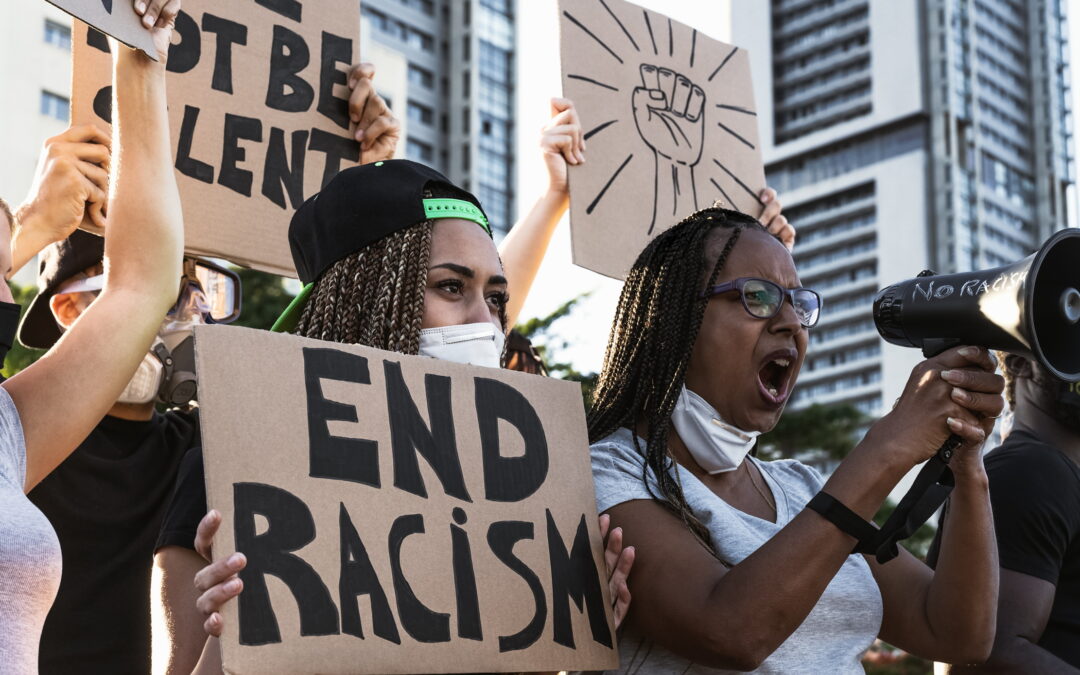
by Iliyah Maddox | Aug 1, 2025 | arts and humanities
Communication research from Texas Christian University reveals how the killing of Atatiana Jefferson in Fort Worth exposed fundamental failures in how cities listen to Black residents. Through in-depth interviews and a national survey, Dr. Ashley English, Dr. Jacqueline Lambiase and Dr. Julie O’Neil demonstrate that meaningful organizational listening requires not just hearing community voices, but implementing changes based on their input. Their findings show that without authentic engagement and accountability, municipal listening processes perpetuate rather than disrupt systemic racism.

by Iliyah Maddox | Jun 9, 2025 | arts and humanities
In our increasingly interconnected world, sharing knowledge freely and fairly is crucial for ongoing development and progress. Increasing the overall size of our store of knowledge is important in dealing with the challenges we face in the modern world, but determining who can access and add to that knowledge is a key question. Prestigious academic journals and global conferences aim to help disseminate our most important discoveries and innovations, but researchers do not have equal access to such resources to promote their ideas and consequently not all voices are heard equally. Scholars from low- and middle-income countries continue to face invisible walls that limit their participation in the global exchange of ideas. This systemic imbalance is the focus of a deeply insightful study by Dr. Angel Ford of the University at Albany and Dr. Daniel Alemneh of the University of North Texas, who call for a more just and healthier scholarly communication system.

by Iliyah Maddox | May 12, 2025 | arts and humanities
Research from Dr Aikaterini-Christina Koula at Manchester Metropolitan University reveals how legal systems are increasingly being weaponized to silence human rights defenders, particularly in Europe. Her work introduces a taxonomy of violations perpetrated through the legal system and demonstrates how these tactics deviate from human rights standards, offering valuable insights for academics, practitioners, and defenders alike.

by Iliyah Maddox | May 6, 2025 | arts and humanities
Research from Professor Germaine A. Hoston at the University of California, San Diego, reveals how traditional Chinese philosophical idealism influenced the development of Chinese Marxism. Her findings demonstrate that despite their rejection of China’s feudal past, key Chinese Marxist theorists like Li Dazhao and Mao Zedong incorporated elements of Neo-Confucian idealism into their revolutionary philosophy. This “sinification” of Marxism drew particularly on concepts of consciousness, will, and the unity of knowledge and action from traditional Chinese thought, creating a uniquely Chinese revolutionary philosophy that challenged Soviet economic determinism.

by Iliyah Maddox | Apr 30, 2025 | arts and humanities
Research from Professors Tristan Nighswander and Ariel Roddy at Northern Arizona University examines the effects of pre-employment training on employment outcomes for previously incarcerated individuals through the lens of two economic theories. Their findings reveal that while training significantly improves employment outcomes for the general population, it shows no meaningful benefit for those with incarceration histories. Even more surprisingly, high-ability individuals (defined through scores on an aptitude test called the Armed Forces Qualification Test, or the AFQT) with past incarceration may actually experience negative employment effects. This highlights the complex challenges of societal re-entry.

by Iliyah Maddox | Apr 23, 2025 | arts and humanities, social and behavioural sciences
A recent paper from Professor William Gardner at Texas Tech University and Professor Kelly Davis McCauley at West Texas A&M University challenges a critique that characterized authentic leadership theory as “wrong” and “perilous.” Their analysis demonstrates how misrepresentations of the theory can undermine valuable leadership approaches, while highlighting the empirical support and practical benefits of leaders striving for authenticity in organizational settings.