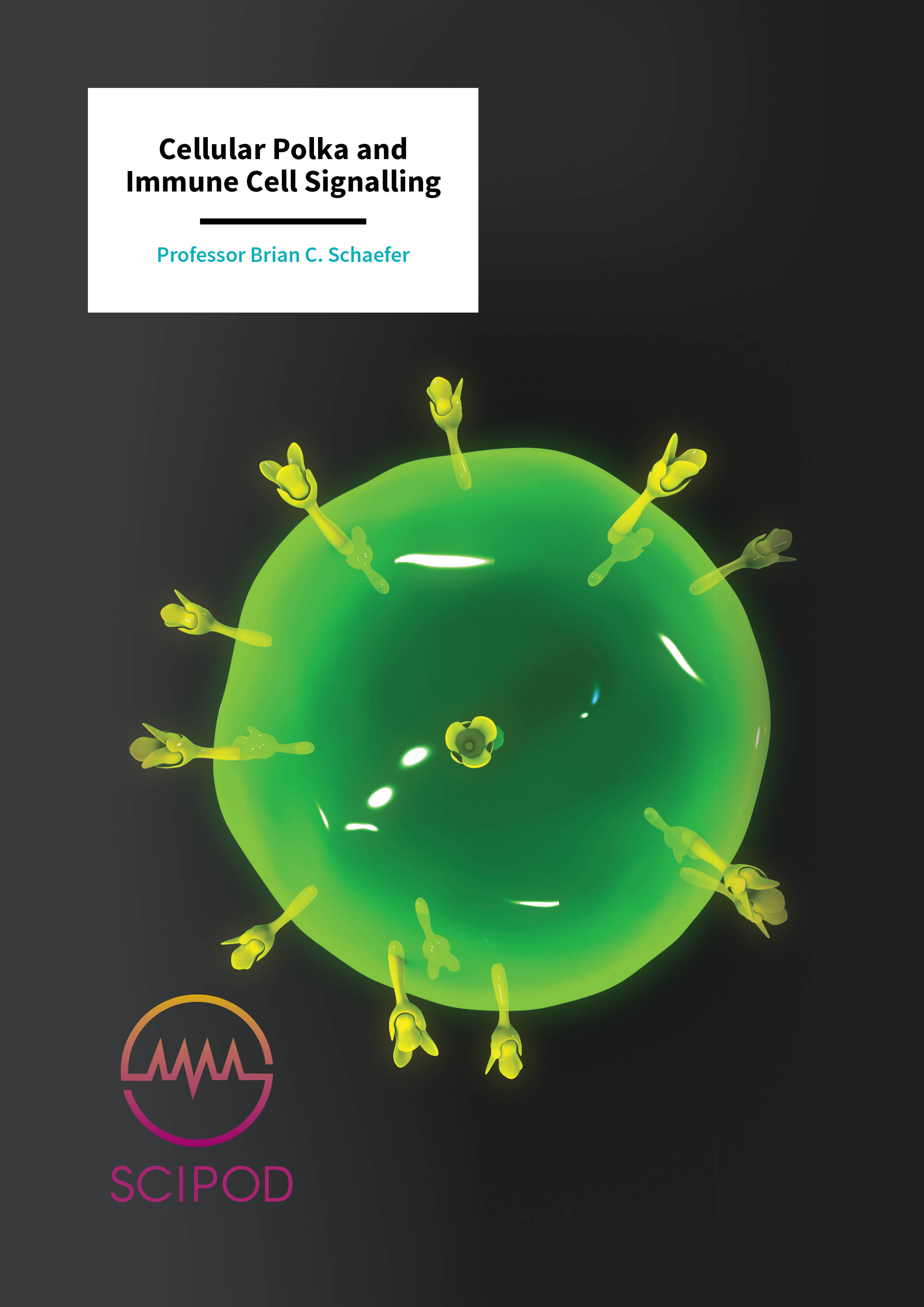
Cellular Polka and Immune Cell Signalling – Professor Brian C. Schaefer, Uniformed Services University of the Health Sciences
Jun 8, 2018biology, health and medicine
Immunology remains an important branch of medical and biological sciences, providing us with protection against infection and disease. Professor Brian Schaefer of the Uniformed Services University, Bethesda, has dedicated his research to elucidating the molecular mechanisms of immune cell signalling, with the hope of discovering potential therapeutic targets for immunological drugs – to ultimately treat human diseases including autoimmunity, graft rejection and cancers.
You may also like …

Dr. Daniel Kroeger | Sleeping More Than Ever Before: The Surprising Science of Extra Sleep and Anxiety
For centuries, sleep has remained one of humanity’s greatest biological mysteries. We spend roughly a third of our lives doing it, yet scientists are still trying to fully understand why the brain insists upon sleep. It seems clear that sleep restores the body, sharpens memory, regulates emotions, and keeps countless internal systems in balance. But one major problem has always complicated sleep research: most experiments focus on what happens when sleep is taken away. That approach has taught researchers a great deal. Sleep deprivation has been linked to poor concentration, weakened immune function, emotional instability, and a long list of health problems. Yet asking what happens when sleep is removed only tells part of the story. It is a little like studying hunger by starving people without ever exploring what happens when they are exceptionally well fed.
Prof. Megan Lancaster | The Hidden Signals of the Heart: How Genetics Is Transforming the Fight Against Sudden Cardiac Death
The human heart beats with a rhythm so steady that most of us rarely stop to consider it. Each pulse carries oxygen, sustains life, and quietly reflects the intricate biological systems that keep us alive. However, this familiar rhythm requires a delicate electrical balance. When that balance is disturbed, the consequences can be sudden and severe. Among the most striking examples is Long QT syndrome, a condition that can lurk silently until it triggers a dangerous arrhythmia or even sudden cardiac death.
Prof. Jullie Pan | The Brain’s Hidden Chemistry: What the Hippocampus Reveals About Memory, Energy, and Disease
The human brain is often described as one of the most complex objects in the known universe. Yet even within this astonishing organ, a small curved structure deep in the temporal lobe has drawn extraordinary scientific attention for decades. This structure, the hippocampus, plays a central role in memory formation, learning, emotional processing, and spatial navigation. It is also one of the brain regions most vulnerable to disease.
The Translational Asian Age-related Macular Degeneration Program Phase 2 (TAAP-2): Reimagining the Future of Vision Care
Age-related macular degeneration, often abbreviated as AMD, is one of the leading causes of vision loss among older adults worldwide. In Asia, where populations are ageing rapidly, its impact is particularly profound. For many, the disease quietly erodes central vision, making everyday activities such as reading, driving, and recognising faces increasingly difficult. Against this backdrop, the Translational Asian Age-related Macular Degeneration Programme, or TAAP for short, has emerged as a bold and ambitious effort to confront the disease head-on. Now in its second phase, TAAP-2 represents a significant evolution in both scientific scope and clinical ambition.
Professor Saji George | When “Safe” Isn’t Safe Enough: What Hidden Fungal Toxins in Cannabis Could Mean for Public Health
Cannabis legalization in Canada was meant to bring transparency, consistency, and safety to a rapidly growing industry. Products sold through regulated channels are tested, packaged, and monitored under strict federal rules. For many consumers, especially medical patients, that regulatory seal offers reassurance that the product they are using has been carefully vetted for health risks. But new research at McGill University suggests that potentially harmful fungal toxins can persist in cannabis products even after they undergo standard decontamination processes and meet existing regulatory thresholds. Their findings raise important questions about whether current definitions of cannabis safety are sufficient to protect consumers, particularly those in higher-risk groups.
Harsanti Morley – Robert Morley | Reading Ancient Pollen to Reconstruct a Lost World in Java
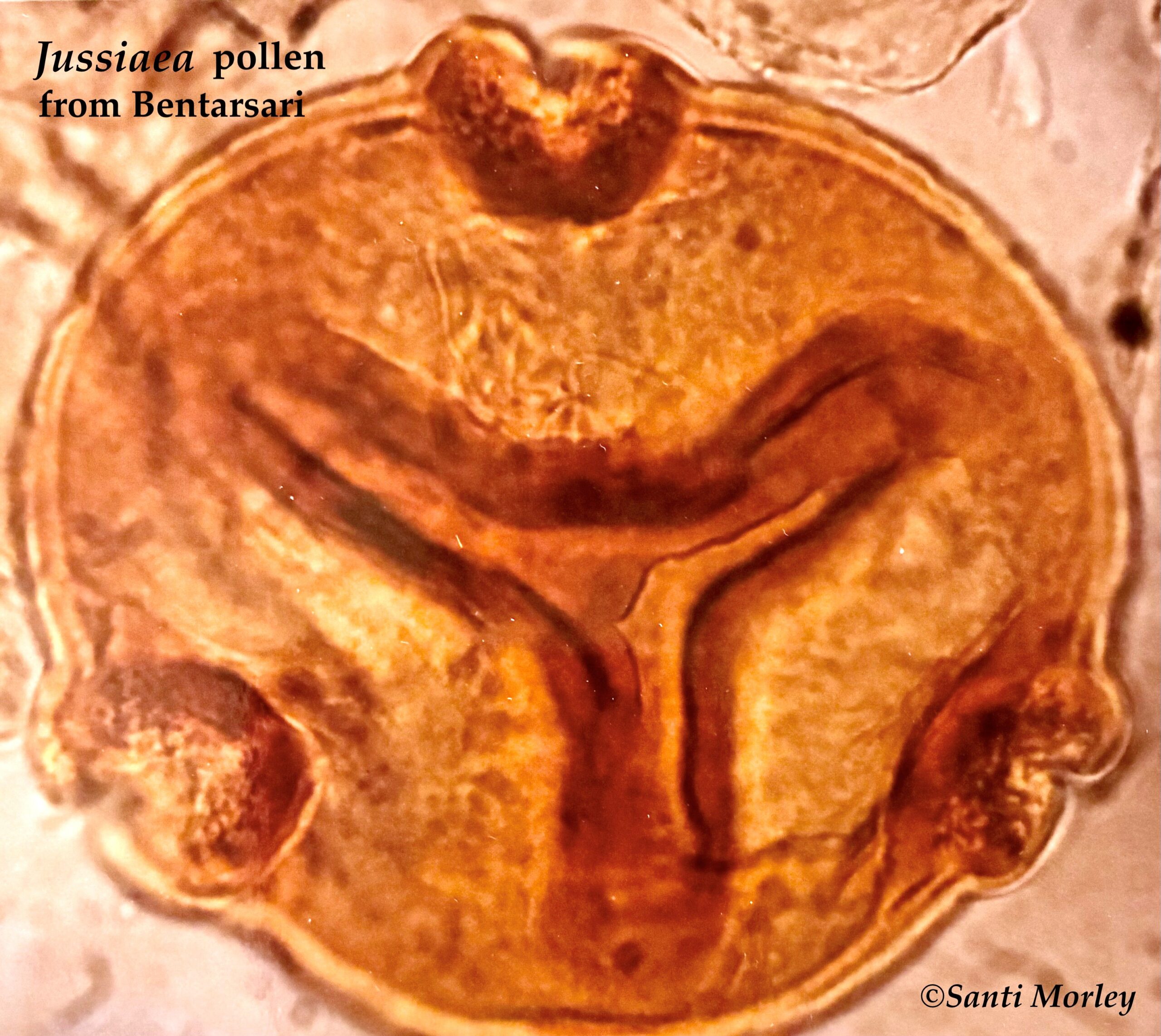
More than a million years ago, the island of Java looked very different from the busy, densely populated place we know today. Vast mangrove forests spread along muddy coastlines. Freshwater swamps stretched inland. Grasslands burned during dry seasons, while volcanic mountains rose in the distance beneath shifting tropical skies. Hidden within these ancient landscapes were animals that no longer exist and environments that shaped some of the earliest chapters of human history in Southeast Asia. A recent study by Harsanti Morley of Palynova Ltd and Robert Morley, who is a research associate at Royal Botanic Gardens, Kew, has opened an extraordinary window into that vanished world. By examining microscopic grains of fossil pollen and spores preserved in ancient rocks from Central Java, the researchers reconstructed ecosystems that existed during the early Pleistocene, a period beginning more than two million years ago. Their work reveals what the landscape looked like, and also how climate, sea levels, vegetation, and wildlife changed through time.
Prof. Alex Vitkin | Seeing the Invisible: How Polarized Light Contributes to Our Understanding and Detection of Cancer
Light is something we encounter every day, so familiar that it rarely inspires a second thought. Yet beneath its apparent simplicity lies a remarkable complexity. Light can carry information in its brightness and color, but also in its polarization and phase, subtle properties that describe how its waves oscillate and interact. For decades, these hidden dimensions of light have remained largely untapped in medicine. Now, a growing body of research is beginning to reveal their extraordinary potential.
Dr. Samantha Zwicker | The Secret Life of the Margay in Peru’s Rainforest
Deep in the Amazon rainforest of southeastern Peru, one of the world’s most elusive wild cats slips silently through the trees. Smaller than a jaguar and far less famous than a tiger, the margay is a master of the canopy, moving through tangled branches with extraordinary agility. For decades, scientists have struggled to understand this mysterious feline because it is rarely seen, mostly active at night, and equally comfortable on the ground and high above it. Now, a new study conducted by Dr. Samantha Zwicker of Hoja Nueva, a conservation nonprofit rooted in Madre de Dios, Peru, and colleagues, is shedding light on the hidden world of the margay in the Madre de Dios region of Peru. By combining ground cameras with lower-canopy cameras placed at natural margay choke points, the team captured both sides of cats moving up and down trees – a practical, lower-cost alternative to labor-intensive upper-canopy surveys.
Dr. Manreet Bhullar | Invisible Hazards: How Water Shapes the Safety of Hydroponic Food
At first glance, hydroponic farming seems like the future made real. Rows of leafy greens grow indoors, roots suspended in carefully balanced nutrient solutions, untouched by soil and shielded from many of the uncertainties of outdoor agriculture. This method promises efficiency, precision, and sustainability. It uses far less water than traditional farming and produces food in tightly controlled environments. Yet beneath this clean and modern image lies a quieter story about risk, one that flows through the very water that sustains these crops.
Prof. Dr. Christopher Gerner | Colitis ulcerosa und die verborgene Logik chronischer Erkrankungen
Colitis ulcerosa, oft als UC bezeichnet, ist eine chronisch-entzündliche Erkrankung des Dickdarms, die weltweit immer häufiger auftritt, auch bei Jugendlichen und jungen Erwachsenen. Für viele Patientinnen und Patienten beginnt sie mit subtilen Warnzeichen wie Bauchbeschwerden, Durchfall, Müdigkeit oder Spuren von Blut im Stuhl. Im Laufe der Zeit können sich diese Symptome zu schmerzhaften und beängstigenden Schüben entwickeln, die Ausbildung, Karriere, Familienleben und das emotionale Wohlbefinden beeinträchtigen. Obwohl die moderne Medizin bemerkenswert wirksam darin geworden ist, diese akuten Krankheitsepisoden zu kontrollieren, bleibt UC hartnäckig bestehen. Bei den meisten Betroffenen kehrt die Erkrankung nach Phasen scheinbarer Erholung zurück, manchmal ohne einen offensichtlichen äußeren Auslöser.