Supernova-accelerated Electrons to Dark Matter – Professor Dr Uli Klein, University of Bonn

Aug 10, 2018physical sciences

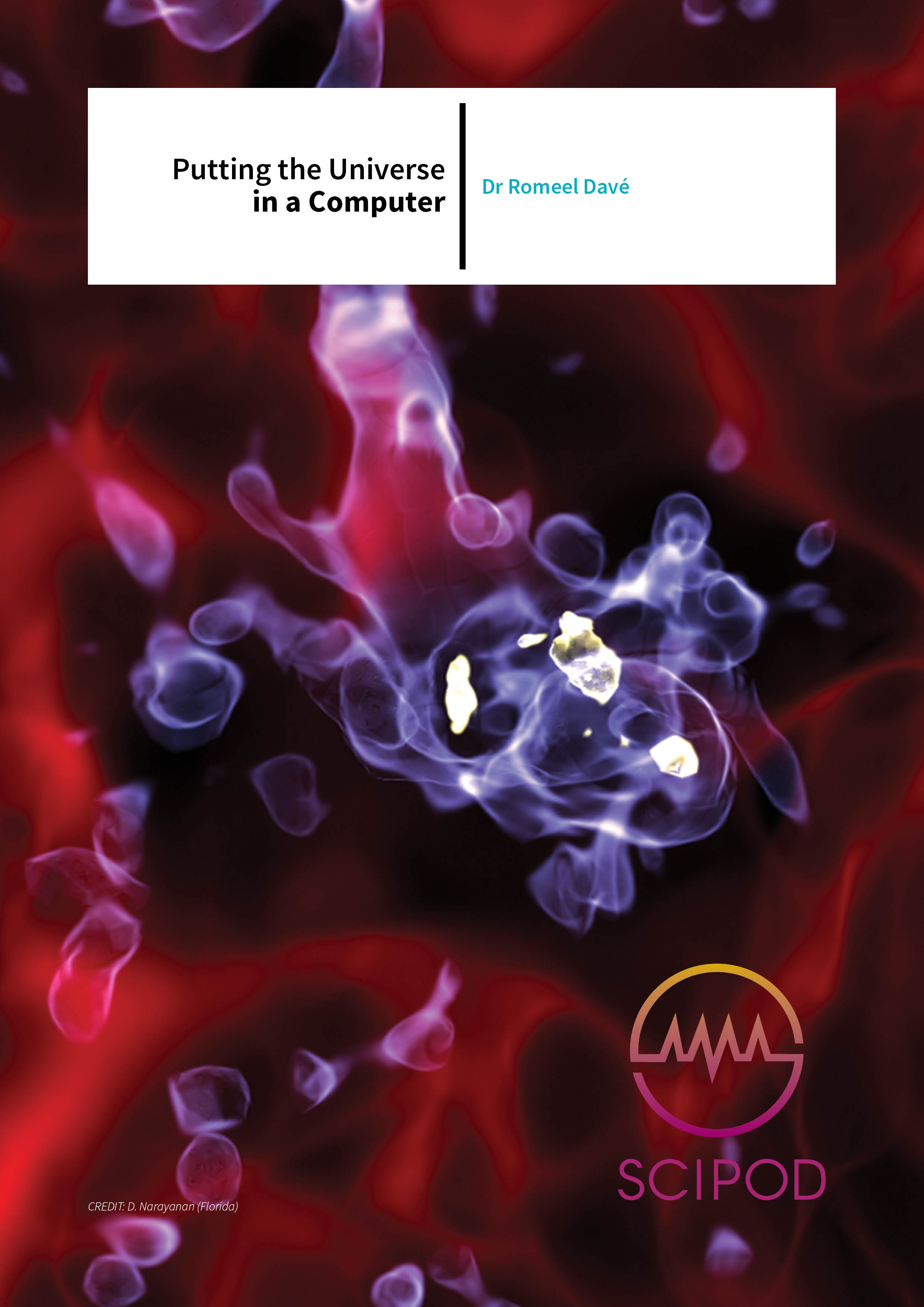
Considering we didn’t know of their existence just a century ago, our current knowledge of the structures and dynamics of galaxies is extraordinarily impressive. Among those who have enhanced our understanding of these building blocks of the Universe is Dr Uli Klein, a former researcher at the University of Bonn who spent 45 years as a radio astronomer. Now retired, Dr Klein is dedicated to sharing his extensive knowledge with students of astronomy and astrophysics, and with the wider public.

[lbg_audio2_html5 settings_id=’104′]

You may also like …
Prof. Jean-Sébastien Delisle – Dr Mélanie Dieudé | The Medicine Is Ready. Is the Health System?

A medical breakthrough is only truly a breakthrough if it can reach the person who needs it. That simple idea sits at the heart of a rapidly growing challenge in cell therapy, gene therapy and regenerative medicine. These treatments are beginning to change what doctors can offer people with serious cancers, rare genetic conditions and other diseases once considered extraordinarily difficult to treat. Some therapies can reprogram a patient’s own cells to attack cancer. Others aim to repair or replace faulty biological instructions. Their promise can sound futuristic, yet the central problem is increasingly practical: how do we turn remarkable science into care that is affordable, timely and available to everyone who could benefit?

Prof. Dr. Jörg Meyer | When Greener Plastic Sees the Light

Most of us rarely wonder what a bicycle headlamp, ceiling light or LED lens is made from. We notice whether it shines brightly, survives heat and weather, and keeps working for years. Yet hidden inside many lighting products are transparent plastics whose environmental credentials are less attractive than their optical performance. Common materials such as polycarbonate and polymethyl methacrylate are generally fossil based and resist degradation. Replacing them involves more than just choosing a greener plastic. A material that guides light must remain clear, strong, dimensionally stable and reliable while being exposed to the destructive forces of heat and light.

Dr. Gary Blau – Dr. Kyle Stephens | The Hidden Costs of the Digital Workplace: Why Employee Deviant Work Behaviour Needs an Additional Lens

The work of Dr. Gary Blau and Dr. Kyle Stephens of Temple University, Philadelphia, Pennsylvania, USA asks an important question that is becoming increasingly relevant around the world. If the workplace has fundamentally changed, shouldn’t the way we measure employee deviant work behaviour change too? Their research argues the answer is yes because the consequences reach far beyond academic debate. Traditional work behaviour deviance examples include: someone deliberately arrives late, spending long coffee breaks chatting with colleagues, or working more slowly than usual. Others are spreading rumours, bullying coworkers, or damaging company property. These are the kinds of in-person, on-site deviant behaviours researchers have investigated, that is, why employees sometimes act against the interests of employing organisations.

The Translational Asian Age-related Macular Degeneration Program Phase 2 (TAAP-2): Reimagining the Future of Vision Care

Age-related macular degeneration, often abbreviated as AMD, is one of the leading causes of vision loss among older adults worldwide. In Asia, where populations are ageing rapidly, its impact is particularly profound. For many, the disease quietly erodes central vision, making everyday activities such as reading, driving, and recognising faces increasingly difficult. Against this backdrop, the Translational Asian Age-related Macular Degeneration Programme, or TAAP for short, has emerged as a bold and ambitious effort to confront the disease head-on. Now in its second phase, TAAP-2 represents a significant evolution in both scientific scope and clinical ambition.

Karl Fleming | Balancing Safety: Rethinking Prevention and Mitigation in a Complex World

In the world of nuclear energy, safety is not a single switch that can be turned on or off. It is a layered, evolving philosophy shaped by decades of engineering, research, and experience. At the heart of this philosophy lie two deceptively simple ideas: prevention and mitigation. These terms sound straightforward, yet their meaning becomes far more intricate when applied to modern reactor systems. The paper authored by Karl Fleming of KNF Consulting Services, and colleagues, invites us to rethink what these concepts truly mean, especially as nuclear technology advances into new territory.

Prof. Alex Vitkin | Seeing the Invisible: How Polarized Light Contributes to Our Understanding and Detection of Cancer

Light is something we encounter every day, so familiar that it rarely inspires a second thought. Yet beneath its apparent simplicity lies a remarkable complexity. Light can carry information in its brightness and color, but also in its polarization and phase, subtle properties that describe how its waves oscillate and interact. For decades, these hidden dimensions of light have remained largely untapped in medicine. Now, a growing body of research is beginning to reveal their extraordinary potential.

Dr. Manreet Bhullar | Invisible Hazards: How Water Shapes the Safety of Hydroponic Food

At first glance, hydroponic farming seems like the future made real. Rows of leafy greens grow indoors, roots suspended in carefully balanced nutrient solutions, untouched by soil and shielded from many of the uncertainties of outdoor agriculture. This method promises efficiency, precision, and sustainability. It uses far less water than traditional farming and produces food in tightly controlled environments. Yet beneath this clean and modern image lies a quieter story about risk, one that flows through the very water that sustains these crops.

Lennart Kira – Dr. Jerome Noir | Listening to Moving Fluids: How Sound Waves Reveal Hidden Worlds

It would be difficult to understand the movement of water in a murky lake, or the swirling air inside a sealed chamber, without being able to see inside. For decades, scientists have relied on clever tricks to peer into such opaque environments, often adding particles or using optical techniques. But what if the fluid is too dark, too enclosed, or too delicate for those methods? A new approach, developed by researchers Lennart Kira and Dr. Jerome Noir of ETH Zurich, offers a compelling answer. It listens instead of looks.

Jenni AI: Preserving academic integrity in an age of AI-written text

As generative AI becomes ever more convincing at mimicking human text, many universities and academic institutions have come to rely on AI detection tools to police academic integrity. However, recent research has clearly demonstrated that these tools are not only ineffective, they are also amplifying systematic injustices in academia. Jenni AI presents a smarter workspace for drafting, citing, and proofreading: helping students and researchers make the best possible use of AI tools while ensuring their academic integrity is preserved.

Where Gas Meets Liquid: Rethinking Carbon Capture for a Net-Zero Future | Dr. Ali Najarnezhadmashhadi

The story of climate change is often told through numbers. Rising temperatures, increasing atmospheric carbon dioxide, and tightening timelines toward global climate targets dominate headlines. Yet behind these numbers lies a quieter, more complex story of engineering innovation. It is a story about how we might redesign industrial systems to reduce emissions without dismantling the infrastructure that modern life depends on. At the center of this effort is carbon capture, a technology that has shifted from theoretical promise to practical necessity.