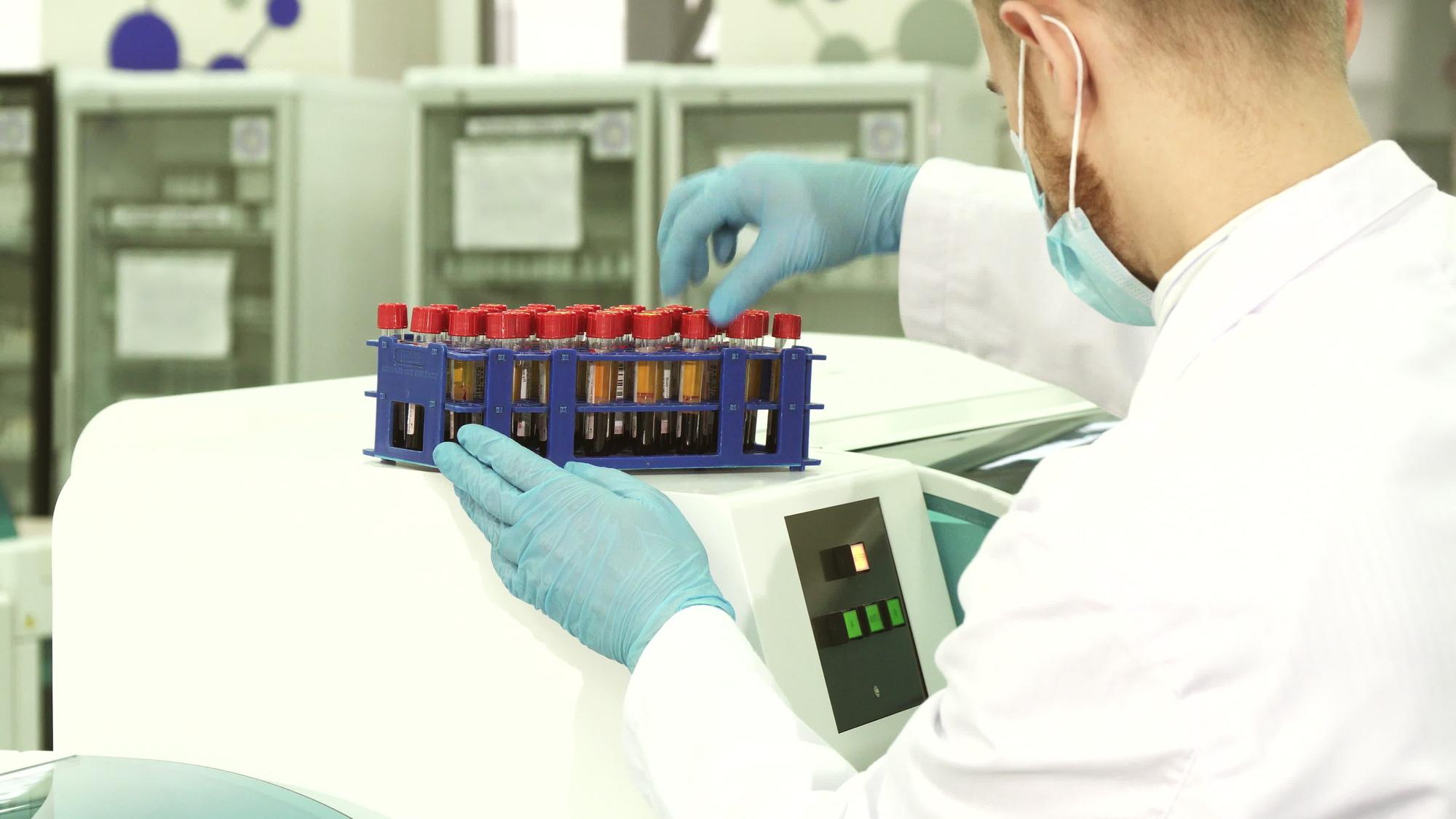
To most of us, a vial of blood looks like a simple container of biological truth, a snapshot of what was happening inside a person at the moment the needle entered their arm. Scientists can measure its proteins, read genetic material, hunt for signs of disease, and feed the resulting data into increasingly powerful analytical systems. Yet that vial has a history. How long did it sit before processing? At what temperature? What kind of tube held it? Was it spun, transported, frozen, thawed, or stored? Each step may quietly change what researchers later believe they are seeing. More
That is the central message of biospecimen science, a field that asks what happens to biological samples, also called biospecimens, between collection and analysis. In a recent commentary, Dr. Fay Betsou, Director of the Biological Resource Center at the Institut Pasteur, Paris (CRBIP), and her colleagues argue that this field should be recognized not as laboratory housekeeping, but as a scientific discipline in its own right. Their case matters because modern medical research increasingly depends on extraordinarily detailed measurements. Genomics, proteomics, metabolomics, precision medicine, and artificial intelligence can extract patterns from biological material on a scale that would once have seemed impossible. But sophisticated analysis cannot rescue information that was altered before the analysis even began.
The key idea is surprisingly intuitive: a biospecimen does not become inert the instant it leaves the body. Blood, saliva, urine, tissue, and other specimens remain biologically responsive. Their molecules and cells can continue to change after collection. RNA may degrade, protein levels may shift, metabolites may vary, and cellular functions may be affected. This means that two apparently similar biospecimens can produce different results simply because they were handled differently.
Consider what that does to the idea of a biomarker. A biomarker is a measurable biological signal that may help researchers detect disease, predict risk, monitor treatment, or understand what is happening in the body. Suppose scientists find that a particular protein is more abundant in one group of patients than another. That difference could be biologically meaningful. But it could also have been influenced by a delay before processing, a different centrifugation method, or different storage conditions. Unless researchers understand those possibilities, a promising discovery may rest partly on an artifact.
This problem reaches far beyond one experiment. Biomedical science has struggled for years with reproducibility, the ability of independent researchers to obtain compatible findings when they repeat or extend a study. Discussions about reproducibility often focus on statistics, study design, sample size, or analytical methods. Those issues are important, but the material entering the experiment deserves equal scrutiny. If the starting biospecimen has changed in poorly understood ways, even careful downstream experimental work can produce unreliable results.
Biospecimen science therefore shifts attention upstream. It asks researchers to go beyond simple documentation and investigate the impact of the conditions a biospecimen experiences. Documentation is essential, but knowing that a biospecimen spent a certain amount of time at room temperature is not the same as knowing what that interval did to the molecules being measured. The ultimate goal is to establish evidence-based limits for when a specimen remains suitable for a particular scientific purpose. This is important because a specimen can be perfectly usable for one test while being unreliable for another. Quality, in this sense, is not absolute. It depends on what researchers want the specimen to reveal.
That fit-for-purpose approach changes the way we think about biobanks. Traditionally, the work of receiving, labelling, storing, and shipping specimens can look like support activity that happens behind the scenes. Betsou and her colleagues argue for something more ambitious: biological stewardship. A biobank should do more than simply preserve material. It should help generate knowledge about how that material changes across its lifecycle, and what those changes mean for the experiments that depend on it.
Important progress has already been made. Systems have been developed to describe how specimens were handled, while reporting guidelines encourage researchers to disclose important pre-analytical details. Accreditation programs and best-practice frameworks have also strengthened the management of biological resources. These measures make biospecimens easier to compare and studies easier to interpret. But documentation alone cannot answer the most important scientific question. It can tell us what happened to a biospecimen, but not necessarily how much that event changed the biological signal researchers later measured.
This is where Dr. Fay Betsou and her co-authors draw a clear boundary between good biobanking practice and biospecimen science. The latter goes beyond recording procedures. It tests hypotheses about their effects. How long can blood remain under a particular condition before a specific measurement becomes unreliable? Does freezing alter one cellular marker more than another? Which handling differences matter for a particular laboratory assay, and which are harmless? Answering questions like these can turn vague concerns about biospecimen quality into evidence-based limits and practical criteria.
The consequences extend into some of the most heavily funded areas of medicine. Precision medicine aims to tailor care using detailed information about individual biology. Artificial intelligence can search enormous datasets for patterns invisible to human observers. Genomic and protein technologies can measure thousands of features at once. Yet all of these approaches depend on the quality of their starting material. A powerful analytical platform may detect a difference with extraordinary sensitivity without knowing whether that difference arose in the patient or during biospecimen handling.
Seen this way, investment in biospecimen science is not a rival to investment in cutting-edge technology or potential breakthrough research. It protects and validates that investment. Understanding how specimens change can reduce uncertainty, prevent wasted biospecimens, support comparisons between studies, and increase confidence that an apparent biological discovery really reflects a biological phenomenon. The authors describe this upstream work as research infrastructure, a foundation that strengthens everything built upon it.
Their call to action is therefore practical as well as conceptual. Biospecimen science needs recognition as an independent area of inquiry, with dedicated funding and systematic inclusion in translational research. Public and private laboratories can contribute by making investigations of pre-analytical effects systematic part of larger scientific projects rather than treating them as optional extras.
The larger lesson is simple. Biomedical breakthroughs require more than an advanced machine producing data. They begin earlier, with the biospecimen itself. Every tube, tissue fragment, or stored cell carries both biological information and the history of what happened to it after collection. If researchers learn to understand that history scientifically, they will increase the chances of finding genuine signals rather than accidental ones. In an age of increasingly powerful biomedical tools, paying closer attention to the humble biospecimen may be one of the smartest ways to make those tools worthy of our trust.