
AudioPod

About this episode
How our mind frames information, processes it and makes decisions is an active field of research in psychology, neurosciences and behavioural sciences. Recent research aims to quantify our cognitive processes by mapping them to mathematical theories. Professor Ariane Lambert-Mogiliansky’s work at the Paris School of Economics looks at how we can link cognitive processes, such as learning and decision-making, to the mathematics of quantum mechanics. She establishes and tests a quantum version of the persuasion problem, looking at how much one can alter a person’s cognitive state and orient their decisions through the smart use of questions and information. This research follows the steps of Niels Bohr, founding father of Quantum Mechanics, who wrote about essential similarities between Quantum Mechanics and the functioning of the mind.
Original Article Reference
This SciPod is a summary of the papers ‘Targeting in quantum persuasion problem’, doi.org/10.1016/j.jmateco.2018.04.005, and ‘Phishing for (Quantum-Like) Phools—Theory and Experimental Evidence’, https://doi.org/10.3390/sym13020162.
This work is licensed under a Creative Commons Attribution 4.0 International License. 
What does this mean?
Share: You can copy and redistribute the material in any medium or format
Adapt: You can change, and build upon the material for any purpose, even commercially.
Credit: You must give appropriate credit, provide a link to the license, and indicate if changes were made.
Increase the impact of your research!
More episodes

Dr Katrina Schlunke | Bringing Dead Zoos to Life: Caring for Extinct Animals and Living Cultures
Step into a natural history museum, sometimes called a ‘dead zoo’, and you will find yourself surrounded by silence....

Dr. Rasha Bayoumi | Decolonizing Global Collaboration: Building Equitable Science Diplomacy
Science diplomacy, meaning the use of scientific collaboration to strengthen international relations and address...

Professor Michael Saward | How Art Exhibitions Offer New Ways to Understand Political Ideas
Professor Michael Saward from the University of Warwick examines how Tate Liverpool’s Democracies exhibition...

Lighting the Path: How the GlioLighT Consortium Is Exploring New Ways to Treat Brain Tumours
Across the world, scientists are still trying to answer one of medicine’s most difficult questions: how can we safely...
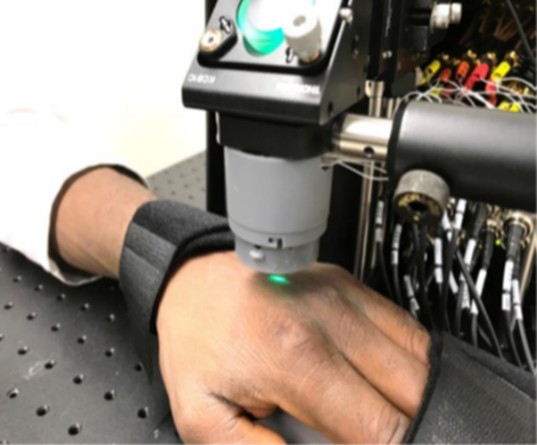
Prof. Vladimir Zharov | Detecting Malaria with Light and Sound Without Blood Draw Can Transform Global Health
For centuries, malaria has been one of the deadliest diseases on the planet. Nearly half of the world remains at risk...

Professor Keith Solomon – Dr. Gladys Stephenson | The Weight of Evidence: Brought Clarity to the Buzz About Pesticides and Pollinators
Modern environmental science faces a curious paradox. We have more data than ever, but less certainty. For scientists,...