A Flickering in the Darkness- Professor Gilles Gerbier, Queen’s University
Original Article Reference
https://doi.org/10.26320/SCIENTIA234
Share Episode

About this episode
This work is licensed under a Creative Commons Attribution 4.0 International License. 
What does this mean?
Share: You can copy and redistribute the material in any medium
or format
Adapt: You can change, and build upon the material for any
purpose, even commercially.
Credit: You must give appropriate credit, provide a link to the
license, and indicate if changes were made.
Related episodes

Prof. Roberto Sussman – Dr. Sebastián Nájera | Rethinking Gravity: A New Path Beyond Einstein
For more than a century, Albert Einstein’s theory of General Relativity has been our best description of gravity. It explains how planets orbit stars, how galaxies move through space, and even how black holes warp the fabric of the universe. Yet despite its extraordinary success, some of the biggest mysteries in modern physics remain unsolved. Scientists still do not know the true nature of dark matter and dark energy, the invisible ingredients believed to make up most of the cosmos.
Because of these unanswered questions, researchers around the world continue searching for new ways to understand gravity. One intriguing contribution comes from Prof. Roberto Sussman and Dr. Sebastián Nájera of the National Autonomous University of Mexico, who have proposed a new gravity theory they denote as “Schouten–Codazzi Gravity”. Their work explores whether gravity might be described by a modified set of mathematical rules that remain closely connected to Einstein’s theory while opening the door to new possibilities.
Dr Tomislav Prokopec – Marco Vecchioni | Rethinking dark matter: How quantum physics undermines long-standing constraints
So far, most attempts to model dark matter have relied on assumptions that may not capture its full behaviour, potentially undermining the constraints that astronomers thought they had already established. For the first time, Dr Tomislav Prokopec at Utrecht University, together with his former master’s student Marco Vecchioni, have developed a framework that treats dark matter as a fully quantum field – building on earlier work showing that gravitational waves in the early universe are similarly unaffected by their quantum surroundings. Their findings suggest that several widely-assumed constraints on dark matter may need to be fundamentally reconsidered.

Karl Fleming | Balancing Safety: Rethinking Prevention and Mitigation in a Complex World
In the world of nuclear energy, safety is not a single switch that can be turned on or off. It is a layered, evolving philosophy shaped by decades of engineering, research, and experience. At the heart of this philosophy lie two deceptively simple ideas: prevention and mitigation. These terms sound straightforward, yet their meaning becomes far more intricate when applied to modern reactor systems. The paper authored by Karl Fleming of KNF Consulting Services, and colleagues, invites us to rethink what these concepts truly mean, especially as nuclear technology advances into new territory.

Lennart Kira – Dr. Jerome Noir | Listening to Moving Fluids: How Sound Waves Reveal Hidden Worlds
It would be difficult to understand the movement of water in a murky lake, or the swirling air inside a sealed chamber, without being able to see inside. For decades, scientists have relied on clever tricks to peer into such opaque environments, often adding particles or using optical techniques. But what if the fluid is too dark, too enclosed, or too delicate for those methods? A new approach, developed by researchers Lennart Kira and Dr. Jerome Noir of ETH Zurich, offers a compelling answer. It listens instead of looks.
Increase the impact of your research
• Good science communication encourages everyday people to be scientifically literate so that they can analyse the integrity and legitimacy of information.
• Good science communication encourages people into STEM-related fields of study and employment.
• Good public science communication fosters a community around research that includes both members of the public, policymakers and scientists.
• In a recent survey, 75% of people suggested they would prefer to listen to an interesting story than read it.
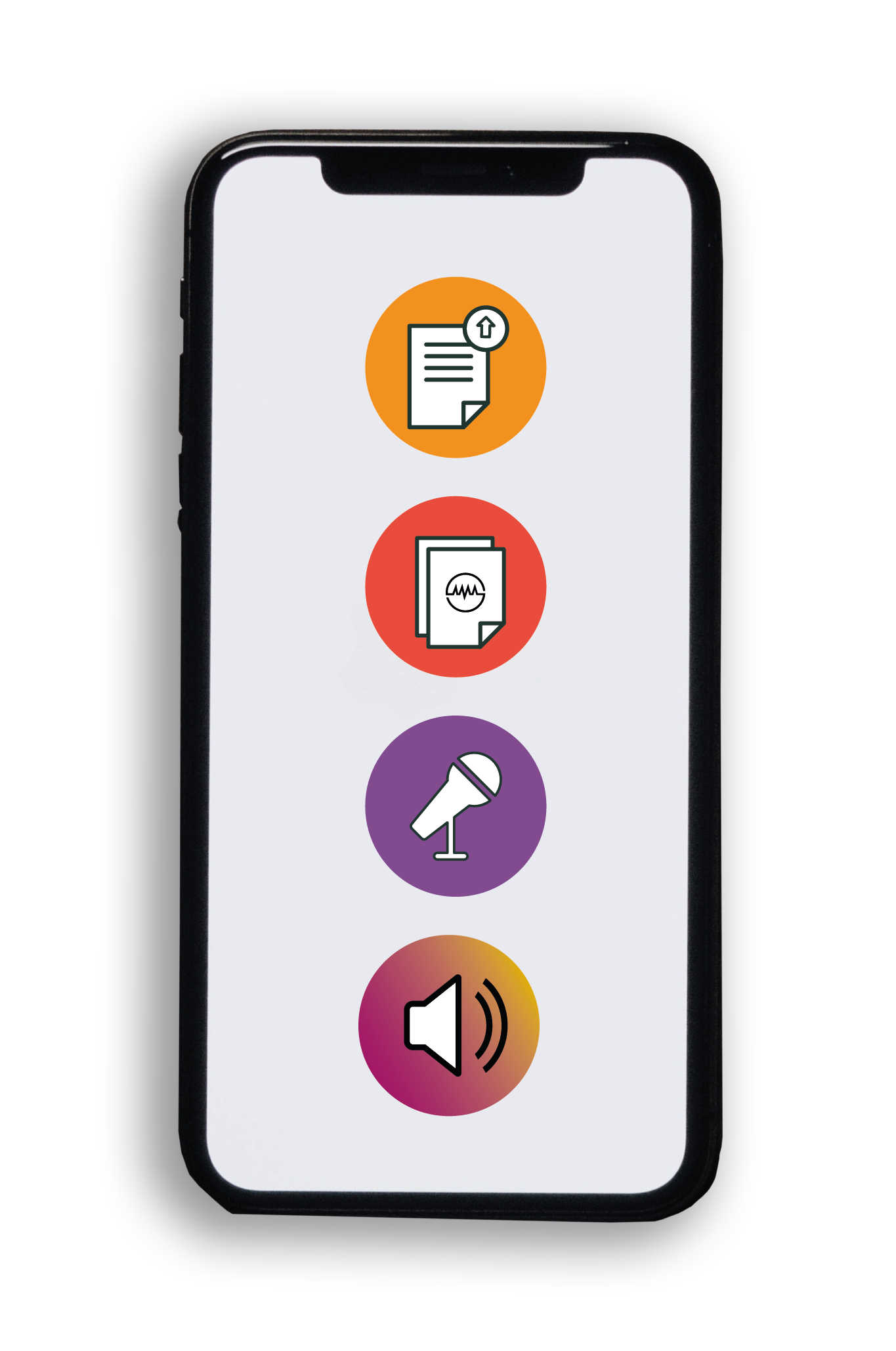
Upload your science paper
Step 2
SciPod script written
Step 3
Voice audio recorded
Step 4
SciPod published