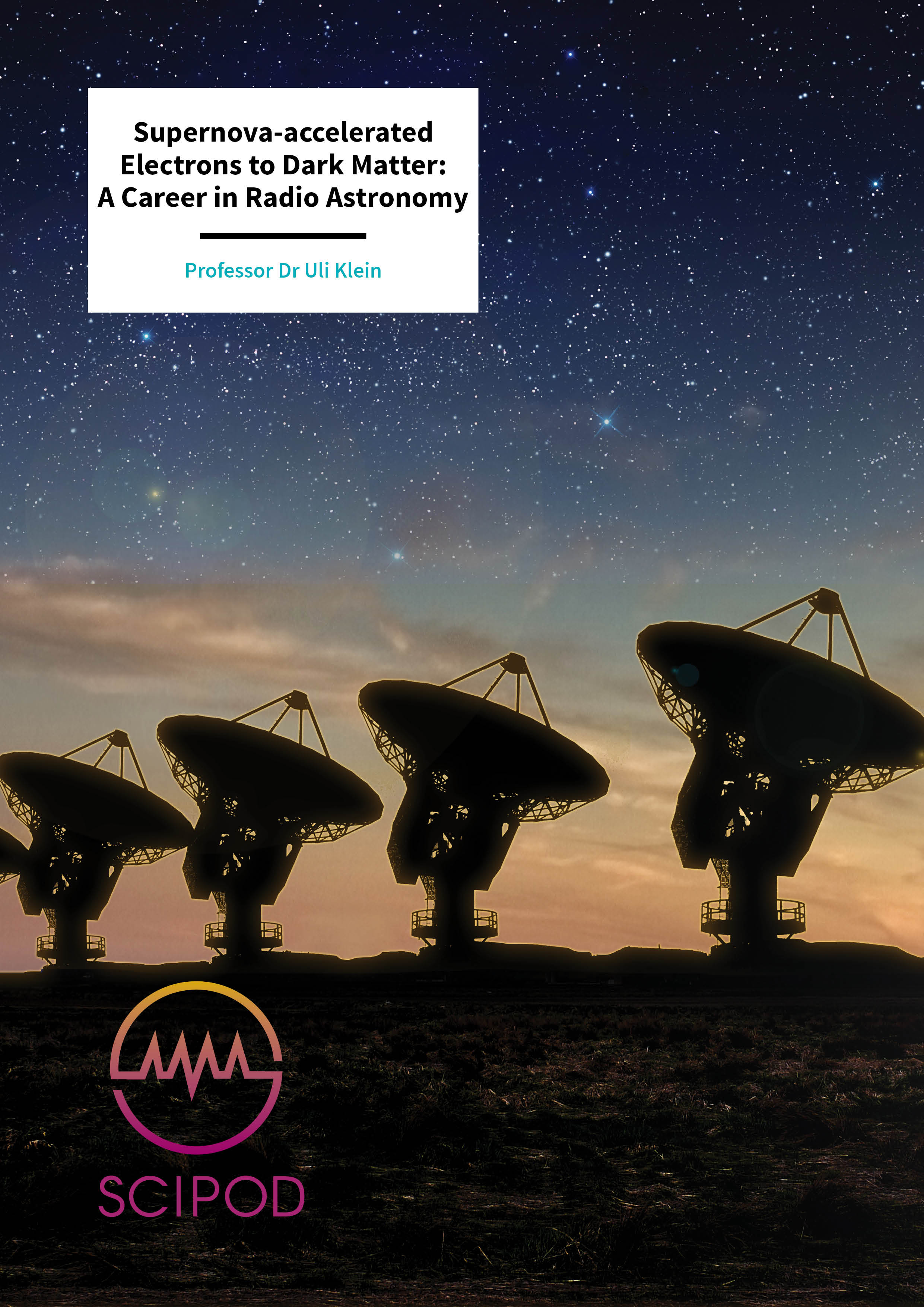
Supernova-accelerated Electrons to Dark Matter – Professor Dr Uli Klein, University of Bonn
Aug 10, 2018physical sciences
Considering we didn’t know of their existence just a century ago, our current knowledge of the structures and dynamics of galaxies is extraordinarily impressive. Among those who have enhanced our understanding of these building blocks of the Universe is Dr Uli Klein, a former researcher at the University of Bonn who spent 45 years as a radio astronomer. Now retired, Dr Klein is dedicated to sharing his extensive knowledge with students of astronomy and astrophysics, and with the wider public.
You may also like …
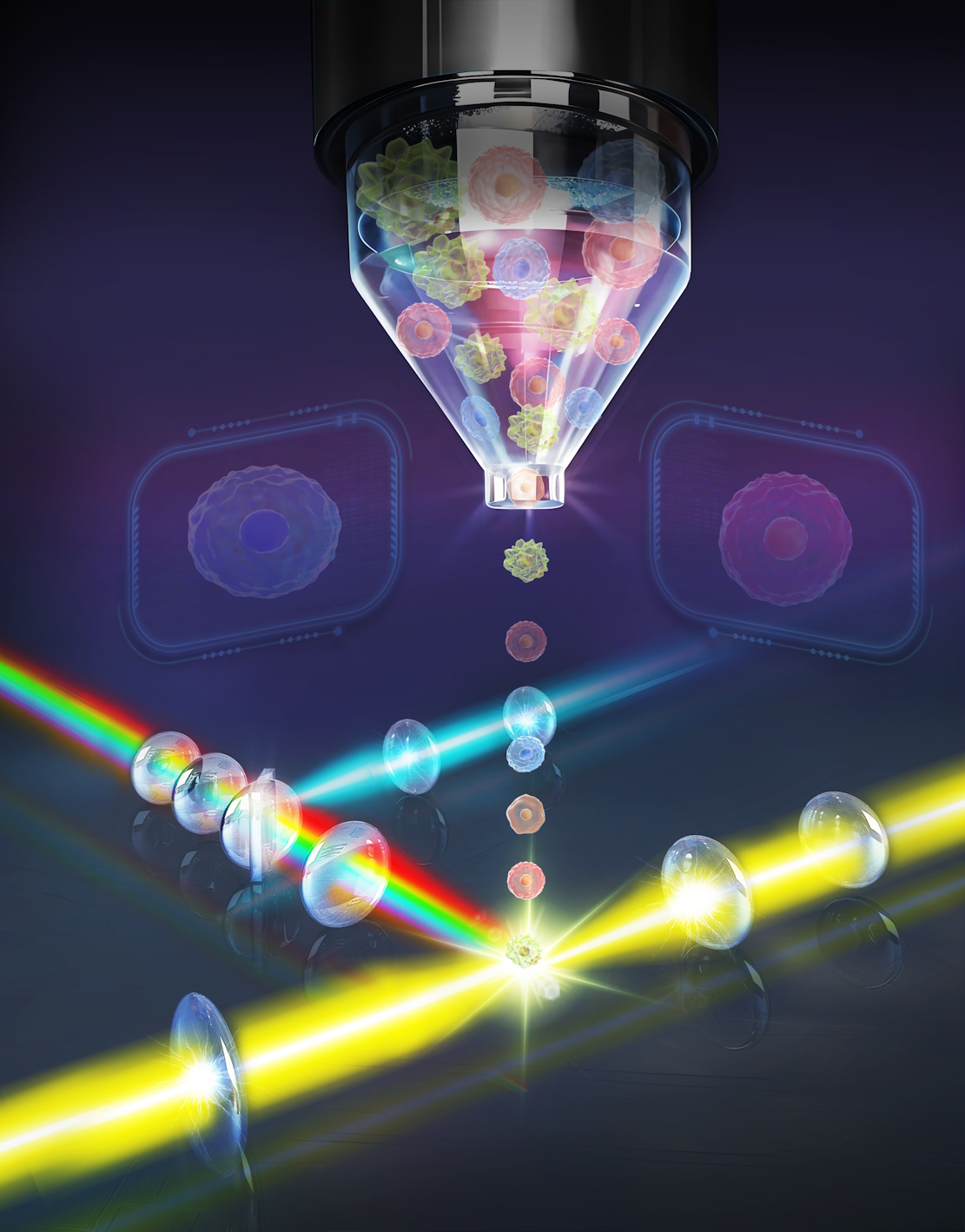
Dr. Xinyu Chen | The Cell Detectives: How Lasers and Artificial Intelligence Are Transforming Biology
Imagine searching for one unusual face in a stadium packed with thousands of people. Now imagine that every person is moving, the faces are nearly invisible, and you have only a fraction of a second to decide whom to stop. This is remarkably close to the challenge scientists face when they try to identify a particular cell among millions. Yet finding the right cells can help researchers understand disease, investigate immune responses, and discover biological differences that would otherwise remain hidden.
Prof. Elizabeth Regan | The Healthcare Revolution That Technology Alone Cannot Deliver
Imagine a patient with several health problems moving through a modern medical system. She may see a family doctor, a specialist, a hospital team, a pharmacist and perhaps a community service. Each professional may be highly skilled. Each organisation may own sophisticated software. Yet the patient can still find herself repeating the same story, carrying information between appointments, waiting for records to arrive and trying to understand who is responsible for what. The individual parts work well, but the journey doesn’t.
Dr. Pranoot Tanpaiboon | Behind Every Reliable Result: Reinventing Quality Control in the Clinical Laboratory
In a clinical laboratory, a number on a screen can shape a life. A test result may help diagnose a rare metabolic disorder, guide treatment, or reassure a family that a feared condition is absent. Before that number reaches a doctor, however, the laboratory has to answer a quieter question: can we trust it? That question is the purpose of quality control, or QC. Laboratories repeatedly test samples with known properties and examine whether their instruments are producing results that remain accurate and precise. When something begins to drift, QC can reveal the problem before unreliable patient results are released. The principle sounds straightforward. In biochemical genetics laboratories, however, the reality is anything but simple.
Dr. Yi Ding | When AI Polishes Our Words, Does It Polish Away Our Feelings?
Every day, millions of people turn to artificial intelligence for help finding the right words. A rough email can become smoother, while a quick product review becomes polished and articulate with a minimum of effort. The changes can seem harmless, and often appear very helpful in clarifying our intended message. But what if polishing our language also quietly changes the emotional signals we had originally intended to convey?
Ben de Vries | The Hidden Netherlands: Inside the Secret World of the Cold War
Every first Monday of the month, at exactly 12.00 hours, warning sirens echo across the Netherlands. For many people they are simply a routine test, a familiar sound that barely interrupts daily life. Yet those sirens are echoes from an age when the possibility of nuclear war shaped government policy, military planning, and even ordinary family life. They are reminders that beneath peaceful towns, quiet rivers, and familiar streets lies another Netherlands, one built in secrecy for a conflict that everyone hoped would never happen.
Dr. Fay Betsou | The Hidden Life of a Biospecimen: Why Better Medical Research Begins Before the Laboratory Assay
To most of us, a vial of blood looks like a simple container of biological truth, a snapshot of what was happening inside a person at the moment the needle entered their arm. Scientists can measure its proteins, read genetic material, hunt for signs of disease, and feed the resulting data into increasingly powerful analytical systems. Yet that vial has a history. How long did it sit before processing? At what temperature? What kind of tube held it? Was it spun, transported, frozen, thawed, or stored? Each step may quietly change what researchers later believe they are seeing.
Prof. Shan Lu | Inducing Polyfunctional Antibodies: A Promising Chapter in the Long Search for an HIV Vaccine
For more than four decades, HIV has challenged some of the brightest scientific minds in the world. Tremendous progress has transformed HIV from what was once almost always a fatal infection into a condition that can often be managed with modern medicines. Preventive treatments have also become increasingly effective. Yet millions of people continue to become infected every year, particularly in regions where access to healthcare remains limited. A safe, effective preventive HIV vaccine remains one of the greatest goals in global medicine because it has the potential to provide large-scale, long-lasting prevention for large numbers of high-risk populations.
Prof. Jean-Sébastien Delisle – Dr Mélanie Dieudé | The Medicine Is Ready. Is the Health System?
A medical breakthrough is only truly a breakthrough if it can reach the person who needs it. That simple idea sits at the heart of a rapidly growing challenge in cell therapy, gene therapy and regenerative medicine. These treatments are beginning to change what doctors can offer people with serious cancers, rare genetic conditions and other diseases once considered extraordinarily difficult to treat. Some therapies can reprogram a patient’s own cells to attack cancer. Others aim to repair or replace faulty biological instructions. Their promise can sound futuristic, yet the central problem is increasingly practical: how do we turn remarkable science into care that is affordable, timely and available to everyone who could benefit?
Prof. Dr. Jörg Meyer | When Greener Plastic Sees the Light
Most of us rarely wonder what a bicycle headlamp, ceiling light or LED lens is made from. We notice whether it shines brightly, survives heat and weather, and keeps working for years. Yet hidden inside many lighting products are transparent plastics whose environmental credentials are less attractive than their optical performance. Common materials such as polycarbonate and polymethyl methacrylate are generally fossil based and resist degradation. Replacing them involves more than just choosing a greener plastic. A material that guides light must remain clear, strong, dimensionally stable and reliable while being exposed to the destructive forces of heat and light.
Dr. Gary Blau – Dr. Kyle Stephens | The Hidden Costs of the Digital Workplace: Why Employee Deviant Work Behaviour Needs an Additional Lens
The work of Dr. Gary Blau and Dr. Kyle Stephens of Temple University, Philadelphia, Pennsylvania, USA asks an important question that is becoming increasingly relevant around the world. If the workplace has fundamentally changed, shouldn’t the way we measure employee deviant work behaviour change too? Their research argues the answer is yes because the consequences reach far beyond academic debate. Traditional work behaviour deviance examples include: someone deliberately arrives late, spending long coffee breaks chatting with colleagues, or working more slowly than usual. Others are spreading rumours, bullying coworkers, or damaging company property. These are the kinds of in-person, on-site deviant behaviours researchers have investigated, that is, why employees sometimes act against the interests of employing organisations.