
Providing Effective Pest Management Education Through Animations – Dr Julia Bello-Bravo
Original Article Reference
This SciPod is a summary of the paper:
doi.org/10.1564/v29_apr_02
About this episode
Integrated pest management describes effective and environmentally sensitive approaches to controlling agricultural pests, which are based on combinations of different practices. Educational information on integrated pest management is much more accessible in the developed world than in developing countries. This is due to a combination of language and technology barriers around information sharing. To ensure that reliable content related to integrated pest management systems and other educational resources can also be widely accessed by people in developing countries, researchers at Michigan State University and Purdue University have created Scientific Animations Without Borders – or SAWBO – which provides scientifically accurate animations about various important topics.
This work is licensed under a Creative Commons Attribution 4.0 International License. 
What does this mean?
Share: You can copy and redistribute the material in any medium or format
Adapt: You can change, and build upon the material for any purpose, even commercially.
Credit: You must give appropriate credit, provide a link to the license, and indicate if changes were made.
More episodes

Reimagining online safety education through the eyes of young people
In today’s world, the internet is more than a tool. It can be a place where friendships are built, identities are explored, and young people find connection. For teenagers, digital spaces are a huge component of their lives. However, the way we talk about online safety often feels like it belongs to another era, one rooted in adult fears rather than young people’s lived experiences. A project led by the Young and Resilient Research Centre at Western Sydney University, in partnership with the PROJECT ROCKIT Foundation with funding from Australia’s eSafety Commissioner, set out to bridge this disconnect. Instead of telling young people how they “should” behave online, the researchers conducted a survey of 104 young people and workshops with 31 young Australians aged 12 to 17 which asked them directly: What does online safety mean to you? What do you wish adults understood? What would your ideal online world look like? How do you want to learn about online safety?
The results were eye-opening and led to the development of a framework to reimagine how online safety education for young people is designed and delivered.
Professor Keith Solomon – Dr. Gladys Stephenson | The Weight of Evidence: Brought Clarity to the Buzz About Pesticides and Pollinators
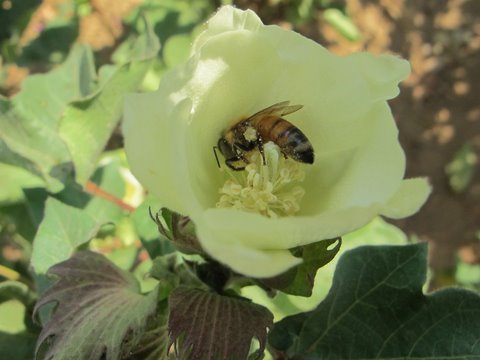
Modern environmental science faces a curious paradox. We have more data than ever, but less certainty. For scientists, policymakers, and the public alike, the sheer volume of studies, each with its own assumptions, experimental conditions, and interpretations, can be overwhelming. Which studies are trustworthy? Which deserve more weight when making decisions about environmental safety? This question has haunted environmental toxicologists who were trying to determine whether pesticides were harming pollinators such as honeybees. Some studies could show significant impacts while others may show minimal effects. Such inconsistencies can fuel the debate over insecticides like neonicotinoids and lead to public confusion. To address this, Professor Keith Solomon, an environmental toxicologist at the University of Guelph, and colleagues set out to bring structure and clarity to the field. Their goal was not to silence debate, but to create a rigorous, transparent, and quantitative framework for evaluating scientific evidence. The result was a methodology called the Quantitative Weight of Evidence, or QWoE.

Dr. Ossénatou Mamadou | Understanding turbulence in the lower atmosphere above West Africa
West Africa’s climate is constantly being shaped by interactions between the ground and the lower atmosphere, where instabilities can give rise to unpredictable turbulence. Guided by extensive weather observations, a team led by Dr. Ossénatou Mamadou at the University of Abomey-Calavi, Benin, has gained important insights into when and how these instabilities occur, and how well they can be predicted by existing theories. Their findings could help climatologists improve weather forecasts in the region and better understand how West Africa might respond to a changing climate.

Professor Chandra Waring | The Myth of the “Post-Racial” Family: What Multiracial Families Reveal About Race in America
In the United States, families that cross racial lines often attract admiration and curiosity. Such families are increasingly common, and they are seen by many as living proof that love conquers prejudice, and that the country is moving beyond its painful racial past. When a white mother cradles her brown-skinned baby, or a Black father teaches his lighter-skinned daughter to ride a bike, the image seems to embody progress and racial harmony. But as Professor Chandra Waring of the University of Massachusetts Lowell shows in her 2025 study, the story is far more complicated. Her article, titled “My Dad Is Racist as Hell: Navigating Racism, Monoracism, and White Privilege by Proxy in Multiracial Families,” reveals what really happens inside many multiracial households. Through interviews with 30 multiracial Americans, Waring reveals that love does not necessarily cancel racism. In fact, racism, and its quieter cousin, monoracism, often lives right inside these families.
Increase the impact of your research
• Good science communication helps people make informed decisions and motivates them to take appropriate and affirmative action.
• Good science communication encourages everyday people to be scientifically literate so that they can analyse the integrity and legitimacy of information.
• Good science communication encourages people into STEM-related fields of study and employment.
• Good public science communication fosters a community around research that includes both members of the public, policymakers and scientists.
• In a recent survey, 75% of people suggested they would prefer to listen to an interesting story than read it.
Step 1 Upload your science paper
Step 2 SciPod script written
Step 3 Voice audio recorded
Step 4 SciPod published