
‘Green Manure’: How Cover Crops Create Healthy Soils and Boost Crop Yields – Dr Lynn Brandenberger | Dr Joshua Massey
Original Article Reference
This SciPod is a summary of the paper:
https://doi.org/10.33548/SCIENTIA750
About this episode
In order to meet the demands of a growing human population, farmers across the globe are attempting to improve the yields and nutritional content of their crops. However, this is an especially difficult challenge, in an age where climate change is negatively impacting our agricultural systems. To address these pressing issues, Dr Lynn Brandenberger and Dr Joshua Massey of Oklahoma State University focus on the intersection of soil health and crop production. Recently, they demonstrated how cover crops can greatly improve soil health and, consequently, enhance crop yields.
This work is licensed under a Creative Commons Attribution 4.0 International License. 
What does this mean?
Share: You can copy and redistribute the material in any medium or format
Adapt: You can change, and build upon the material for any purpose, even commercially.
Credit: You must give appropriate credit, provide a link to the license, and indicate if changes were made.
More episodes
Harsanti Morley – Robert Morley | Reading Ancient Pollen to Reconstruct a Lost World in Java
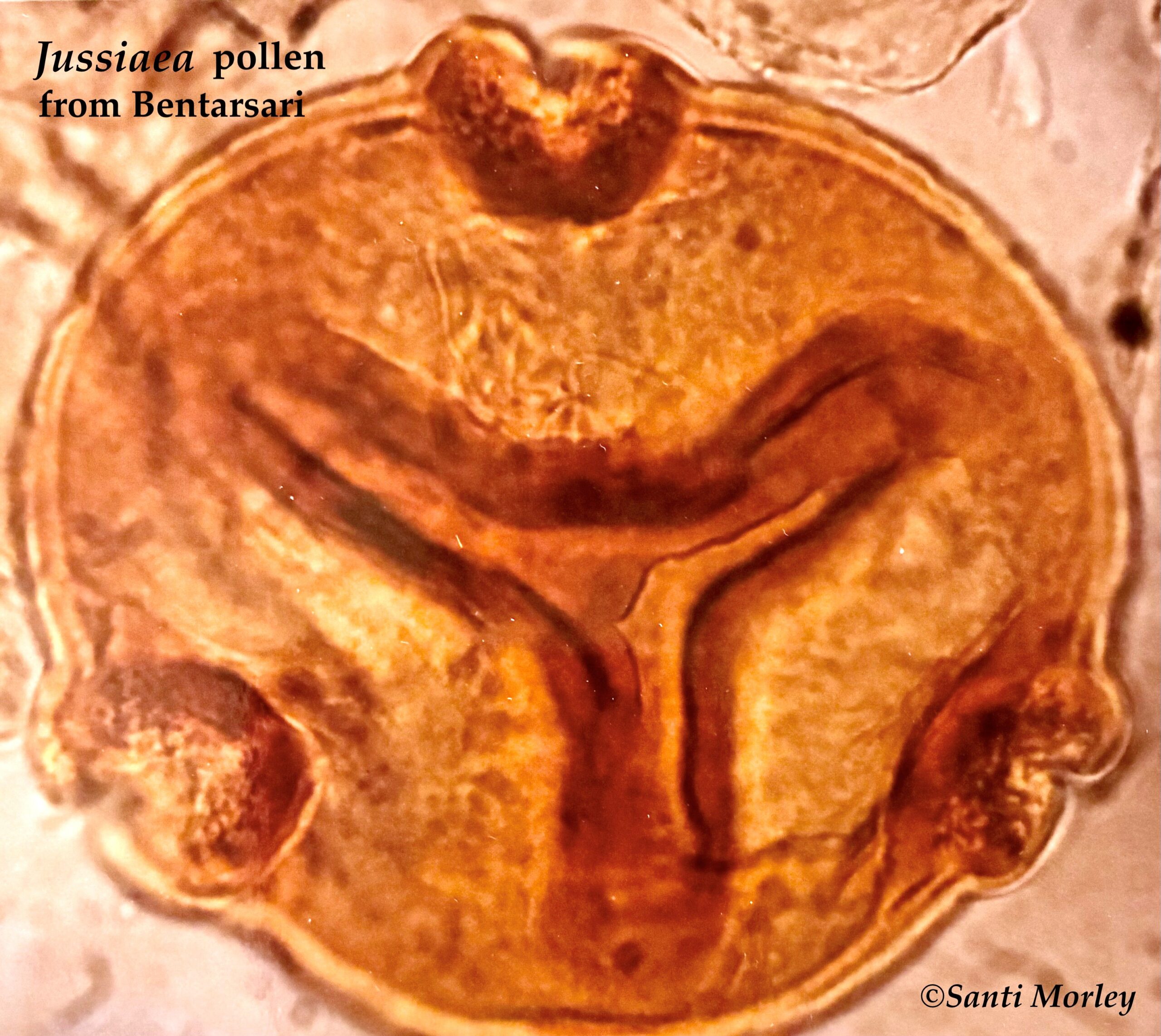
More than a million years ago, the island of Java looked very different from the busy, densely populated place we know today. Vast mangrove forests spread along muddy coastlines. Freshwater swamps stretched inland. Grasslands burned during dry seasons, while volcanic mountains rose in the distance beneath shifting tropical skies. Hidden within these ancient landscapes were animals that no longer exist and environments that shaped some of the earliest chapters of human history in Southeast Asia. A recent study by Harsanti Morley of Palynova Ltd and Robert Morley, who is a research associate at Royal Botanic Gardens, Kew, has opened an extraordinary window into that vanished world. By examining microscopic grains of fossil pollen and spores preserved in ancient rocks from Central Java, the researchers reconstructed ecosystems that existed during the early Pleistocene, a period beginning more than two million years ago. Their work reveals what the landscape looked like, and also how climate, sea levels, vegetation, and wildlife changed through time.
Dr. Samantha Zwicker | The Secret Life of the Margay in Peru’s Rainforest
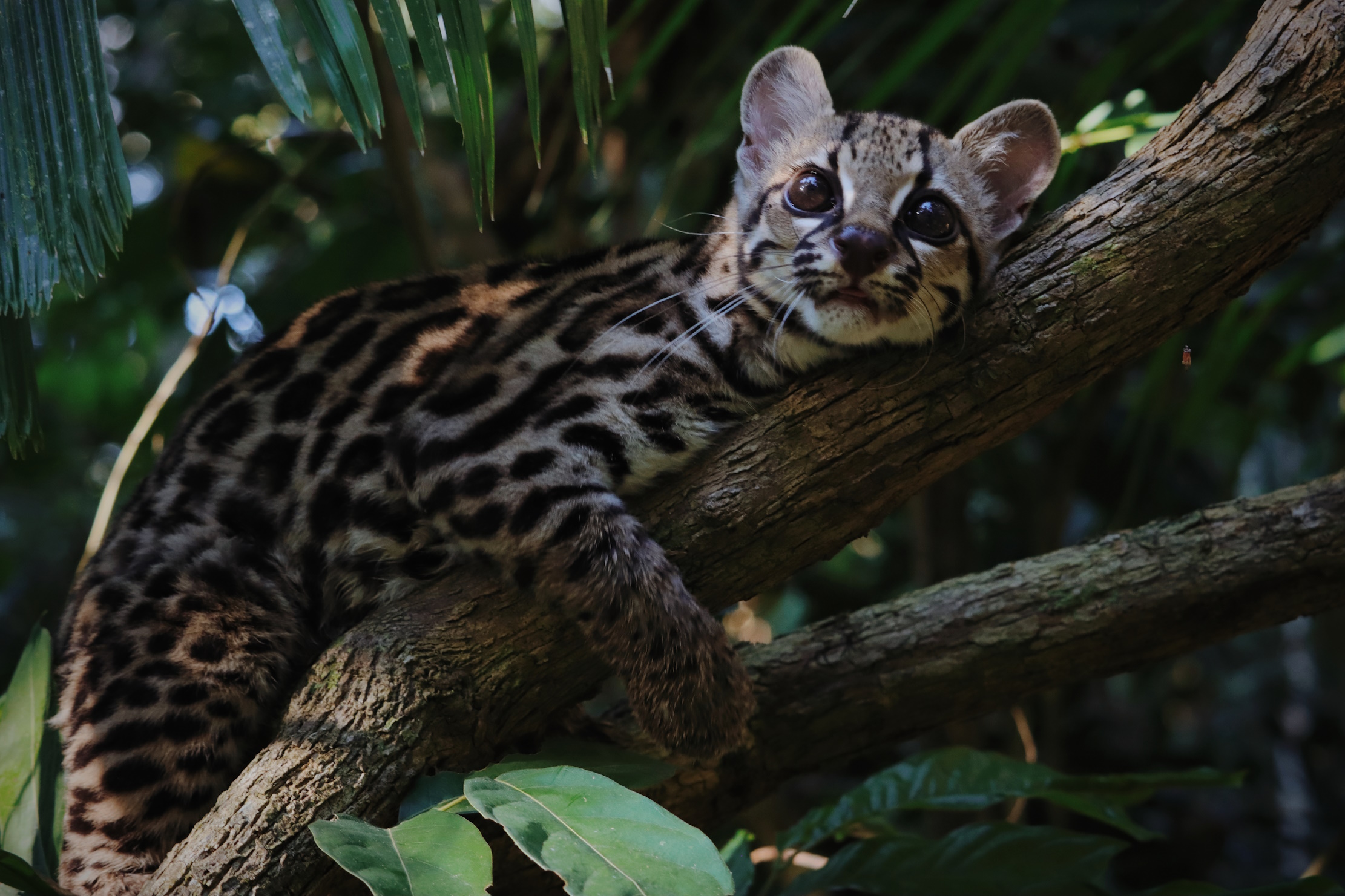
Deep in the Amazon rainforest of southeastern Peru, one of the world’s most elusive wild cats slips silently through the trees. Smaller than a jaguar and far less famous than a tiger, the margay is a master of the canopy, moving through tangled branches with extraordinary agility. For decades, scientists have struggled to understand this mysterious feline because it is rarely seen, mostly active at night, and equally comfortable on the ground and high above it. Now, a new study conducted by Dr. Samantha Zwicker of Hoja Nueva, a conservation nonprofit rooted in Madre de Dios, Peru, and colleagues, is shedding light on the hidden world of the margay in the Madre de Dios region of Peru. By combining ground cameras with lower-canopy cameras placed at natural margay choke points, the team captured both sides of cats moving up and down trees – a practical, lower-cost alternative to labor-intensive upper-canopy surveys.

Prof. José Ignacio Nazif-Muñoz | Quand la chaleur rencontre la route: comment la hausse des températures modifie la sécurité routière en milieu urbain
Lors d’une journée d’été étouffante, la plupart d’entre nous remarquent les effets évidents de la chaleur. Nous nous sentons plus lents, plus irritables et impatients d’échapper au soleil. Ce qui est moins visible, c’est la manière dont ces mêmes conditions modifient discrètement notre comportement au volant. Une étude récente dirigée par le professeur José Ignacio Nazif-Muñoz de l’Université de Sherbrooke, en collaboration avec le professeur Jose Guillermo Cedeño Laurent de l’Université Rutgers, explore ce lien caché, révélant comment les vagues de chaleur et les modèles thermiques urbains influencent la sécurité routière dans cinq villes du Québec. Les résultats rappellent opportunément que le changement climatique n’est pas seulement un enjeu environnemental, mais aussi une question de sécurité publique qui touche la vie quotidienne de manière inattendue.
Prof. José Ignacio Nazif-Muñoz | When Heat Meets the Road: How Rising Temperatures Are Changing Urban Traffic Safety
On a sweltering summer day, most of us notice the obvious effects of heat. We feel slower, more irritable, and eager to escape the sun. What is less obvious is how these same conditions quietly reshape our behavior behind the wheel. A recent study led by Prof. José Ignacio Nazif-Muñoz of the University of Sherbrooke in collaboration with Prof. Jose Guillermo Cedeño Laurent of Rutgers University explores this hidden connection, revealing how heatwaves and urban heat patterns influence road safety across five cities in Québec. The findings offer a timely reminder that climate change is not only an environmental issue but also a public safety concern that touches everyday life in unexpected ways.
Increase the impact of your research
• Good science communication helps people make informed decisions and motivates them to take appropriate and affirmative action.
• Good science communication encourages everyday people to be scientifically literate so that they can analyse the integrity and legitimacy of information.
• Good science communication encourages people into STEM-related fields of study and employment.
• Good public science communication fosters a community around research that includes both members of the public, policymakers and scientists.
• In a recent survey, 75% of people suggested they would prefer to listen to an interesting story than read it.

Step 1 Upload your science paper
Step 2 SciPod script written
Step 3 Voice audio recorded
Step 4 SciPod published