by Iliyah Maddox | Apr 9, 2025 | biology, health and medicine
In recent years, plant-based diets have gained significant traction, not just among vegetarians and vegans but also among individuals looking to improve their health and reduce their environmental impact. Increasing public awareness of the role of animal food production in driving climate change, along with the potential health risks of consuming large amounts of animal foods has powered this phenomenon. However, one of the ongoing debates in nutrition revolves around protein, a crucial nutritional component, and the nutritional quality of various protein sources. Can plant-based protein sources provide sufficient, high-quality protein compared with animal-based protein sources in the context of a dietary pattern? The question relates to consumer awareness and education, as not all plant proteins are created equal, and replacing meat, diary, and other animal proteins with just one or two plant protein sources may not provide everything we need nutritionally. Rather, a mix of plant protein sources may be required as an adequate replacement for high quality animal protein. As consumers increasingly replace animal proteins with plant proteins, potentially without awareness of these issues, is the overall quality of the protein they are consuming decreasing? Dr. Christopher Marinangeli of Protein Industries Canada and his colleagues set out to answer this question in their research on the effects of increasing plant protein intake on protein quality and nutrient consumption among U.S. adults.
by Iliyah Maddox | Jan 20, 2025 | biology
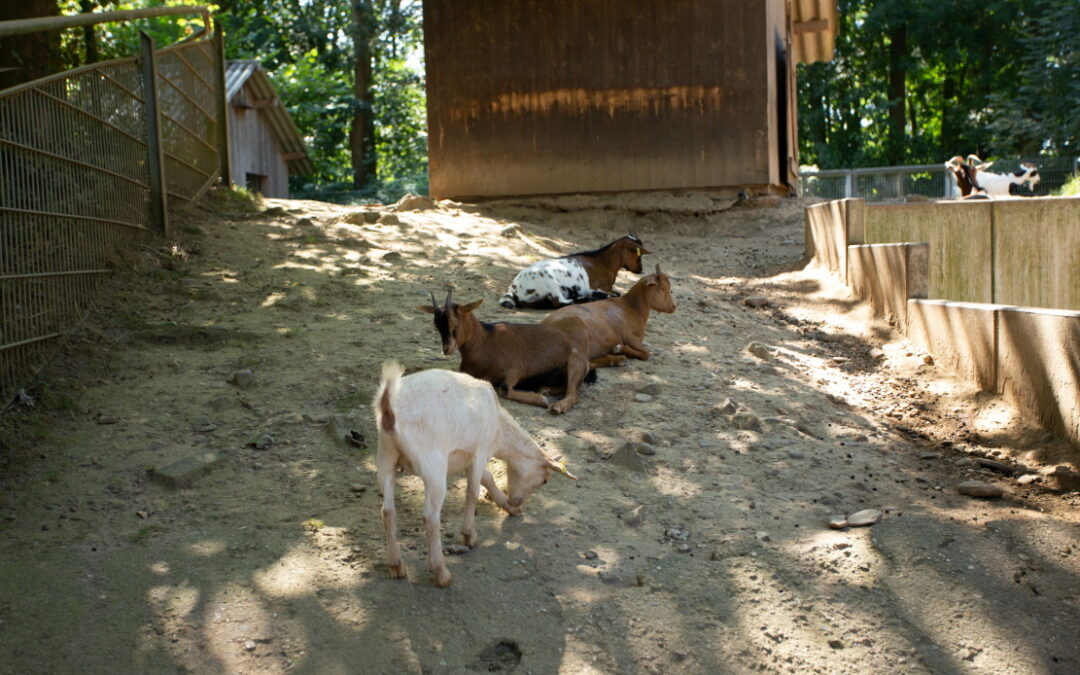
Across the varied and diverse landscapes that make up the Nigerian countryside, animals, both wild and domesticated, are more than merely an agricultural commodity or source of food; they are an integral part of local cultures, natural biodiversity, and represent an ecological treasure trove. Local wildlife and agricultural livestock help to sustain the livelihoods of millions. However, beyond this, Nigerian animals hold secrets within their genetic code that could, when revealed, help to prevent diseases, aid conservation efforts and enhance agricultural productivity. Leading the efforts to uncover useful and interesting genetic phenomena in these animals is Dr. Adeniyi Charles Adeola of the Chinese Academy of Sciences, who explores the genetic blueprints of Nigerian animals in his pioneering research. From investigating the population dynamics of grasscutters to tackling the genetic roots of prion diseases, Dr. Adeniyi Charles Adeola’s work illuminates both challenges and solutions that impact food security, agriculture, and biodiversity in Nigeria, and far beyond.

by Iliyah Maddox | Jan 17, 2025 | arts and humanities, biology, social and behavioural sciences
Research by Professor Magnus S. Magnusson at the University of Iceland demonstrates surprising similarities between the organization of cellular protein networks and of human societies. He reveals how the invention of writing and, very recently, general education, transformed human civilization in ways that mirror ancient biological developments and emphasises how this makes humans unique.

by Iliyah Maddox | Jan 16, 2025 | biology, health and medicine
Sepsis is a critical illness that begins with a simple infection and degenerates into a severe and dysregulated immune response that affects the whole body. This significant immune reaction typically causes widespread inflammation and can progress very rapidly. This can result in serious damage to tissues and organs, potentially leading to organ failure and death. Despite the severity of sepsis and its frequent poor prognosis, effective treatments are still elusive, and many sepsis patients remain at high risk of death and serious complications. Part of the issue is the complex cascade of cellular and biochemical events that underlie sepsis, which has made it difficult to obtain a comprehensive overview of the illness from which to design an effective treatment. Dr. Roberta Martinelli, Executive Director of Stromal Immunology and Early Discovery, Discovery Immunology, Merck, and colleagues, have published a study in the journal iScience which reveals new insights into the complex biological milieu underlying sepsis, and uncovers pathways and potential treatment targets that could change how we diagnose and treat this life-threatening illness.
by Iliyah Maddox | Jan 13, 2025 | biology, earth and environment
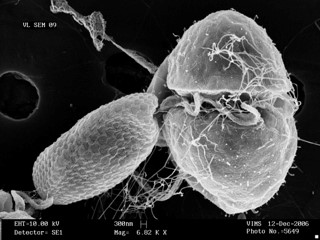
The oceans, huge and brimming with diverse lifeforms, pose no less a struggle for survival for their inhabitants than that faced by creatures on dry land. Evolution has furnished marine organisms with huge array of defensive, and indeed, offensive adaptations to help them to thrive in this battleground. Among the organisms who live and compete in the ocean are dinoflagellates. These are small, single-celled creatures that are an important component of plankton found in marine ecosystems. Despite their tiny size, dinoflagellates such as Karlodinium veneficum can wield potent biochemical weaponry that gives them an edge against other competing organisms. Decades since the discovery of the toxic properties of Karlodinium veneficum, researchers such as Dr. Allen Place of the University of Maryland Center for Environmental Sciences, and his colleagues, have begun to unravel the secrets of its potent toxins, called karlotoxins. Their findings offer fascinating insights into the interactions of marine life and the weapons they adopt to capture prey and deter predators.
by Iliyah Maddox | Jan 8, 2025 | biology, earth and environment
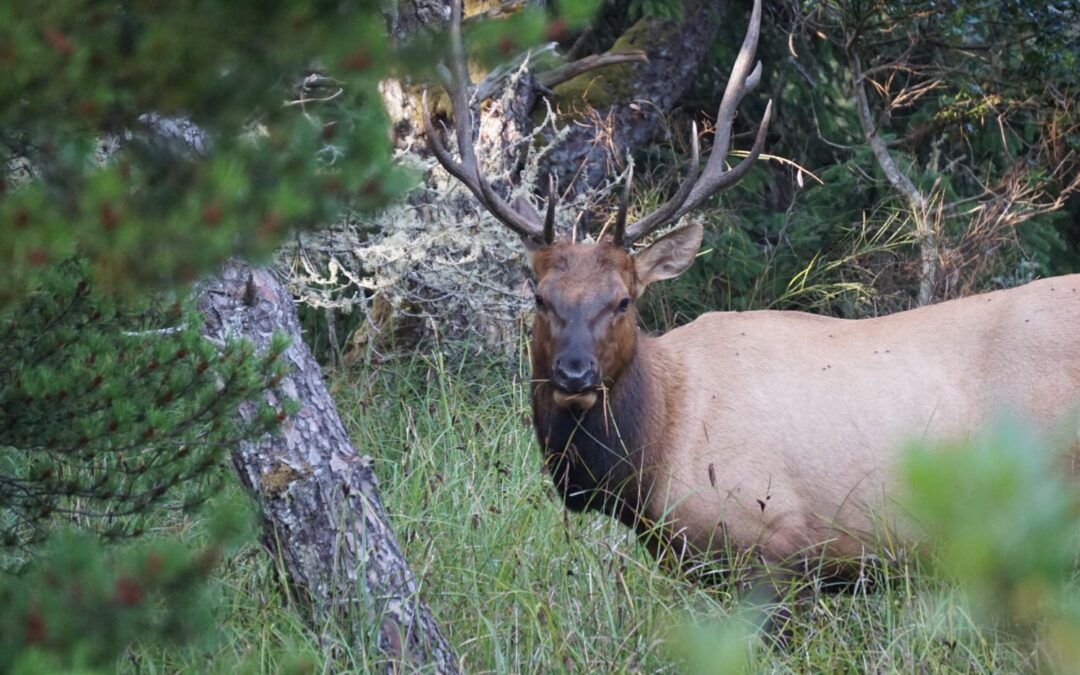
It’s not difficult to picture a lush forest landscape populated with majestic deer and elk, long admired for their prowess and strength. Now, imagine that same scene, but instead of healthy and happy animals browsing a forest ecosystem, we see creatures that are thin and disoriented, that struggle to run or even stand, with halting and confused movements that are pitiable and distressing to watch. This is the harsh reality of Chronic Wasting Disease, an illness that currently has no cure and that threatens such wildlife around the world. Part of the challenge with Chronic Wasting Disease is the difficulty in studying it reliably in wildlife. The disease has subtle signs at an early stage, and it is difficult to obtain robust and reproducible data from large, wild animals who often live in remote and poorly accessible forest ecosystems. Consequently, researchers have turned to an unlikely but powerful ally, the tiny laboratory mouse, to model and study the disease under laboratory conditions. Dr. Andrea Grindeland of the McLaughlin Research Institute, and her colleagues, have authored a review of the existing mouse models of Chronic Wasting Disease. These tiny creatures have been engineered to mimic the biology of cervids, such as deer and elk, and are providing crucial insights into how Chronic Wasting Disease evolves, is transmitted, and how it might one day be controlled or even eradicated.