
Dr Edward Andrew – Critical Reflections on The Theology of Liberalism
Original Article Reference
This SciPod is a summary of the paper ‘The Theology of Liberalism: Political Philosophy and the Justice of God’, from The European Legacy. https://doi.org/10.1080/10848770.2021.1906625
About this episode
This work is licensed under a Creative Commons Attribution 4.0 International License. 
What does this mean?
Share: You can copy and redistribute the material in any medium or format
Adapt: You can change, and build upon the material for any purpose, even commercially.
Credit: You must give appropriate credit, provide a link to the license, and indicate if changes were made.
More episodes

Rozanne Gold | The Stories We Taste: How Food Gives Voice to Memory, Identity and Belonging
Think of a dish that instantly transports you somewhere else. Perhaps it is your grandmother’s soup, a birthday cake, or the smell of onions softening in a pan. Before you have taken a bite, you are back in another kitchen, surrounded by people whose voices you can almost hear. Food has done something extraordinary. It has told a story without saying a word. This is the idea behind the “food voice,” a concept explored by Rozanne Gold, an award-winning chef, journalist, and author. Our food voice is the distinctive way we experience, remember, describe and share food. It grows from family traditions, cultural expectations, personal associations and the senses. Like a speaking voice, it belongs to each of us, yet it is shaped by everyone who has helped feed us.
Dr. Susanne Görke – Dr. Jürgen Lorenz | When Ancient Stories Vanish: The Mystery of a Hittite Library
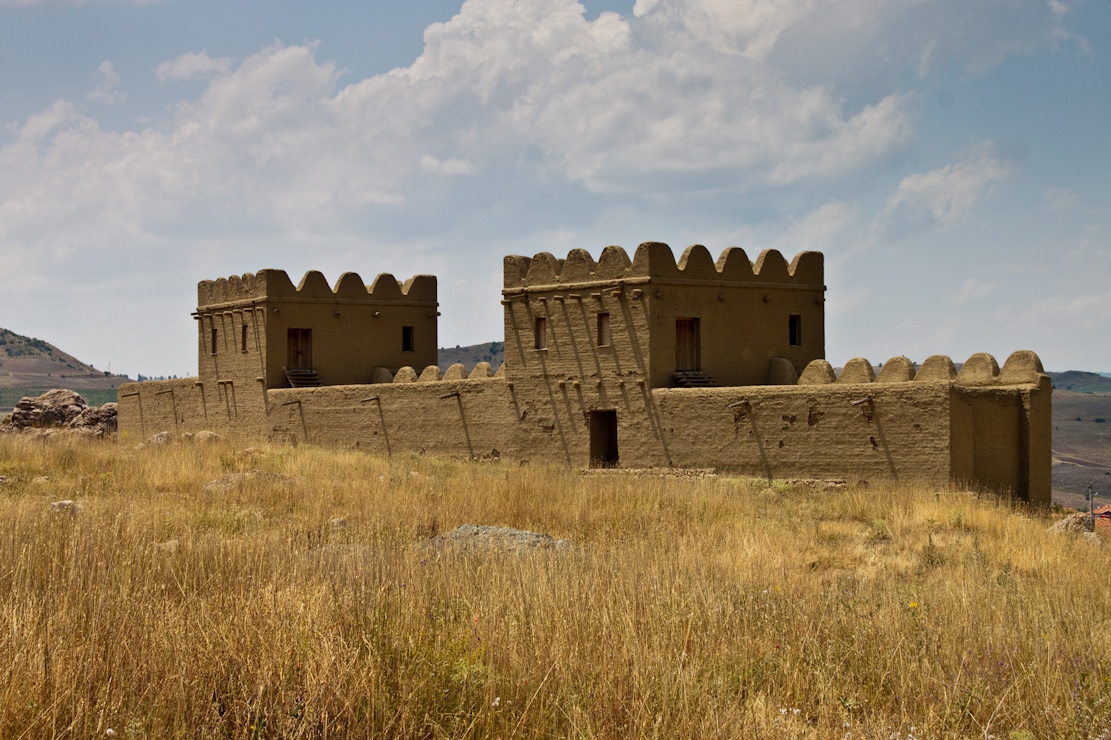
Imagine archaeologists uncovering the remains of an ancient library and discovering something strange. Several copies of a remarkable story survive, but every one of them appears to come from roughly the same period. Centuries of later scribal activity left no newer copy. Was the story forgotten? Deliberately abandoned? Confined to a small circle of scholars? Or are the missing copies simply waiting to be found? That puzzle lies at the heart of research by Dr. Susanne Görke and Dr. Jürgen Lorenz, both of Philipps-Universität Marburg, into the “Song of Release,” a fascinating work preserved on clay tablets from the Hittite capital of Ḫattuša, in what is now Turkey. The composition belongs to a bilingual Hurrian-Hittite textual tradition. Its surviving fragments open a window onto a world in which stories, languages and scholarly knowledge moved across cultural boundaries.

Prof. Sam Ashman | Gold, Labour and the Making of an Unequal South Africa
A country can look modern and prosperous in one place, then desperately poor only a short distance away. South Africa makes this contrast unusually stark. Its mines, cities and financial institutions have long connected it to the heart of the global economy, yet enormous inequalities have divided people by race and class. The tempting explanation is that two different economies somehow exist side by side. Prof. Sam Ashman of the University of the Witwatersrand in Johannesburg asks us to see something more unsettling: these worlds are not separate. They were built together.
Prof. Manal Hamzeh | When Academic Research Becomes Graphic Art: Women’s Bravery and Knowledge Making of Egypt’s 2011 Revolution
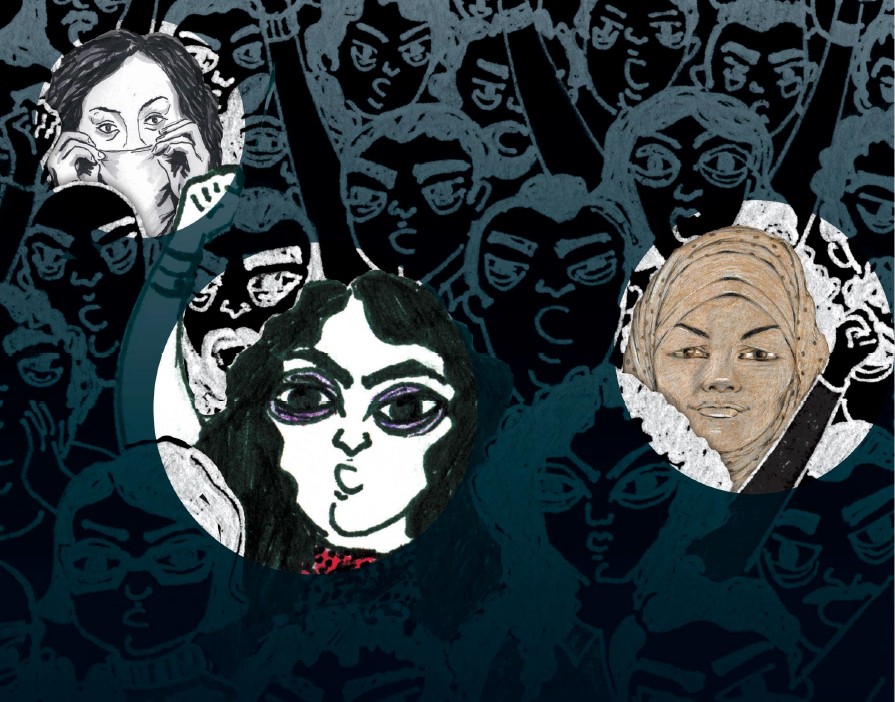
The Egyptian Revolution of January 2011 may be recalled vaguely through memories of massive crowds in public squares, slogans that reverberated worldwide, and viral images on social media. Women belong at the center of public memory and understanding of this important revolution. During Egypt’s 2011 Revolution and its aftermath, women played a major role, leading demonstrations and negotiations and organizing frontline confrontations, while demanding bread, freedom, and social justice. Many also faced sexual violence in the public spheres, a strategy to isolate them from the masses and weaken the force of the revolution. A remarkable collaborative project led by Prof. Manal Hamzeh of New Mexico State University asks what happens when the women who lived and witnessed those experiences transform them into graphic art.
Increase the impact of your research
• Good science communication helps people make informed decisions and motivates them to take appropriate and affirmative action.
• Good science communication encourages everyday people to be scientifically literate so that they can analyse the integrity and legitimacy of information.
• Good science communication encourages people into STEM-related fields of study and employment.
• Good public science communication fosters a community around research that includes both members of the public, policymakers and scientists.
• In a recent survey, 75% of people suggested they would prefer to listen to an interesting story than read it.

Step 1 Upload your science paper
Step 2 SciPod script written
Step 3 Voice audio recorded
Step 4 SciPod published