The Hidden Truths Of Machine Learning With Zack Lipton
This week we discuss the hidden truths of machine learning, and how this new technology could undermine democracy as we know it, but is that even so bad…
Resources mentioned:
Zack’s website: http://zacklipton.com/
Zack’s Twitter: https://twitter.com/zacharylipton
More SciPod Radio episodes you may like

Reimagining online safety education through the eyes of young people
Audiobook

About this episode
In today’s world, the internet is more than a tool. It can be a place where friendships are built, identities are explored, and young people find connection. For teenagers, digital spaces are a huge component of their lives. However, the way we talk about online safety often feels like it belongs to another era, one rooted in adult fears rather than young people’s lived experiences. A project led by the Young and Resilient Research Centre at Western Sydney University, in partnership with the PROJECT ROCKIT Foundation with funding from Australia’s eSafety Commissioner, set out to bridge this disconnect. Instead of telling young people how they “should” behave online, the researchers conducted a survey of 104 young people and workshops with 31 young Australians aged 12 to 17 which asked them directly: What does online safety mean to you? What do you wish adults understood? What would your ideal online world look like? How do you want to learn about online safety?
The results were eye-opening and led to the development of a framework to reimagine how online safety education for young people is designed and delivered. More
Original article reference
This Audio is a summary of the Project Report ‘Reimagining Online Safety Education through the Eyes of Young People: Co-Design Workshops with Young People to Inform Digital Learning Experiences’, from Western Sydney University, https://doi.org/10.26183/3bz3-r451
Contact
For further information, you can connect with Lilly Moody at l.moody@westernsydney.edu.au

What does this mean?
Share: You can copy and redistribute the material in any medium or format
Adapt: You can change, and build upon the material for any purpose, even commercially.
Credit: You must give appropriate credit, provide a link to the license, and indicate if changes were made.
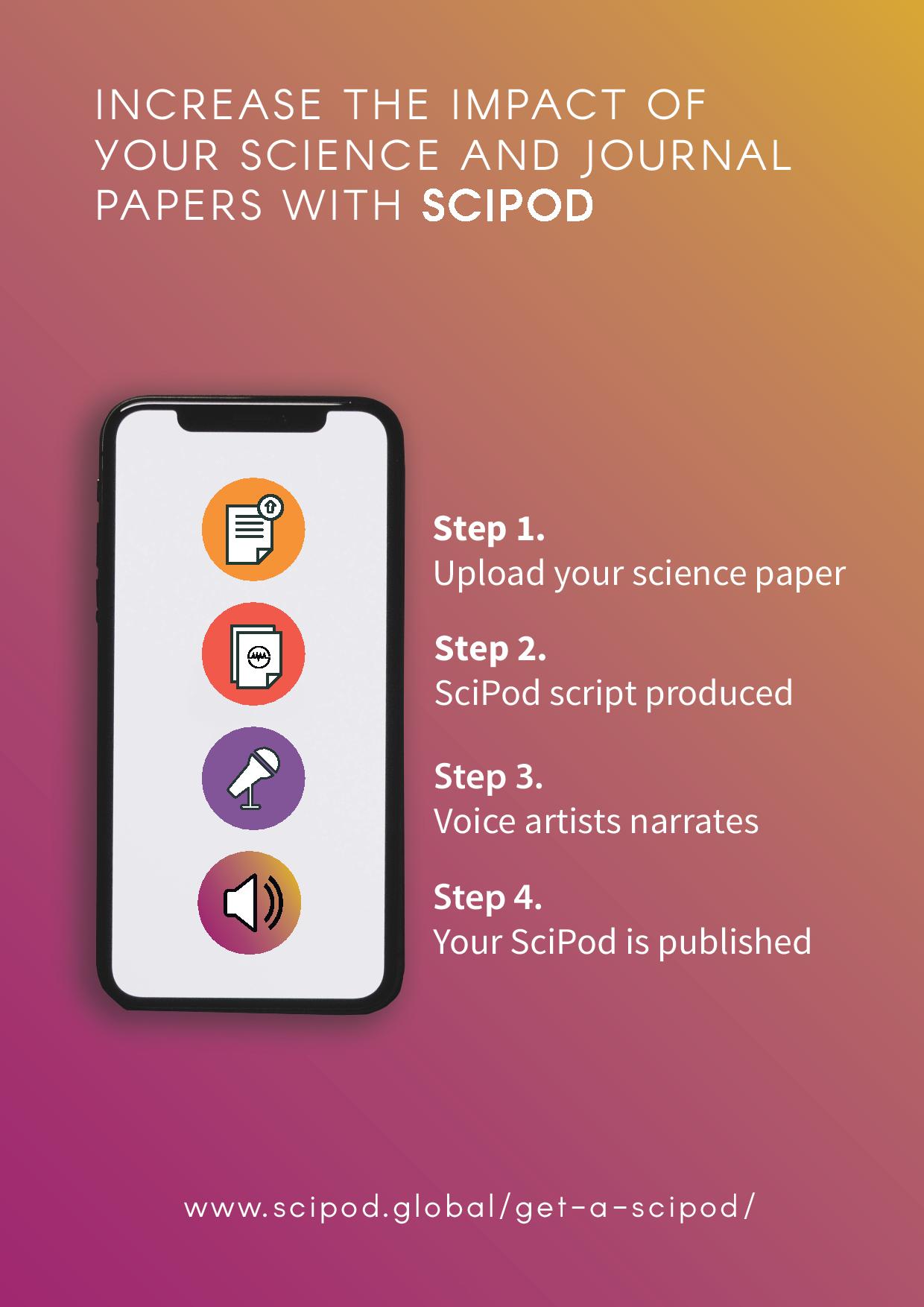
Increase The Impact Of Your Research!
More episodes
Reimagining online safety education through the eyes of young people
Professor Ligeia Quackelbeen | How Should Judges Consider Cultural Concepts in International Criminal Law?
Dr Katrina Schlunke | Bringing Dead Zoos to Life: Caring for Extinct Animals and Living Cultures
Dr. Rasha Bayoumi | Decolonizing Global Collaboration: Building Equitable Science Diplomacy

Professor Michael Saward | How Art Exhibitions Offer New Ways to Understand Political Ideas


Lighting the Path: How the GlioLighT Consortium Is Exploring New Ways to Treat Brain Tumours

Professor Ligeia Quackelbeen | How Should Judges Consider Cultural Concepts in International Criminal Law?
Audiobook
About this episode
Research from Assistant Professor Ligeia Quackelbeen at Tilburg University examines how international criminal courts categorize cultural practices such as forced marriage, revealing issues with current legal approaches. Using a landmark case as a primary example, the analysis demonstrates how judges rely on rigid checklist-based reasoning that fails to adequately consider cultural contexts. The research examines the benefits of adopting prototype theory from cognitive science to enable more culturally sensitive legal interpretations that better understand local practices rather than applying generic Western-centered definitions. More
Original article reference
This SciPod is a summary of ‘In Search of the Prototype of Forced Marriage: The Ongwen Case and the Bush Wives Phenomenon’ in the Journal of International Criminal Justice, https://doi.org/10.1093/jicj/mqae023.
Contact
For further information, you can connect with Professor Ligeia Quackelbeen at L.S.C.Quackelbeen@tilburguniversity.edu or via: Ligeia Quackelbeen | LinkedIn
What does this mean?
Share: You can copy and redistribute the material in any medium or format
Adapt: You can change, and build upon the material for any purpose, even commercially.
Credit: You must give appropriate credit, provide a link to the license, and indicate if changes were made.
Increase The Impact Of Your Research!
More episodes
Reimagining online safety education through the eyes of young people
Professor Ligeia Quackelbeen | How Should Judges Consider Cultural Concepts in International Criminal Law?
Dr Katrina Schlunke | Bringing Dead Zoos to Life: Caring for Extinct Animals and Living Cultures
Dr. Rasha Bayoumi | Decolonizing Global Collaboration: Building Equitable Science Diplomacy
Professor Michael Saward | How Art Exhibitions Offer New Ways to Understand Political Ideas
Lighting the Path: How the GlioLighT Consortium Is Exploring New Ways to Treat Brain Tumours

Dr Katrina Schlunke | Bringing Dead Zoos to Life: Caring for Extinct Animals and Living Cultures
Audiobook
About this episode
Step into a natural history museum, sometimes called a ‘dead zoo’, and you will find yourself surrounded by silence. Behind glass cases and inside drawers lie animals long gone: the Tasmanian tiger, the quagga, birds that no longer take flight, creatures whose skins and bones now carry only the weight of memory. These preserved remains are meant to represent care – careful handling, careful storage, and careful cataloguing, in a tribute to the long dead and sometimes extinct. But as Dr Katrina Schlunke, from the University of Potsdam and Sydney, argues, the care offered by museums is not so simple. It is bound up with histories of colonialism, extinction, and exclusion, which are typically not explored or acknowledged in the displays we encounter.More
Original article reference
This Audio is a summary of the paper ‘The practices of care: extinction and decolonization in the natural history museum’, in Continuum: Journal of Media & Cultural Studies, https://doi.org/10.1080/10304312.2024.2384951 and the book chapter “How does it all come back now? Re-organising naturalised histories” in People, Place and Nature in Indigenous-Settler Relations: Recentring the More-than-Human World, Springer (In press)
Contact
For further information, you can connect with Dr. Katrina Schlunke at katrina.schlunke@sydney.edu.au
What does this mean?
Share: You can copy and redistribute the material in any medium or format
Adapt: You can change, and build upon the material for any purpose, even commercially.
Credit: You must give appropriate credit, provide a link to the license, and indicate if changes were made.
Increase The Impact Of Your Research!
More episodes
Reimagining online safety education through the eyes of young people
Professor Ligeia Quackelbeen | How Should Judges Consider Cultural Concepts in International Criminal Law?
Dr Katrina Schlunke | Bringing Dead Zoos to Life: Caring for Extinct Animals and Living Cultures
Dr. Rasha Bayoumi | Decolonizing Global Collaboration: Building Equitable Science Diplomacy
Professor Michael Saward | How Art Exhibitions Offer New Ways to Understand Political Ideas
Lighting the Path: How the GlioLighT Consortium Is Exploring New Ways to Treat Brain Tumours

Dr. Rasha Bayoumi | Decolonizing Global Collaboration: Building Equitable Science Diplomacy
Audiobook
About this episode
Science diplomacy, meaning the use of scientific collaboration to strengthen international relations and address shared global challenges, has long been hailed as a force for good. Yet, as Dr. Rasha Bayoumi of the University of Birmingham Dubai and her colleagues argue in their Editorial for a special issue in the journal Frontiers in Public Health, this optimism often masks uncomfortable realities. The practice of science diplomacy has too often reproduced the very inequalities it aims to dismantle, operating within frameworks that privilege powerful nations and institutions while marginalizing voices from the Global South. More
Original article reference
This Audio is a summary of the Editorial ‘Toward Inclusive and Equitable Models of Science Diplomacy in Public Health’, in Frontiers in Public Health, https://doi.org/10.3389/fpubh.2025.1700272
Contact
For further information, you can connect with Dr. Rasha Bayoumi at r.bayoumi@bham.ac.uk
What does this mean?
Share: You can copy and redistribute the material in any medium or format
Adapt: You can change, and build upon the material for any purpose, even commercially.
Credit: You must give appropriate credit, provide a link to the license, and indicate if changes were made.
Increase The Impact Of Your Research!
More episodes
Reimagining online safety education through the eyes of young people
Professor Ligeia Quackelbeen | How Should Judges Consider Cultural Concepts in International Criminal Law?
Dr Katrina Schlunke | Bringing Dead Zoos to Life: Caring for Extinct Animals and Living Cultures
Dr. Rasha Bayoumi | Decolonizing Global Collaboration: Building Equitable Science Diplomacy
Professor Michael Saward | How Art Exhibitions Offer New Ways to Understand Political Ideas
Lighting the Path: How the GlioLighT Consortium Is Exploring New Ways to Treat Brain Tumours

Welcome to SciPod Radio
An exclusive interview series with leading scientists and science communicators
Also available on