
Exploring Winds in the Polar Thermosphere – Dr Ying Zou, University of Alabama in Huntsville
Original Article Reference
This SciPod is a summary of the paper:
https://doi.org/10.33548/SCIENTIA624
Share Episode

About this episode
Beginning 80 kilometres above Earth’s surface, and extending to the edge of the atmosphere, the thermosphere occupies a large proportion of Earth’s upper atmosphere. So far, studies of this expansive region have largely focused on how the air it contains flows over global scales. Now, Dr Ying Zou at the University of Alabama in Huntsville has explored how the thermosphere is also significantly influenced by ‘mesoscale’ interactions with Earth’s magnetosphere, creating flows spanning just hundreds of kilometres. Her team’s work could greatly improve our knowledge of how the upper atmosphere behaves.
This work is licensed under a Creative Commons Attribution 4.0 International License. 
What does this mean?
Share: You can copy and redistribute the material in any medium or format
Adapt: You can change, and build upon the material for any purpose, even commercially.
Credit: You must give appropriate credit, provide a link to the license, and indicate if changes were made.
More episodes

Prof. Dr. Jörg Meyer | When Greener Plastic Sees the Light
Most of us rarely wonder what a bicycle headlamp, ceiling light or LED lens is made from. We notice whether it shines brightly, survives heat and weather, and keeps working for years. Yet hidden inside many lighting products are transparent plastics whose environmental credentials are less attractive than their optical performance. Common materials such as polycarbonate and polymethyl methacrylate are generally fossil based and resist degradation. Replacing them involves more than just choosing a greener plastic. A material that guides light must remain clear, strong, dimensionally stable and reliable while being exposed to the destructive forces of heat and light.

Prof. Roberto Sussman – Dr. Sebastián Nájera | Rethinking Gravity: A New Path Beyond Einstein
For more than a century, Albert Einstein’s theory of General Relativity has been our best description of gravity. It explains how planets orbit stars, how galaxies move through space, and even how black holes warp the fabric of the universe. Yet despite its extraordinary success, some of the biggest mysteries in modern physics remain unsolved. Scientists still do not know the true nature of dark matter and dark energy, the invisible ingredients believed to make up most of the cosmos.
Because of these unanswered questions, researchers around the world continue searching for new ways to understand gravity. One intriguing contribution comes from Prof. Roberto Sussman and Dr. Sebastián Nájera of the National Autonomous University of Mexico, who have proposed a new gravity theory they denote as “Schouten–Codazzi Gravity”. Their work explores whether gravity might be described by a modified set of mathematical rules that remain closely connected to Einstein’s theory while opening the door to new possibilities.

Prof. Magdalena Osińska – Dr. Muhammad Alamgir | Green Bonds and a Greener Future: How Smart Finance Can Power the Energy Transition
Imagine if buying a financial investment could help build a wind farm, expand a solar park, or modernise an electricity grid. That is the promise of green bonds, a rapidly growing form of investment designed to fund projects with environmental benefits. As the world searches for practical ways to tackle climate change while meeting rising energy demand, these financial tools are attracting increasing attention from governments, businesses, and investors alike. Yet an important question remains. Do green bonds genuinely make a measurable difference, or are they simply another well-intentioned financial product with limited real-world impact?
Sue Jaffer | Why Better Corporate Governance Could Save England and Wales’ Water Industry
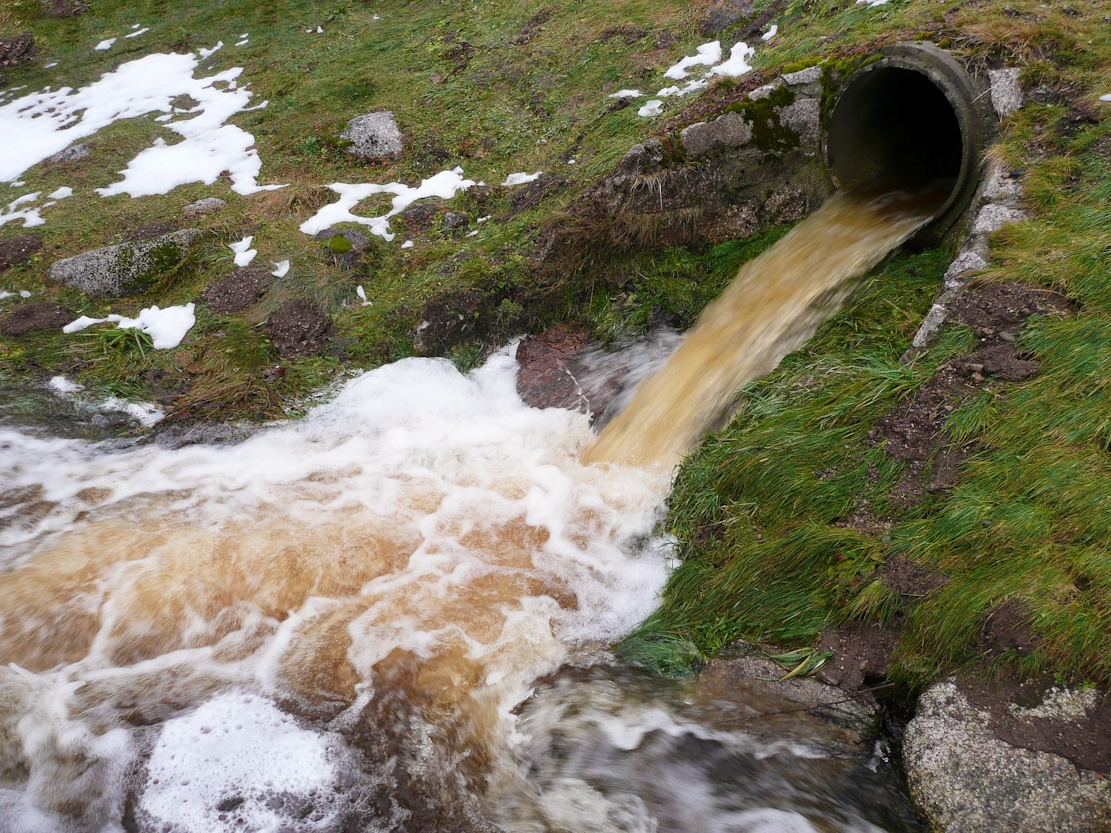
Every time someone turns on a tap, they expect it to work. Clean water should arrive reliably, wastewater should disappear safely, and rivers and beaches should remain healthy for future generations. Most people rarely think about the companies and regulators working behind the scenes because these systems are supposed to function quietly and effectively. Yet in recent years, England and Wales have experienced repeated controversies over sewage pollution, rising public frustration, and questions about the financial health of some water companies. The obvious question is how an industry with extensive regulation could produce such disappointing outcomes.
Increase the impact of your research
• Good science communication helps people make informed decisions and motivates them to take appropriate and affirmative action.
• Good science communication encourages everyday people to be scientifically literate so that they can analyse the integrity and legitimacy of information.
• Good science communication encourages people into STEM-related fields of study and employment.
• Good public science communication fosters a community around research that includes both members of the public, policymakers and scientists.
• In a recent survey, 75% of people suggested they would prefer to listen to an interesting story than read it.
Step 1 Upload your science paper
Step 2 SciPod script written
Step 3 Voice audio recorded
Step 4 SciPod published