Dr Darren Sharpe – Cultivating Young People’s Empowerment and Participation in Society
About this episode
More episodes

Professor Michael Saward | How Art Exhibitions Offer New Ways to Understand Political Ideas
Professor Michael Saward from the University of Warwick examines how Tate Liverpool’s Democracies exhibition used curatorial methods to explore democracy in ways that fundamentally differ from traditional academic approaches. By analyzing several artworks displayed between 2020 and 2023, and how the exhibition was presented by the gallery, Saward reveals how art galleries can generate knowledge, challenging democratic theorists to reconsider their methodologies and pay greater attention to embodiment, visceral experiences, and situated actions.

Penelope J. Corfield | Time-Space: Exploring How Humans Navigate Cosmic Existence
Penelope J. Corfield’s groundbreaking book, entitled Time-Space: We Are All in It Together, presents a multidimensional framework for understanding how humans exist within the cosmic continuum of time and space. Corfield agrees with the modern scientific consensus post-Einstein, where time is understood not as a separate dimension but as being integrally yoked with space. Together, time and space form one dynamic system, which shapes all of existence. But Corfield argues that the continuum should properly be named time-space rather than spacetime, because time is the dynamo and space is its physical manifestation. The book then explores how this great time-space continuum frames the entire cosmos, including all human existence and our collective journey through history.

Professor Dr Susanne Maria Maurer | How Social Work Functions as Living Memory of Society’s Deepest Conflicts
Research from Professor Dr Susanne Maria Maurer, former chair of social pedagogy at the Philipps-Universität Marburg, reveals how social work institutions and practices serve as repositories of knowledge about historical struggles over class, gender, and race. She conceptualizes social work as both a “memory of conflicts” and an “open archive” that holds different answers to social problems from across history. Her work shows that to truly understand social work today we need to look at the ideas that were pushed aside and the ongoing debates that still shape how social workers do their jobs.

Dr. Genny Beemyn – Dr. Abbie Goldberg | Beyond the Binary: A New Generation’s Approach to Gender
In the Autumn of 2022, hopeful college students across the United States clicked through the questions on the Common Application, the digital gateway to more than one thousand colleges and universities. For the first time, alongside their grades, essays, and extracurricular lists, applicants had the chance to provide their gender and pronouns. These questions might seem a small detail, tucked between test scores and teacher recommendations, but their impact is enormous. They mark a turning point in higher education, one where students are able to represent themselves more authentically. Thanks to the work of Dr. Genny Beemyn of the University of Massachusetts Amherst and Dr. Abbie Goldberg of Clark University, we now have the first large-scale glimpse into how a new generation of young people is reshaping society’s understanding of gender.
This work is licensed under a Creative Commons Attribution 4.0 International License. 
What does this mean?
Share: You can copy and redistribute the material in any medium or format
Adapt: You can change, and build upon the material for any purpose, even commercially.
Credit: You must give appropriate credit, provide a link to the license, and indicate if changes were made.
Increase the impact of your research
• Good science communication helps people make informed decisions and motivates them to take appropriate and affirmative action.
• Good science communication encourages everyday people to be scientifically literate so that they can analyse the integrity and legitimacy of information.
• Good science communication encourages people into STEM-related fields of study and employment.
• Good public science communication fosters a community around research that includes both members of the public, policymakers and scientists.
• In a recent survey, 75% of people suggested they would prefer to listen to an interesting story than read it.
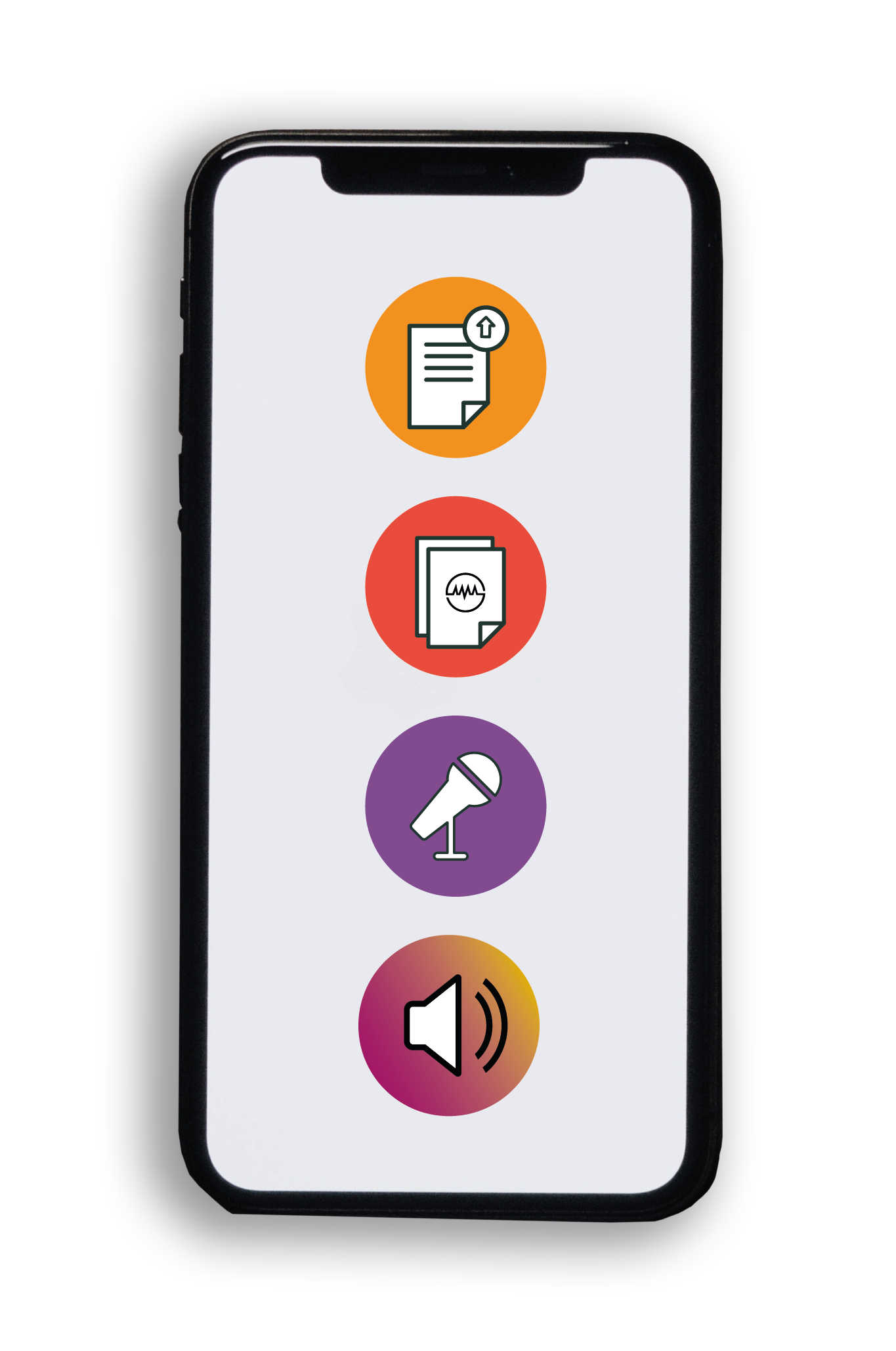
Step 1 Upload your science paper
Step 2 SciPod script written
Step 3 Voice audio recorded
Step 4 SciPod published