
Arts and Humanities
Explore Arts and Humanities

Dr. Jacqueline Lambiase – Dr. Ashley English – Dr. Julie O’Neil | How Municipal Communication Failures Perpetuate Systemic Racism
Communication research from Texas Christian University reveals how the killing of Atatiana Jefferson in Fort Worth exposed fundamental failures in how cities listen to Black residents. Through in-depth interviews and a national survey, Dr. Ashley English, Dr. Jacqueline Lambiase and Dr. Julie O’Neil demonstrate that meaningful organizational listening requires not just hearing community voices, but implementing changes based on their input. Their findings show that without authentic engagement and accountability, municipal listening processes perpetuate rather than disrupt systemic racism.

Dr. Angel Ford – Dr. Daniel Alemneh | Amplifying Global Voices: The Fight for Fairness in Scholarly Communication
In our increasingly interconnected world, sharing knowledge freely and fairly is crucial for ongoing development and progress. Increasing the overall size of our store of knowledge is important in dealing with the challenges we face in the modern world, but determining who can access and add to that knowledge is a key question. Prestigious academic journals and global conferences aim to help disseminate our most important discoveries and innovations, but researchers do not have equal access to such resources to promote their ideas and consequently not all voices are heard equally. Scholars from low- and middle-income countries continue to face invisible walls that limit their participation in the global exchange of ideas. This systemic imbalance is the focus of a deeply insightful study by Dr. Angel Ford of the University at Albany and Dr. Daniel Alemneh of the University of North Texas, who call for a more just and healthier scholarly communication system.

Dr Aikaterini-Christina Koula | How the law is used to silence Human Rights Defenders
Research from Dr Aikaterini-Christina Koula at Manchester Metropolitan University reveals how legal systems are increasingly being weaponized to silence human rights defenders, particularly in Europe. Her work introduces a taxonomy of violations perpetrated through the legal system and demonstrates how these tactics deviate from human rights standards, offering valuable insights for academics, practitioners, and defenders alike.

Professor Germaine A. Hoston | How Traditional Chinese Philosophy Shaped Modern Revolutionary Thought
Research from Professor Germaine A. Hoston at the University of California, San Diego, reveals how traditional Chinese philosophical idealism influenced the development of Chinese Marxism. Her findings demonstrate that despite their rejection of China’s feudal past, key Chinese Marxist theorists like Li Dazhao and Mao Zedong incorporated elements of Neo-Confucian idealism into their revolutionary philosophy. This “sinification” of Marxism drew particularly on concepts of consciousness, will, and the unity of knowledge and action from traditional Chinese thought, creating a uniquely Chinese revolutionary philosophy that challenged Soviet economic determinism.
Professor Tristan Nighswander – Professor Ariel Roddy | Mixed Signals: Employment Training Outcomes for Previously Incarcerated Individuals
Research from Professors Tristan Nighswander and Ariel Roddy at Northern Arizona University examines the effects of pre-employment training on employment outcomes for previously incarcerated individuals through the lens of two economic theories. Their findings reveal that while training significantly improves employment outcomes for the general population, it shows no meaningful benefit for those with incarceration histories. Even more surprisingly, high-ability individuals (defined through scores on an aptitude test called the Armed Forces Qualification Test, or the AFQT) with past incarceration may actually experience negative employment effects. This highlights the complex challenges of societal re-entry.

Defending Authentic Leadership: A Response to Critical Claims
A recent paper from Professor William Gardner at Texas Tech University and Professor Kelly Davis McCauley at West Texas A&M University challenges a critique that characterized authentic leadership theory as “wrong” and “perilous.” Their analysis demonstrates how misrepresentations of the theory can undermine valuable leadership approaches, while highlighting the empirical support and practical benefits of leaders striving for authenticity in organizational settings.

Associate Professor Nina Tahmasebi | A new approach for detecting changes in word meaning over time
Words change their meanings over time, but tracking these changes has traditionally required painstaking manual analysis by linguists. In recent years, researchers have been using computational models to automatically detect when semantic change happens, and how much of a change has occurred. Recent research led by Associate Professor Nina Tahmasebi and her colleagues in the Change is Key! program introduces innovative computational methods for detecting qualitative features of semantic change, opening new possibilities for understanding language evolution at scale.

Professor Denise Troutman | Rethinking ‘Sassy’: The Complex Intersections of Race, Gender, and Linguistic Politeness
Research by Professor Denise Troutman at Michigan State University examines how race, gender, and social context shape perceptions of politeness and impoliteness in language, particularly focusing on the term ‘sassy’ when applied to African American women and girls. The research challenges traditional theories of politeness and reveals a need for cultural contextualizations to avert harmful stereotypes.

Professor Carsten Herrmann-Pillath and Professor Guo Man | How death rituals are changing in China’s fastest-growing city
Research from Professor Carsten Herrmann-Pillath at the University of Erfurt and Professor Guo Man at Harbin Institute of Technology Shenzhen Campus reveals how traditional funeral practices are being transformed in Shenzhen, an area of China which has rapidly developed into a huge metropolis. The research shows how government regulations, economic forces, and cultural traditions interact to create new forms of death rituals that balance modern urban constraints with deep-rooted customs.
Professor Will Greaves | How Donald Trump has changed Canada-US relations
Research by Professor Will Greaves at the University of Victoria examines how the Trump presidency has impacted the long-standing security relationship between Canada and the United States. His analysis reveals concerning shifts in the foundations of bilateral cooperation and trust between these traditionally close allies, with implications for the future of North American security arrangements.

Professor Magnus S. Magnusson | The surprising similarities between the structures of human cells and societies
Research by Professor Magnus S. Magnusson at the University of Iceland demonstrates surprising similarities between the organization of cellular protein networks and of human societies. He reveals how the invention of writing and, very recently, general education, transformed human civilization in ways that mirror ancient biological developments and emphasises how this makes humans unique.

Professor Bernd Schlipphak – Professor Oliver Treib – Dr. Constantin Schäfer | How citizens’ identities shape their support for international organizations
Research by Professors Bernd Schlipphak and Oliver Treib, both of the University of Münster, along with Doctor Constantin Schäfer of ifok GmbH, Germany, reveals how people’s sense of global identity influences their support for international organizations. Their work demonstrates that reforms to international organizations can have opposing effects on different groups of citizens, potentially increasing societal divisions about global cooperation.

Dr Suzanne Coyle | Weaving Spirituality into Psychotherapy: How Stories Help Healing
As the practice of psychotherapy increasingly embraces the spiritual dimensions of the human experience, therapists are investigating new ways to weave faith and meaning into healing. Dr Suzanne Coyle, a licensed pastoral counsellor and family therapist, explores the role of spirituality in psychotherapy and how this intersection can support the journey of healing. Her work provides practitioners with the tools and knowledge to meaningfully integrate spirituality into clinical practice.
Prof. Satoshi Abe | The Unexpected Symbols Driving Iran’s Environmental Movement
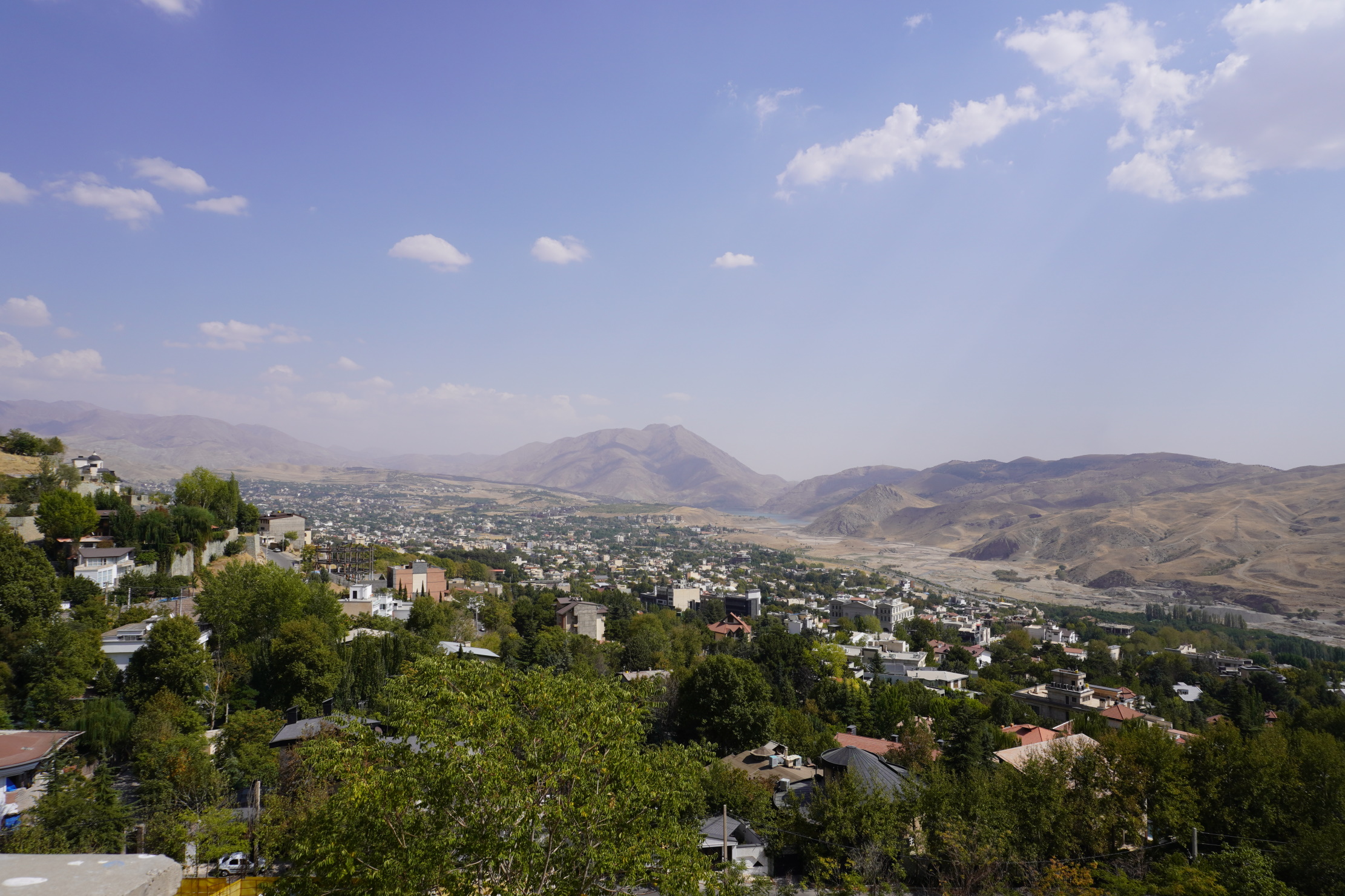
If you walk through the bustling streets of Tehran, you might first notice the traffic, the densely packed apartments, or young people weaving through the city on motorbikes. But if you look a little closer, you may notice banners stretching across overpasses, tiny flags lining the perimeters of parks, or posters taped to walls, and you might just begin to sense something else humming quietly in the background: a story about nature, identity, and the nation itself. According to Prof. Satoshi Abe of Tottori University, Japan, who has researched environmental activism in Iran, the country is experiencing not just an environmental crisis, but an environmental reimagining. Iranians are not simply debating water shortages, air pollution, or endangered species, though they are certainly doing that. They are also wrestling with questions about what “nature” means within the story of Iran.

Reimagining online safety education through the eyes of young people
In today’s world, the internet is more than a tool. It can be a place where friendships are built, identities are explored, and young people find connection. For teenagers, digital spaces are a huge component of their lives. However, the way we talk about online safety often feels like it belongs to another era, one rooted in adult fears rather than young people’s lived experiences. A project led by the Young and Resilient Research Centre at Western Sydney University, in partnership with the PROJECT ROCKIT Foundation with funding from Australia’s eSafety Commissioner, set out to bridge this disconnect. Instead of telling young people how they “should” behave online, the researchers conducted a survey of 104 young people and workshops with 31 young Australians aged 12 to 17 which asked them directly: What does online safety mean to you? What do you wish adults understood? What would your ideal online world look like? How do you want to learn about online safety?
The results were eye-opening and led to the development of a framework to reimagine how online safety education for young people is designed and delivered.

Professor Ligeia Quackelbeen | How Should Judges Consider Cultural Concepts in International Criminal Law?
Research from Assistant Professor Ligeia Quackelbeen at Tilburg University examines how international criminal courts categorize cultural practices such as forced marriage, revealing issues with current legal approaches. Using a landmark case as a primary example, the analysis demonstrates how judges rely on rigid checklist-based reasoning that fails to adequately consider cultural contexts. The research examines the benefits of adopting prototype theory from cognitive science to enable more culturally sensitive legal interpretations that better understand local practices rather than applying generic Western-centered definitions.

Dr Katrina Schlunke | Bringing Dead Zoos to Life: Caring for Extinct Animals and Living Cultures
Step into a natural history museum, sometimes called a ‘dead zoo’, and you will find yourself surrounded by silence. Behind glass cases and inside drawers lie animals long gone: the Tasmanian tiger, the quagga, birds that no longer take flight, creatures whose skins and bones now carry only the weight of memory. These preserved remains are meant to represent care – careful handling, careful storage, and careful cataloguing, in a tribute to the long dead and sometimes extinct. But as Dr Katrina Schlunke, from the University of Potsdam and Sydney, argues, the care offered by museums is not so simple. It is bound up with histories of colonialism, extinction, and exclusion, which are typically not explored or acknowledged in the displays we encounter.