
Advancing Quantum Computing to Accelerate Scientific Research
About this episode
Over the past few years, the capabilities of quantum computers have reached the stage where they can be used to pursue research with widespread technological impact. Through their research, the Q4Q team at the University of Southern California, University of North Texas, and Central Michigan University, explores how software and algorithms designed for the latest quantum computing technologies can be adapted to suit the needs of applied sciences. In a collaborative project, the Q4Q team sets out a roadmap for bringing accessible, user-friendly quantum computing into fields ranging from materials science, to pharmaceutical drug development.
Original Article Reference
This animation is a summary of https://doi.org/10.33548/SCIENTIA678
More episodes

Prof. Abdullah Alrasheed | How Light, Air, and Time Shape the Future of Two-Dimensional Materials
Over the past two decades, materials science has been quietly transforming the technological foundations of everyday life. While consumers notice faster phones and more capable computers, the deeper story unfolds at the scale of atoms. Scientists are learning how to isolate and control materials that are only a few atoms thick, revealing forms of matter whose behavior differs profoundly from their bulk counterparts. These so-called two-dimensional materials promise a new generation of electronics, sensors, and photonic devices. At the same time, they challenge long held assumptions about stability, reliability, and control at the smallest scales. Researchers such as Prof. Abdullah Alrasheed of the King Abdulaziz City for Science and Technology are helping to expand our knowledge and push the boundaries of what is possible in this sphere.

Jonathan Ruiz Esquius | How Smarter Catalysts Could Unlock the Future of Hydrogen Energy
Hydrogen is often presented as one of the most promising tools we have for cutting carbon emissions, especially in parts of the economy where clean alternatives are limited. Heavy industry, long-distance transport, and chemical manufacturing all need large amounts of energy that cannot easily be supplied by batteries alone. Green hydrogen, produced using renewable electricity, could fill that gap. Governments are investing billions to make this happen, but there is a catch. The technology depends on rare materials that could become a bottleneck just as demand takes off. New research led by Jonathan Ruiz Esquius, and conducted by chemist Sara Riera, at the Carbon Science and Technology Institute in Spain, shows how smarter catalyst design could help remove that barrier.
Dr. Jürgen Gailer | Linking the Blood Chemistry of Metals with Adverse Human Health: New Tools Reveal an Invisible World
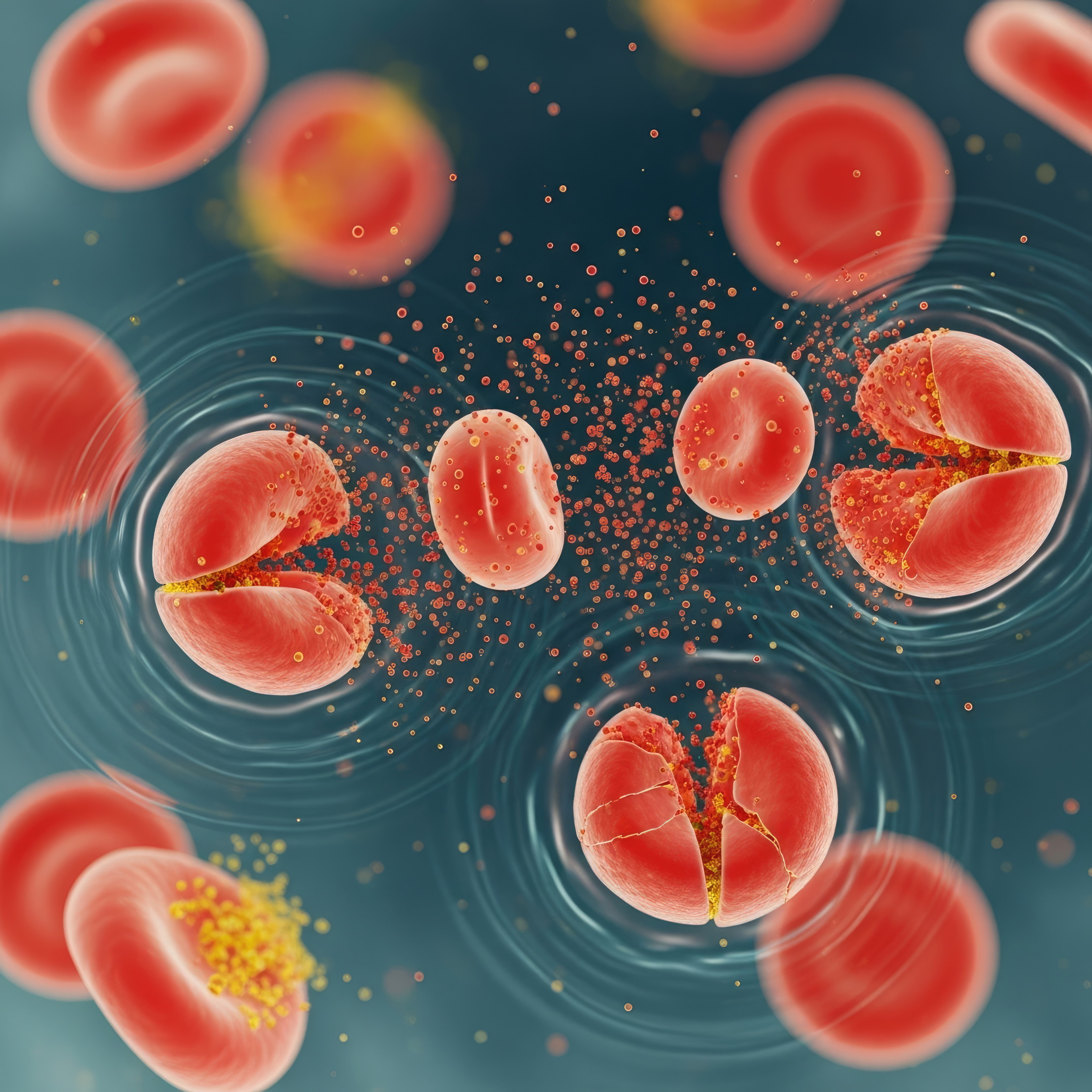
Researchers Maryam Doroudian and Jürgen Gailer from the University of Calgary explore what happens when red blood cells rupture and release a zinc-containing enzyme called carbonic anhydrase 1 into the bloodstream, revealing that it remains unexpectedly free and may influence vascular health. Their work also connects to broader research showing how liquid chromatography is transforming our ability to study toxic cadmium and mercury as they move through the body. Together, these studies uncover hidden biochemical processes that shape how environmental pollutants and blood-cell damage affect human health.

Easing the Hardest Moment: How Brain Stimulation Is Transforming Care for People with Opioid Use Disorder
In the world of opioid addiction treatment, the hardest moment often arrives precisely when hope begins to emerge. It is the moment someone chooses to stop using opioids. That decision, courageous and life-changing, almost immediately collides with one of the most punishing physiologic syndromes known in medicine: opioid withdrawal. Withdrawal brings waves of nausea, sweats, shaking, cramps, insomnia, anxiety, and extremely intense cravings. For countless individuals, this moment is a seemingly inescapable stumbling block that can be the undoing of their recovery. They want to stop, they mean to stop, but withdrawal can become an insurmountable barrier.
This work is licensed under a Creative Commons Attribution 4.0 International License. 
What does this mean?
Share: You can copy and redistribute the material in any medium or format
Adapt: You can change, and build upon the material for any purpose, even commercially.
Credit: You must give appropriate credit, provide a link to the license, and indicate if changes were made.
Increase the impact of your research
• Good science communication helps people make informed decisions and motivates them to take appropriate and affirmative action.
• Good science communication encourages everyday people to be scientifically literate so that they can analyse the integrity and legitimacy of information.
• Good science communication encourages people into STEM-related fields of study and employment.
• Good public science communication fosters a community around research that includes both members of the public, policymakers and scientists.
• In a recent survey, 75% of people suggested they would prefer to listen to an interesting story than read it.
Step 1 Upload your science paper
Step 2 SciPod script written
Step 3 Voice audio recorded
Step 4 SciPod published