
Use of Experimental Medicine for Rational Development of an Effective HIV Vaccine – Professor Tomáš Hanke, University of Oxford
Original Article Reference
This SciPod is a summary of the paper:
Share Episode

About this episode
The UNAIDS estimates that 38 million people currently live with human immunodeficiency virus (HIV) infection. Combination antiretroviral treatment has had great success in saving lives but is also associated with numerous medical and public health challenges. Vaccination remains the best and most cost-effective option for controlling HIV infection across the world. Professor Tomáš Hanke jointly from the University of Oxford, UK, and Kumamoto University, Japan, designs vaccines and coordinates clinical programmes testing the most advanced vaccine candidates developed by his team in the UK, Europe, USA and Africa.
This work is licensed under a Creative Commons Attribution 4.0 International License. 
What does this mean?
Share: You can copy and redistribute the material in any medium or format
Adapt: You can change, and build upon the material for any purpose, even commercially.
Credit: You must give appropriate credit, provide a link to the license, and indicate if changes were made.
Related episodes
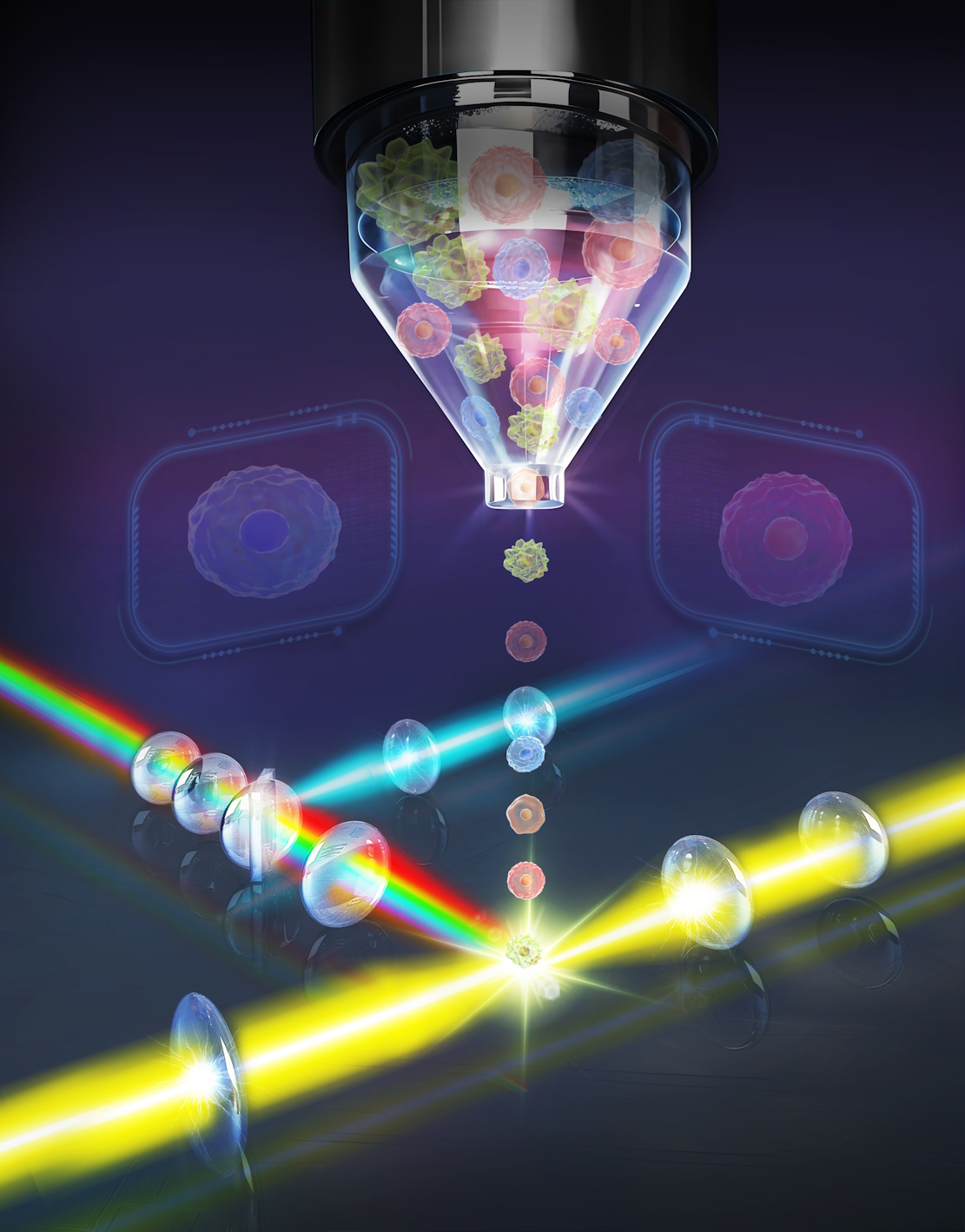
Dr. Xinyu Chen | The Cell Detectives: How Lasers and Artificial Intelligence Are Transforming Biology
Imagine searching for one unusual face in a stadium packed with thousands of people. Now imagine that every person is moving, the faces are nearly invisible, and you have only a fraction of a second to decide whom to stop. This is remarkably close to the challenge scientists face when they try to identify a particular cell among millions. Yet finding the right cells can help researchers understand disease, investigate immune responses, and discover biological differences that would otherwise remain hidden.
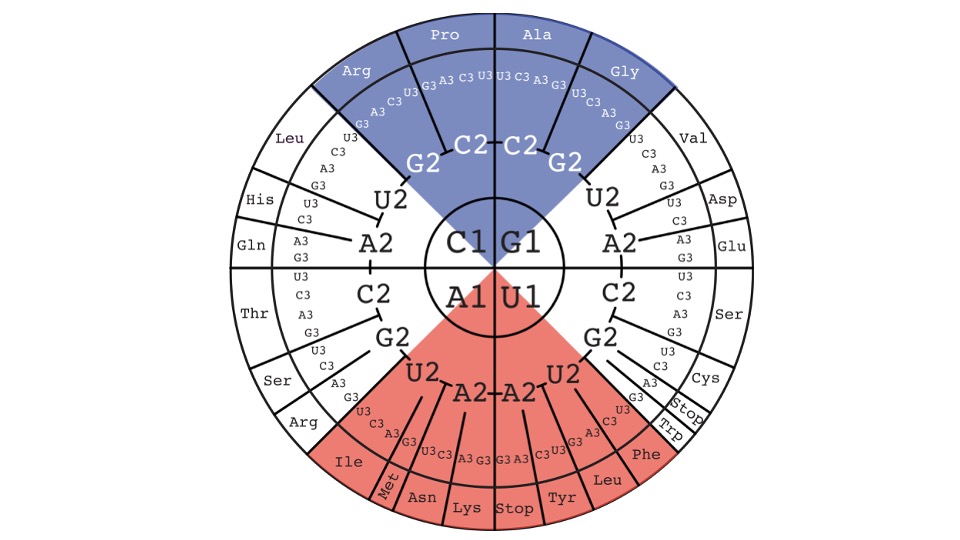
Professor Eric Westhof – Dr. Henri Grosjean | The Hidden Physics of Life: Rethinking the Genetic Code
For generations, biology students have encountered the genetic code as a neat table of letters. Across its rows and columns sit combinations such as AUG, GGC and UUU, each pointing to an ingredient used to build proteins. The table is one of science’s great achievements: a compact dictionary connecting genetic information with the molecules that make living cells work. Yet it also raises a question that textbooks rarely explore. Why is the code arranged as it is, and what might we discover by looking at it differently?

Prof. Elizabeth Regan | The Healthcare Revolution That Technology Alone Cannot Deliver
Imagine a patient with several health problems moving through a modern medical system. She may see a family doctor, a specialist, a hospital team, a pharmacist and perhaps a community service. Each professional may be highly skilled. Each organisation may own sophisticated software. Yet the patient can still find herself repeating the same story, carrying information between appointments, waiting for records to arrive and trying to understand who is responsible for what. The individual parts work well, but the journey doesn’t.

Dr Sarah Davies – Dr Clare French | The Vaccine Uptake Recipe: Which Ingredients Work for Different Groups?
Vaccines can prevent serious illness, disability and death, but their benefits depend on people actually receiving them. When vaccination rates fall, the usual question is how to support more people to get vaccinated. Yet that question may be too simple. A reminder, a conversation, a financial incentive or a more convenient clinic can all help, but they do not necessarily help everyone in the same way. That is the central insight emerging from a major analysis led by Dr Sarah Davies and Dr Clare French, both of the University of Bristol, and colleagues. To go beyond asking whether broad categories such as “education” or “improved access” work, the researchers took apart vaccine uptake interventions to examine their individual ingredients. It is a little like studying recipes: knowing that a cake tastes good is useful, but knowing which ingredients make the difference is far more helpful if you want to create a better cake.
Increase the impact of your research
• Good science communication helps people make informed decisions and motivates them to take appropriate and affirmative action.
• Good science communication encourages everyday people to be scientifically literate so that they can analyse the integrity and legitimacy of information.
• Good science communication encourages people into STEM-related fields of study and employment.
• Good public science communication fosters a community around research that includes both members of the public, policymakers and scientists.
• In a recent survey, 75% of people suggested they would prefer to listen to an interesting story than read it.

Step 1 Upload your science paper
Step 2 SciPod script written
Step 3 Voice audio recorded
Step 4 SciPod published