
The Blood-Brain Barrier: More than Just a Barrier – Dr Shikha Nangia, Syracuse University
Original Article Reference
https://doi.org/10.33548/SCIENTIA490
Share Episode

About this episode
Neurodegenerative disorders present a major cause of death and disability worldwide. Treatments are typically expensive, non-efficient, and invasive. Although scientists are committed to finding better treatment strategies, the challenge of penetrating the blood-brain barrier remains. This highly selective envelope protects our brain from harmful substances but also prevents drugs from reaching the brain when needed. Dr Shikha Nangia at Syracuse University, USA, focuses on understanding the molecular structure of this complex interface to ultimately facilitate the transport of drugs across the blood-brain barrier.
This work is licensed under a Creative Commons Attribution 4.0 International License. 
What does this mean?
Share: You can copy and redistribute the material in any medium or format
Adapt: You can change, and build upon the material for any purpose, even commercially.
Credit: You must give appropriate credit, provide a link to the license, and indicate if changes were made.
Related episodes

Prof. Dr. Daniel Gredig | Protection Is a Conversation: How Modern HIV Prevention Is Changing Intimacy and Trust
The story of HIV prevention has changed dramatically over the past four decades. What was once dominated by fear and limited options has become a field shaped by scientific breakthroughs, greater understanding, and a growing appreciation of personal choice. Yet while medicine has transformed the ways people can protect themselves, one element remains as important as ever. Prevention depends on communication. Every intimate encounter involves two people, each bringing their own experiences, expectations, and preferences. Reaching a shared understanding is rarely as simple as it appears.

Professor Thomas Münzel | Nicotine: The Molecule the Tobacco Industry Doesn’t Want You to Question
For decades, the story of tobacco and the heart seemed settled. Cigarettes were dangerous because they burned, releasing tar, carbon monoxide, and thousands of toxic chemicals that wrecked blood vessels. Remove the fire, the thinking went, and you remove almost all of the danger. That’s the logic behind heat-not-burn devices, e-cigarettes, and now nicotine pouches, each marketed, in turn, as the “safer” next step for people who can’t or won’t quit nicotine altogether.
Prof. Jean-Sébastien Delisle – Dr Mélanie Dieudé | The Medicine Is Ready. Is the Health System?
A medical breakthrough is only truly a breakthrough if it can reach the person who needs it. That simple idea sits at the heart of a rapidly growing challenge in cell therapy, gene therapy and regenerative medicine. These treatments are beginning to change what doctors can offer people with serious cancers, rare genetic conditions and other diseases once considered extraordinarily difficult to treat. Some therapies can reprogram a patient’s own cells to attack cancer. Others aim to repair or replace faulty biological instructions. Their promise can sound futuristic, yet the central problem is increasingly practical: how do we turn remarkable science into care that is affordable, timely and available to everyone who could benefit?

Prof. Yuben Moodley | Signals in the Scars: The Search for New Ways to Predict and Treat Lung Fibrosis
Breathing is so automatic that most of us notice it only when something goes wrong. Yet every breath depends on an extraordinarily delicate structure. Inside the lungs, tiny air sacs provide a vast, thin surface across which oxygen enters the blood. When that tissue is repeatedly injured, the body’s attempt to repair it can become part of the problem. Instead of restoring flexible lung tissue, repair processes may leave behind excessive scar tissue. As this fibrosis accumulates, the lungs become stiffer and less able to perform their essential task.
Increase the impact of your research
• Good science communication encourages everyday people to be scientifically literate so that they can analyse the integrity and legitimacy of information.
• Good science communication encourages people into STEM-related fields of study and employment.
• Good public science communication fosters a community around research that includes both members of the public, policymakers and scientists.
• In a recent survey, 75% of people suggested they would prefer to listen to an interesting story than read it.
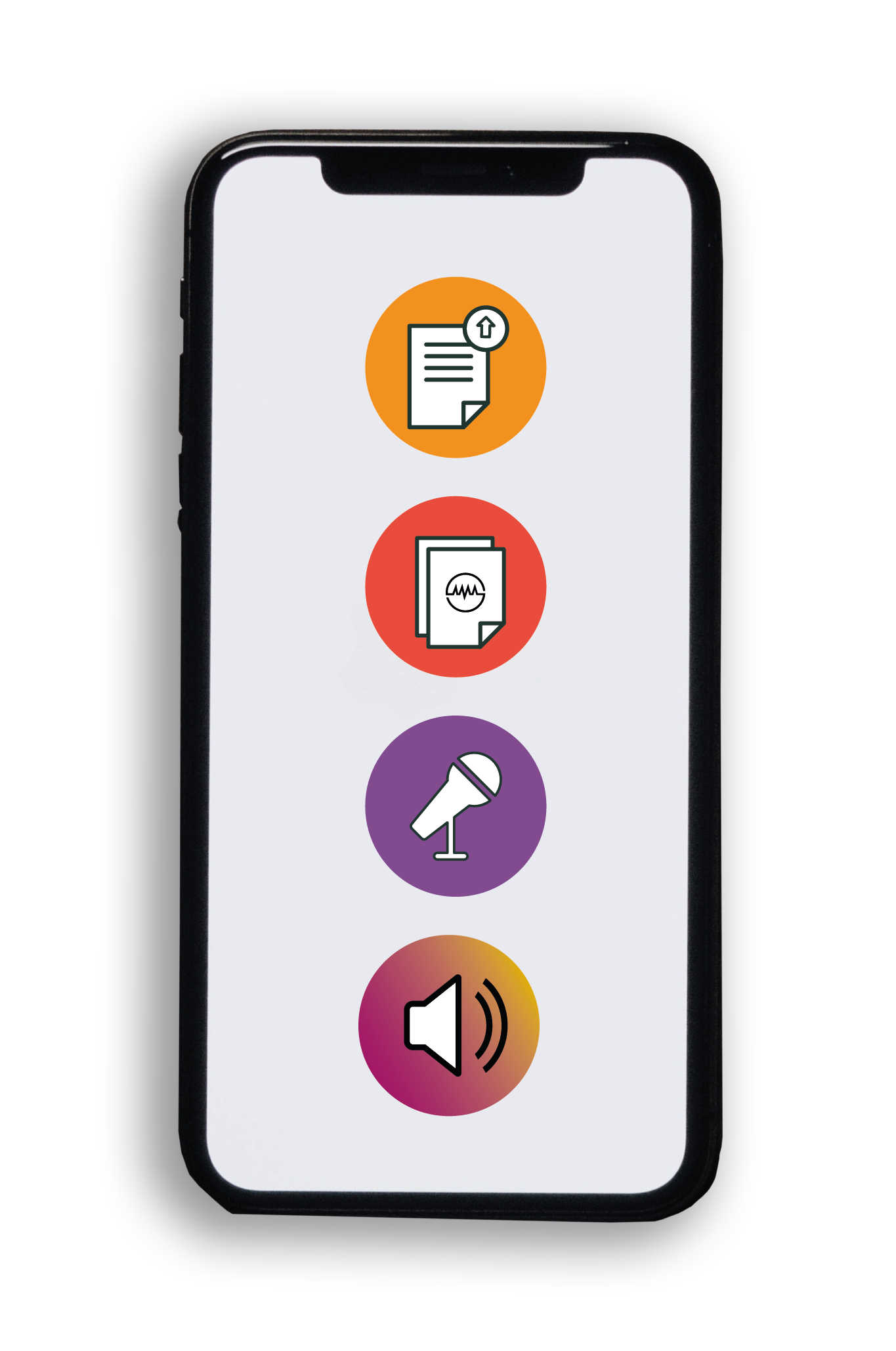
Step 1 Upload your science paper
Step 2 SciPod script written
Step 3 Voice audio recorded
Step 4 SciPod published