
Inspiring Science Teachers in the Arizona Borderlands – Dr Etta Kralovec, University of Arizona, South
Original Article Reference
https://doi.org/10.26320/SCIENTIA171
Share Episode

About this episode
This work is licensed under a Creative Commons Attribution 4.0 International License. 
What does this mean?
Share: You can copy and redistribute the material in any medium
or format
Adapt: You can change, and build upon the material for any
purpose, even commercially.
Credit: You must give appropriate credit, provide a link to the
license, and indicate if changes were made.
Related episodes

Prof. Dr. Winnie-Karen Giera | Learning to Argue: How Debate, Planning and Strategy Can Build Better Writers
What happens between having an opinion and writing a convincing argument? For many teenagers, the distance is surprisingly large. A student may argue energetically with friends, spot weaknesses in someone else’s reasoning, and explain why a rule seems unfair, yet struggle when asked to turn those abilities into a formal essay. On the page, there is no opponent waiting to respond and no immediate question demanding clarification. The writer has to create that dialogue alone.
Dr Marie McGregor | Why Gifted Students Need More Than Ability to Thrive in Science
Walk into any classroom, and some students immediately attract attention. They ask thoughtful questions, solve complex problems quickly and display an enthusiasm that inspires those around them. Some may describe these students as gifted. However, others with equally advanced potential may be less visible: they may sit quietly, avoid drawing attention to themselves, rarely volunteer answers or appear disengaged. As a result, their abilities may go unnoticed. While ability and achievement are important, they do not tell the whole story and do not guarantee confidence, resilience, or lasting motivation.
Professor Theodore Allen | From Sanitizers to Social Media: The Hidden Science Behind Everyday Choices
When most people think of scientific research, they may imagine test tubes, lab coats, and microscopes. However, many impactful experiments happen not in laboratories, but in office buildings, student unions, and even on social media. In two fascinating studies co-authored by Professor Theodore Allen of The Ohio State University, researchers show how the same rigorous logic that drives cutting-edge chemistry or physics can be applied to practical, everyday challenges, such as where to place a hand sanitizer dispenser or how to convince someone to get vaccinated. The studies, though different in their subjects, share a common theme that data and careful experimental design can make the world cleaner, healthier, and more humane.

Jenni AI: Preserving academic integrity in an age of AI-written text
As generative AI becomes ever more convincing at mimicking human text, many universities and academic institutions have come to rely on AI detection tools to police academic integrity. However, recent research has clearly demonstrated that these tools are not only ineffective, they are also amplifying systematic injustices in academia. Jenni AI presents a smarter workspace for drafting, citing, and proofreading: helping students and researchers make the best possible use of AI tools while ensuring their academic integrity is preserved.
Increase the impact of your research
• Good science communication encourages everyday people to be scientifically literate so that they can analyse the integrity and legitimacy of information.
• Good science communication encourages people into STEM-related fields of study and employment.
• Good public science communication fosters a community around research that includes both members of the public, policymakers and scientists.
• In a recent survey, 75% of people suggested they would prefer to listen to an interesting story than read it.
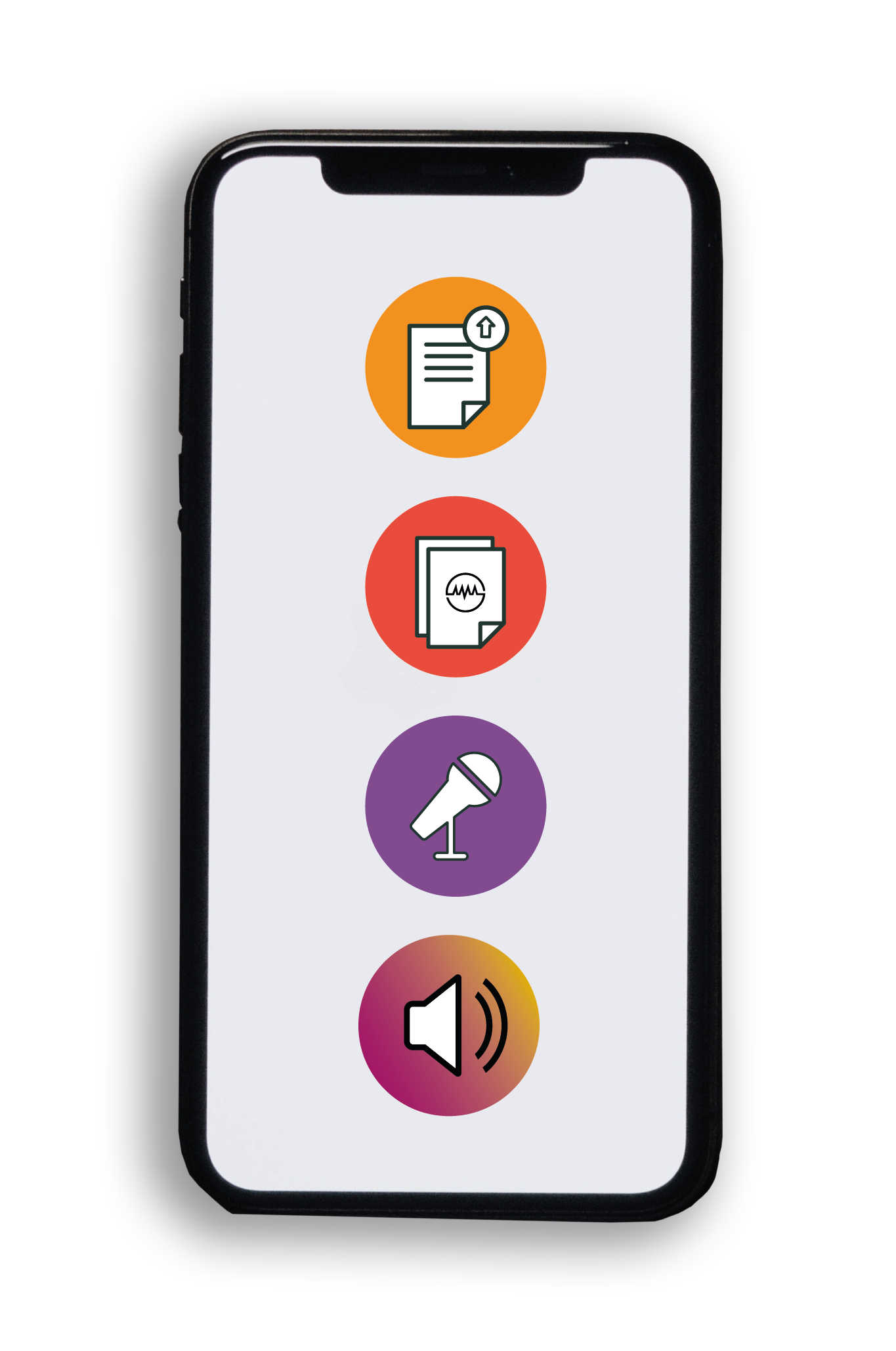
Upload your science paper
Step 2
SciPod script written
Step 3
Voice audio recorded
Step 4
SciPod published