by Iliyah Maddox | May 29, 2026 | business and economy
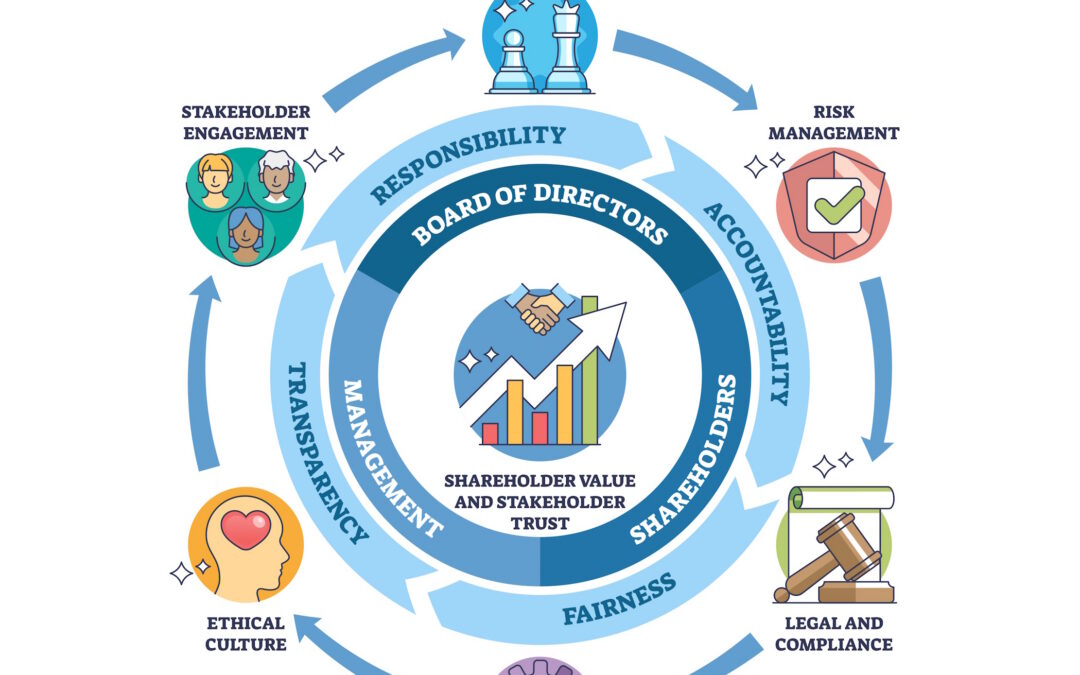
Michael Jensen spent much of his life asking one of the most important questions in modern business: What makes companies work well, and what causes them to fail? For decades, his ideas shaped how corporations were managed, how executives were paid, and how investors judged success. Some praised him as one of the most influential thinkers in modern finance. Others blamed his theories for encouraging corporate greed, soaring executive compensation, and an obsession with shareholder value. Few economists have had such a powerful influence on the financial world.

by Iliyah Maddox | Apr 7, 2026 | business and economy, earth and environment, engineering and tech
Steel is everywhere. It forms the skeletons of skyscrapers, the frames of cars, the rails beneath trains, and the machines that build modern economies. Yet behind this essential material lies a difficult truth. Steelmaking is one of the world’s most carbon intensive industries. Each ton of conventional steel can release nearly two tons of carbon dioxide into the atmosphere. As countries race to reduce emissions and limit climate change, transforming the way steel is made has become an urgent challenge.

by Iliyah Maddox | Mar 13, 2026 | business and economy
On any given day in the United States, millions of financial decisions are made quietly behind desks and computer screens. A loan officer reviews an application from a small construction company. An algorithm evaluates a mortgage request from a young family. A bank executive signs off on a merger that will reshape the local banking landscape. Each decision may seem technical or routine. Yet together they shape who gets to buy a home, who gets to expand a business, and which communities flourish.

by Iliyah Maddox | Feb 12, 2026 | business and economy, social and behavioural sciences
If you ask someone in the United States whether to reconsider their health insurance plan choices, they may sigh, roll their eyes, and offer a story about navigating a maze of deductibles, networks, and confusing brochures. In practice, most people end up doing the simplest thing possible: they stay in the same plan they are already in. Economists have long noticed this pattern. Even when plans raise their prices or competitors offer better deals, people tend to remain where they are. This raises a fascinating question: do people stay because switching is difficult, or because they genuinely prefer the plan they already have? A new study by the economist Prof. Ariel Pakes of Harvard University, and colleagues Prof. Mark Shepard and Prof. Jack Porter, digs into this puzzle and uncovers some surprising answers. Although the study uses sophisticated mathematical tools, the insights are straightforward and important for anyone interested in how health insurance markets work.
by Iliyah Maddox | Oct 6, 2025 | business and economy
Research from Professor John Willoughby and Christian Fignole at American University in Washington DC examines how diverse ownership structures persist in market economies, challenging the assumption that capitalist ownership automatically emerges as the most efficient form. Using economist Henry Hansmann’s institutional framework, they argue that while capitalist owners contribute little to enterprise operations, this does not guarantee that worker ownership would become dominant in post-capitalist societies. Their analysis reveals that heterogeneous ownership forms will likely continue to exist due to the varying conditions that exist in different sectors of a market economy.

by Iliyah Maddox | Sep 30, 2025 | business and economy
Research from Dr. Andrey Kostyuk at the Grenoble Ecole de Management supervised by Prof. Martina Battisti, a Senior Fellow of Higher Education Academy, and Director of European Council for Small Business and Entrepreneurship, reveals that successful startup mentoring operates as a complex social exchange where both mentors and entrepreneurs must benefit for ventures to thrive. The findings advance the understanding of entrepreneurial mentoring and provide a blueprint for designing more effective mentoring programs that could accelerate sustainable startup growth worldwide.